
Trump's Fateful November
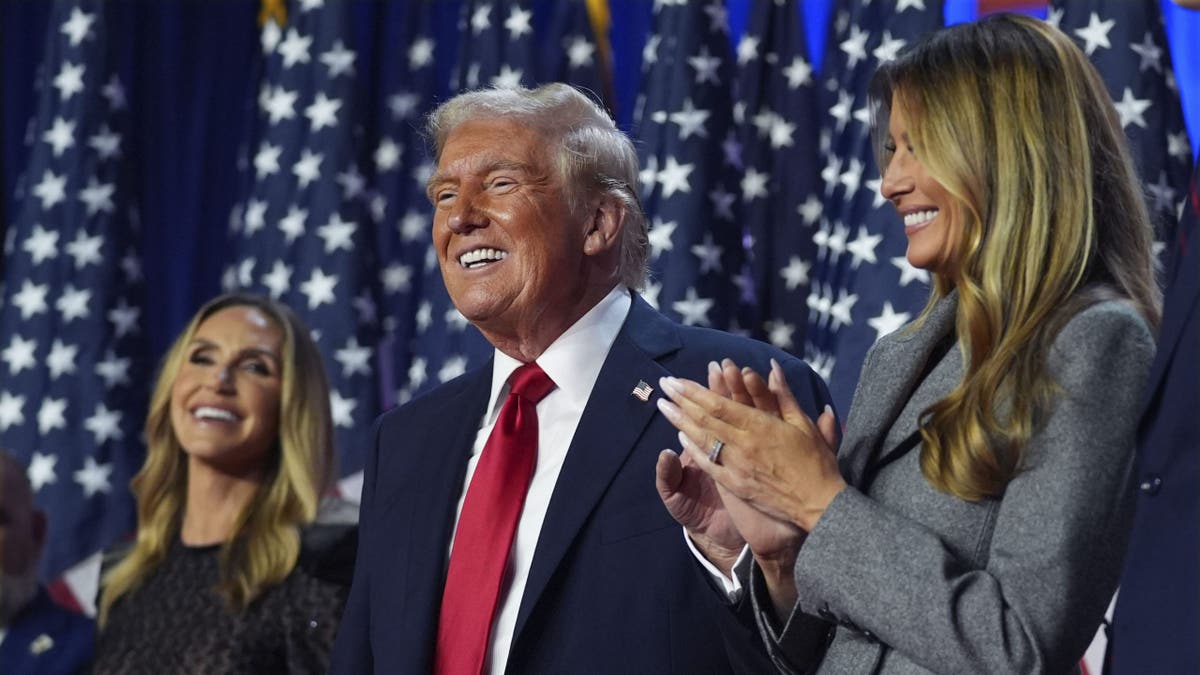
Trump's November: A Month of Challenges
President Donald Trump has had a November to forget. The Republican leader started his second term in the White House with a string of strong months, backed by his hold on Republicans in Congress and a willingness to bend the nation’s bureaucracy to his will. That all changed this month. Just look at the blows Trump has taken in the last few weeks:
- Republicans took a thumping in off-year elections: Republicans knew they faced an uphill battle in Virginia, New Jersey and New York. But the sweeping nature of Democratic wins, with the party also winning in places like Georgia and Mississippi, was a surprise to even the most dour Republicans. Trump loomed large in these races, and the victories — especially in Virginia and New Jersey — were seen as a repudiation of his first months in office. The campaigns also highlighted Trump’s next issue …
- Voters question Trump’s commitment to costs and affordability: The issue that united Democrats in these off-year elections was affordability, and poll after poll has shown that Trump has faced a steep decline in voter confidence in his handling of the economy. Trump made grandiose promises on costs during his campaign and has, so far, failed to deliver on them, and often paints a far rosier picture of the economy than most Americans feel. Taken together, that’s a dangerous combination for not just Trump, but Republicans writ large. And it seems like the president has gotten that message: “All I want is I want for people to recognize a great job that I’ve done on pricing, on affordability,” he told reporters this week.
- Republicans, Trump blamed for shutdown: The nation’s longest government shutdown ended this month and while Democrats largely caved without getting much in return, the shutdown polls were nearly unanimous: Voters blamed Trump and Republicans for the stoppage. The most damaging findings may be how independents, by a 2-to-1 margin, held Trump and Republicans responsible. This couples with a steep decline in the way Americans view Trump’s handling of the government, with an AP-NORC poll finding only “33% of U.S. adults approve of the way the Republican president is managing the government,” down from 43% in March.
- Courts, Republicans rebuffed his push for mid-decade redistricting: Trump had been explicit about what he expected out of state Republicans this year: Redistrict to get Republicans a better chance at keeping a House majority in the midterms. “We are entitled to 5 more seats,” Trump said about Texas’s push to redistrict in August. That effort has stalled out, though. A federal court this week blocked a newly drawn congressional map in Texas that would have given Republicans a possible five-seat edge, while Republicans in the Indiana state Senate rejected Trump’s call for mid-decade redistricting. Both represent significant blows to Republicans’ midterm plans, especially considering California voters approved a new congressional map this month that could give Democrats as many as five additional seats in the state.
- Inability to shake the Epstein saga: No issue has hung around Trump more consistently this year than the controversy around convicted sexual predator Jeffrey Epstein. Despite stoking his base’s anger about Epstein during his presidential campaigns, Trump had for months vehemently argued against releasing the Department of Justice’s investigatory files and lambasted Republicans who bucked him by supporting an effort in the House to do just that. But once it became clear that the House would not only call a vote on the issue but would almost certainly pass it with Republican support, Trump backtracked, supported the bill’s passage and signed it this week.
- Midterm warning signs are flashing for Republicans: A president’s approval rating is often correlated with their success in a midterm election, so with all (political) eyes now on the 2026 midterms, there are clear warning signs for Republicans on the horizon. A Fox News poll released this week found 41 percent of voters approve of Trump, while 58 percent disapprove, with a sizable 45 percent strongly disapproving. Polls can change and there is time for Trump to turn things around, but heading into 2026, Trump and Republicans have some clear ground to make up.
Contrast this with even as recently as October, when the Trump administration was able to strike a trade deal with China, announce a ceasefire deal to begin ending Israel’s war in Gaza and travel to the Middle East, where he was feted in Israel as hostages were released and in Egypt for bringing both sides to the negotiating table.
Of course, Trump continues to tout his accomplishments, even after a tough month.
“They say this has been the best nine months that any president has ever had …” Trump said on Wednesday. “But we have had a great nine months. Now we have to do it more than a few more times.”
Larry Sabato, the founder and director of the University of Virginia’s Center for Politics, isn’t so sure.
“It’s one of the worst months that any president has had in his first year,” said Sabato. “It’s true with all presidencies, every day matters, and a million things happen, and every month is different. But the bad things tend to be remembered longer than the good things. He really has accumulated a lot of wounds, and he still has 80 percent of this term to go.”
The White House firmly pushed back against the suggestion that this month had been tough for Trump.
“This month President Trump delivered yet another historic drug pricing deal, five new trade deals, record-breaking commercial and investment deals with Saudi Arabia, new stock market highs, and a blockbuster jobs report,” said Kush Desai, a White House spokesperson who went on to argue that November has been “another month of historic victories for President Trump and the American people.”
Meeting Between Trump and Mamdani
New York City comes to Washington today, and it could get interesting! The city’s democratic socialist mayor-elect, Zohran Mamdani, has a meeting today with Trump, a native New Yorker. Trump has an almost apocalyptic view of Mamdani, whom he calls a communist. Trump supported former Democratic governor Andrew M. Cuomo’s bid for mayor in the competitive mayoral race this month, not so much because he loved Cuomo but because he was horrified of Mamdani. Republicans are continuing to use Mamdani as a bogeyman, tying his policies to Democrats in competitive races to portray them as hard-line leftists.
Trump threatened to pull federal funding for New York City if Mamdani were elected mayor. The federal government is responsible for about 6 percent of the city’s budget, focused on infrastructure projects and housing assistance for the city’s poor. The White House already paused funding for the Gateway tunnel project between New York City and New Jersey — one of the largest infrastructure projects in the country — during the government shutdown. Trump has also threatened to send in the National Guard to police the city.
Mamdani, obviously, would like to avoid all of that. The 34-year-old mayor-elect has an ambitious policy agenda, from free child care to government-run grocery stores to free buses, that would be a heavy lift even without the most powerful man on Earth watching for him to fail.
Speaking with MS NOW’s Chris Hayes on Wednesday night, Mamdani said meeting with the president was one of his responsibilities as mayor-elect. He said he planned to talk about the city’s affordability crisis, the driving issue in this month’s elections.
“My team reached out because of a commitment that I made to New Yorkers that I would be willing to meet with anyone and everyone so long as it was to the benefit of the 8.5 million people who call the city home and their struggle to afford the most expensive city in the United States of America,” Mamdani said.
Local Stories and Readers' Questions
In your local paper:
- San Francisco Standard (California): You know it’s bad when chefs in San Francisco are horrified by the prices on their menus. But this story speaks to a broader problem about rising prices and restaurant costs.
- Bridge Michigan (Ypsilanti, Michigan): Every state is struggling with rural health care, and Michigan hospitals are arguing that the effort to “‘make rural America healthy again” could prove difficult. They have warned that the Republican-backed tax and spending bill signed into law earlier this year would have “devastating” impacts on rural health.
- Salt Lake Tribune (Utah): A cash-strapped school district is considering a novel idea to cut costs: a four-day school week. The implications could be dramatic for families in Iron County, Utah, but there are questions about how much money it will save.
From you
We asked a different kind of question yesterday, and many of you responded with questions to talk about on our Post Reports podcast. Thank you for those! That podcast will be published here later today.
But we still had some thoughts from our readers we wanted to highlight, particularly this question from Cheryl Kurzawa about the 2028 presidential race.
“Can you write a slate of candidates, four for each party, that we might expect to run in the next presidential election?” asked Kurzawa. “It will be a consequential one, no doubt, but I wonder if MAGA will have lost its stranglehold by then.”
It’s a great point and we will certainly be devoting a lot of time to the presidential campaign in the years to come. And that question — whether MAGA will retain its hold on the party without Trump atop the ticket — will be one of the most critical of this political moment.
Our standout colleague, Amber Phillips, a politics reporter who writes the The 5-Minute Fix newsletter, has two pieces about this exact topic.
- Ranking the 2028 Republican presidential contenders: The list includes Vice President JD Vance, Secretary of State Marco Rubio, Sen. Ted Cruz, among others, such as one of Trump’s own children.
- Ranking the 2028 Democratic presidential contenders: The list includes California Gov. Gavin Newsom, Pennsylvania Gov. Josh Shapiro and former Transportation secretary Pete Buttigieg, among others.
Send a reply
We plan to write about Trump’s use of his pardon power on Monday. The Republican president has upended the federal pardoning process, giving the White House staff more authority in the decision-making. While many presidents have issued controversial pardons, Trump’s timing and cadence are unique. Pardons are one of the president’s ultimate powers, but what do you think about how Trump is using his pardon authority? Is he just using the power given to him or abusing the process? Some Democrats have argued for changes to the president’s pardon power. Do you support those changes? Let us (and your fellow Early Brief readers) know at earlytips@washpost.com.

Post a Comment for "Trump's Fateful November"
Post a Comment