
Trump's Four-Front Push for a Viable Middle East Peace
The Trump Administration's Efforts to Shape Middle East Peace
The U.S. President has a growing stack of draft proposals on his desk, aimed at addressing the four main fronts in the Middle East. These proposals are still in the early stages and have yet to form a coherent plan.
At the UN Security Council, a new draft resolution has been introduced to define the framework for the multinational force's operation in Gaza. Lebanon is waiting for Washington to exert pressure on Israel to enter negotiations over security arrangements.
Between Washington and Tehran, a dialogue conducted largely through the media has yet to evolve into a genuine diplomatic process. In Syria, following the historic visit of President Ahmad al-Sharaa to the White House, expectations are mounting for a U.S. initiative to advance an agreement on security arrangements with Israel.
Although al-Sharaa's visit was hailed as a diplomatic achievement, many practical questions remain unanswered, casting doubt on the substance of that success.
Al-Sharaa can take satisfaction in the U.S. decision to extend the waiver on the 2019 Caesar Act, which bans most aid and investment in Syria. However, it's doubtful that this extension will open the floodgates to the large-scale investment and assistance the country so desperately needs.
Investors and donors are unlikely to reach for their checkbooks when they have no assurance about the fate of their funds six months from now, particularly in light of criticism and opposition from several members of Congress, including prominent Republicans who are attentive to Israel's position. In fact, this waiver is no broader in scope than the one granted to al-Sharaa last May.
Al-Sharaa announced Syria's accession to the international coalition against ISIS, a coalition that, with Syria's inclusion, now counts 90 member states. For the moment, however, this remains primarily a political framework: significant in its declarative dimension but lacking the coordinated military mechanisms required to make it operational.
Without such coordination, it cannot relieve the United States of its military role in Syria or transfer responsibility for managing the "Syrian front" of the war from the Kurdish-led Syrian Democratic Forces to the Syrian army, which is still too undertrained and underequipped to sustain such a campaign.
This initiative is intended to form part of a broader, ambitious strategic plan jointly devised by Turkey, Syria, and the United States. Under its terms, Turkey would provide overarching military cover for the Syrian army, into which Kurdish forces would be integrated; the border region between Turkey and Syria, home to a large Kurdish population, would be demilitarized; and the Syrian regime would regain sovereignty over those provinces.
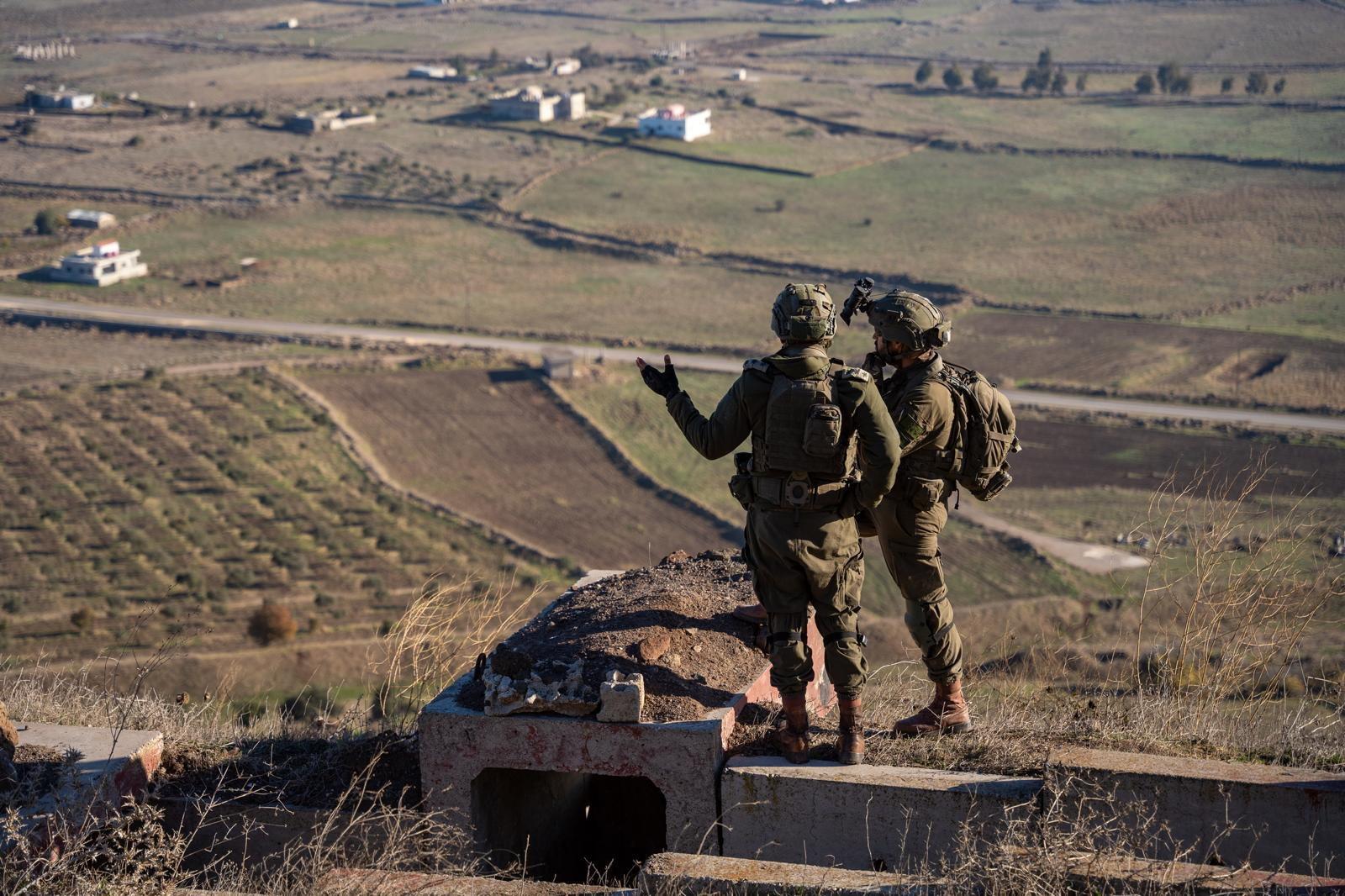
For now, however, a wide gap remains between intention and implementation. The Kurds have expressed willingness to join the Syrian army, but their principal demand, that their units be incorporated as an autonomous force authorized to defend the Kurdish regions, remains unacceptable both to Damascus and to Ankara.
Security arrangements between Israel and Syria remain shaky, despite what al-Sharaa has described as the major progress achieved in direct talks between the two sides.
In an interview with The Washington Post, al-Sharaa voiced his firm opposition to Israel's demand for the establishment of a demilitarized zone between Damascus and Syria's southern and western borders. He stressed that, for any agreement to be reached, Israel will have to withdraw to the lines of December 8, the date on which the Assad regime was ousted and Israel began occupying territories in western Syria.
Al-Sharaa's opposition to a demilitarized zone on Syrian soil rests on two main pillars. Practically, he argues that such a zone would create openings for hostile actors to operate against Israel, without clarity as to who would bear responsibility for confronting them. He also insists that "this is Syrian territory, and Syria should have the freedom of dealing with its own territory."
According to al-Sharaa, this position is backed by the United States and effectively rules out the possibility of an American force taking charge of the demilitarized zone or acting as a regional task force against those who might exploit it to launch attacks on Israel.
His stance is closely coordinated with the Turkish leadership, which views Israel as a threat to Syria's territorial integrity, a principle the Trump administration also accepts.
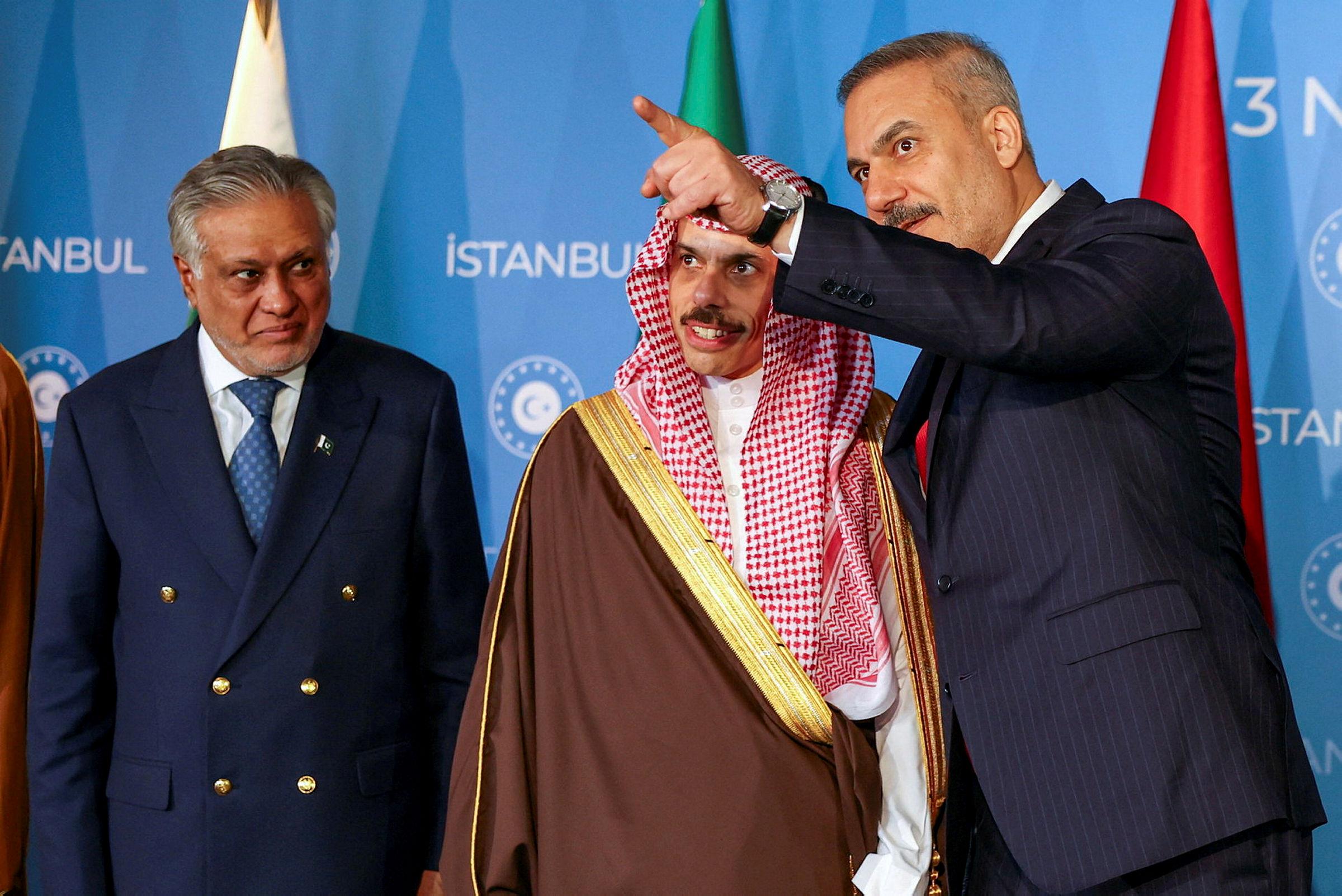
To ensure that Washington does not "deviate" from this line or pressure al-Sharaa into concessions, Turkish Foreign Minister Hakan Fidan was dispatched to quietly accompany al-Sharaa's visit to Washington and even took part in several of his meetings with Trump and senior U.S. officials.
An alternative scenario envisions the deployment of a Russian "policing force" in southern Syria, modeled on the arrangement that existed during the Assad era under Israeli coordination and consent.
Al-Sharaa, who visited Russia in October and met with President Vladimir Putin, declared that Syria would honor all agreements previously signed between Damascus and Moscow – a statement interpreted as a commitment to allow Russia to retain its bases in Tartus, Khmeimim and Qamishli. It also signaled the restoration of ties between Damascus and Moscow.

On the Lebanese front as well, there has been no breakthrough that could advance Trump's ambition to broker an agreement between Jerusalem and Beirut. Lebanese President Michel Aoun said on Wednesday, during a press briefing, that he is still waiting for Israel's response, via U.S. mediators, to his proposal to launch negotiations.
Earlier this month, Aoun said that Lebanon has no other choice but negotiation, "because in politics there are three arenas of action: diplomacy, economy and war. When war leads nowhere, what remains to be done? All wars in history ended in talks, and negotiations are not conducted with friends but with enemies."
This wasn't Aoun's first attempt to promote talks with Israel. So far, however, he hasn't clarified whether he is prepared to hold direct negotiations, as the United States has demanded.
He also didn't agree to change the composition of the committee overseeing the implementation of the cease-fire agreement to include politicians and civilian experts alongside military officers, fearing that such a move would be perceived as political negotiations with Israel.
The prevailing impression in Lebanon is that Israel has little genuine interest in negotiations, direct or indirect, and instead prefers to continue exploiting its control over Lebanese airspace, which grants it near-complete military freedom of action.

On Tuesday, the thirteenth meeting of the oversight committee was held in Naqoura, where the Lebanese delegation presented a detailed list of Israeli violations of Lebanese sovereignty. No diplomatic progress emerged from the session.
The Lebanese army chief complained that Israel continues to prevent his forces from entering areas suspected of housing Hezbollah weapons and facilities. According to him, Israel prefers to conduct airstrikes rather than allow the Lebanese army to implement its own plan for Hezbollah's disarmament.
The Lebanese army, however, is still attempting to carry out the operational plan it presented to the government in August, under which it pledged to collect Hezbollah's weapons south of the Litani River by the end of the year, a deadline that now appears unrealistic.
As in Syria, Lebanon awaits an American decision, one that will dictate not only Beirut's policy but also Israel's. The decision would require both sides to adopt the working paper presented by U.S. special envoy Tom Barrack.
Under his proposal, Israel would halt its airstrikes for two months, during which negotiations would be held on security arrangements, the initial marking of the land border, and the creation of a demilitarized zone between the two countries. In parallel, Israel would gradually withdraw from five positions it currently holds inside Lebanese territory. According to Barrack, Israel has flatly rejected the proposal.
"There's a lot of diplomatic activity at the moment and plenty of working papers being passed around," a European diplomat whose country is involved in the initiative told Haaretz. "There's, however, one actor who ultimately has to bang on the table and dictate the moves on the ground, and he's sitting in the White House. No one knows which way he'll turn."

Post a Comment for "Trump's Four-Front Push for a Viable Middle East Peace"
Post a Comment