
Trump's High-Stakes Venezuela Play, Explained
The United States and the Potential for Military Action in Venezuela
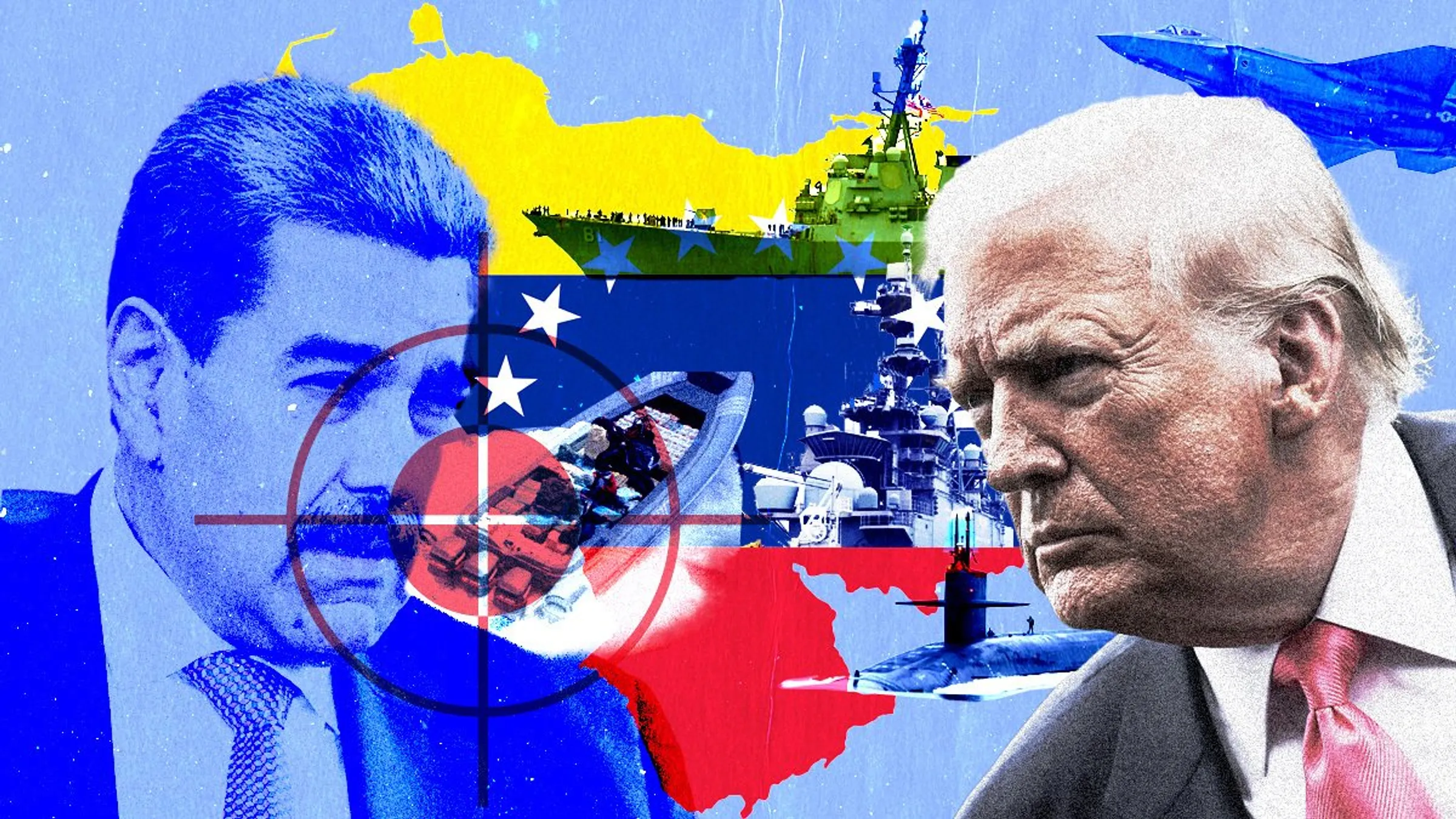
The Trump administration is showing signs of preparing for a potential military intervention in Venezuela. The USS Gerald Ford, the largest and most advanced aircraft carrier in the U.S. Navy, has been stationed in the Caribbean alongside three destroyers, attack planes, a special forces ship, 15,000 troops, and an impressive amount of firepower. This move suggests that the U.S. is considering a significant escalation in its approach to the crisis in Venezuela.
Secretary of State Marco Rubio has designated the Cartel de Los Soles as a terrorist organization, with Nicolás Maduro allegedly being its leader. Additionally, there are reports that the CIA has been conducting covert operations inside the country, and President Trump has not ruled out the possibility of sending troops on the ground. When asked if Maduro's days were numbered, Trump responded, "I would say yeah. I think so, yeah."
This buildup indicates that the United States is gearing up for what could be a regime change in Venezuela. However, such an approach may not be the best solution.
Why Removing Maduro Might Not Be the Best Option
While it is understandable to want to see the end of Maduro's regime, given his brutal leadership and the humanitarian crisis he has created, the situation in Venezuela is far more complex than it appears. Maduro has rigged elections, caused economic collapse, and turned Venezuela into a narco-state. The opposition leader, María Corina Machado, is a genuine democrat who won the Nobel Peace Prize this year. Her running mate, Edmundo González, won last year's presidential election in a landslide that Maduro stole.
If removing tyrants by force was a guaranteed path to better outcomes, then supporting such actions would make sense. However, the reality is that this is not the case. The 1989 Panama intervention is often cited as a model, but Venezuela is vastly different from Panama. With a population of nearly 30 million and a territory larger than Texas and Oklahoma combined, the challenges are much greater. The U.S. also lacks the same level of knowledge about Venezuelan politics and faces a more formidable resistance.
The Complexities of a Military Intervention
Venezuela's military is heavily armed and supported by Cuba. There are also other groups such as the FARC, ELN, Hezbollah, and the Tren de Aragua gang, all of which add to the complexity of any potential military action. American intelligence on the ground has been limited, leading to incidents like the targeting of fishing boats suspected of drug trafficking, resulting in over 80 deaths without clear evidence or legal justification.
The Trump administration believes that targeted strikes could weaken Maduro's inner circle. By taking out key figures like Iván Hernández Dala, who is responsible for kidnapping Americans, and senior military leaders, the administration hopes that the risk calculus for these individuals will change, potentially leading to their support for Maduro's removal.
However, if this strategy fails, the pressure to escalate could increase, leading to direct targeting of Maduro. A full-scale invasion remains off the table, but the administration is not ruling out limited strikes similar to those seen in Iran.
The Challenges of Transitioning to a New Government
Even if Maduro is removed, the transition to a new government would be difficult. It is likely that someone from the existing power structure would take over, such as Vice President Delcy Rodríguez or her brother Jorge. These individuals may not be democrats, but they have shown willingness to negotiate with Washington and could help maintain stability.
The real challenge lies in transitioning to an opposition-led government with Machado or González at the helm. This requires street pressure, negotiations, and credible guarantees for the security apparatus. However, Machado lacks the armed forces and organizational capacity needed to enforce such changes.
Ambassador James Story, who served as U.S. Ambassador to Venezuela from 2018 to 2023, emphasized the need for a clear plan for dealing with regime figures. He warned against repeating the mistakes of "de-Baathification" in Iraq, suggesting that some form of amnesty or integration may be necessary.
The Risks of Military Intervention
Military intervention in Venezuela carries significant risks. It could lead to increased refugee flows, more drug trafficking, and greater regional instability. The lessons from Iraq, Libya, and Afghanistan show that toppling a dictator is easy, but building a functioning state is extremely difficult.
Venezuela is not Iraq or Libya, but the underlying problem remains: removing a dictator creates a vacuum that can be filled by whoever has the most organization and firepower. This does not necessarily mean the most democratic actors.
The Trump administration seems unprepared to manage these risks. Rubio sees Caracas as key to toppling regimes in Cuba and Nicaragua, while Trump prefers quick wins that can be sold to his base. This approach could lead to a messy outcome.
The Need for a Multilateral Approach
What Venezuela needs is a multilateral diplomatic solution involving regional players like Brazil and Colombia. Back-channel negotiations, a phased transition roadmap, and long-term commitment are essential. However, this does not seem to align with the Trump administration's approach.
There is a possibility that Trump could achieve a diplomatic breakthrough, as seen in his Gaza ceasefire and the Abraham Accords. However, relying on such possibilities is not a reliable strategy.
Despite the military buildup, the White House has reopened negotiations with Maduro. Trump's approach is to maximize pressure while keeping diplomatic options open. If talks fail, the massive buildup may force a strike before the end of the year.
Conclusion
Maduro needs to go, but history shows that such interventions often lead to negative outcomes. The U.S. must carefully consider the risks and explore alternative solutions.

Post a Comment for "Trump's High-Stakes Venezuela Play, Explained"
Post a Comment