
Tulsa Music Fan Documents Church Studio's Legacy in 'Sanctuary of Sound'
The Story Behind the Church Studio
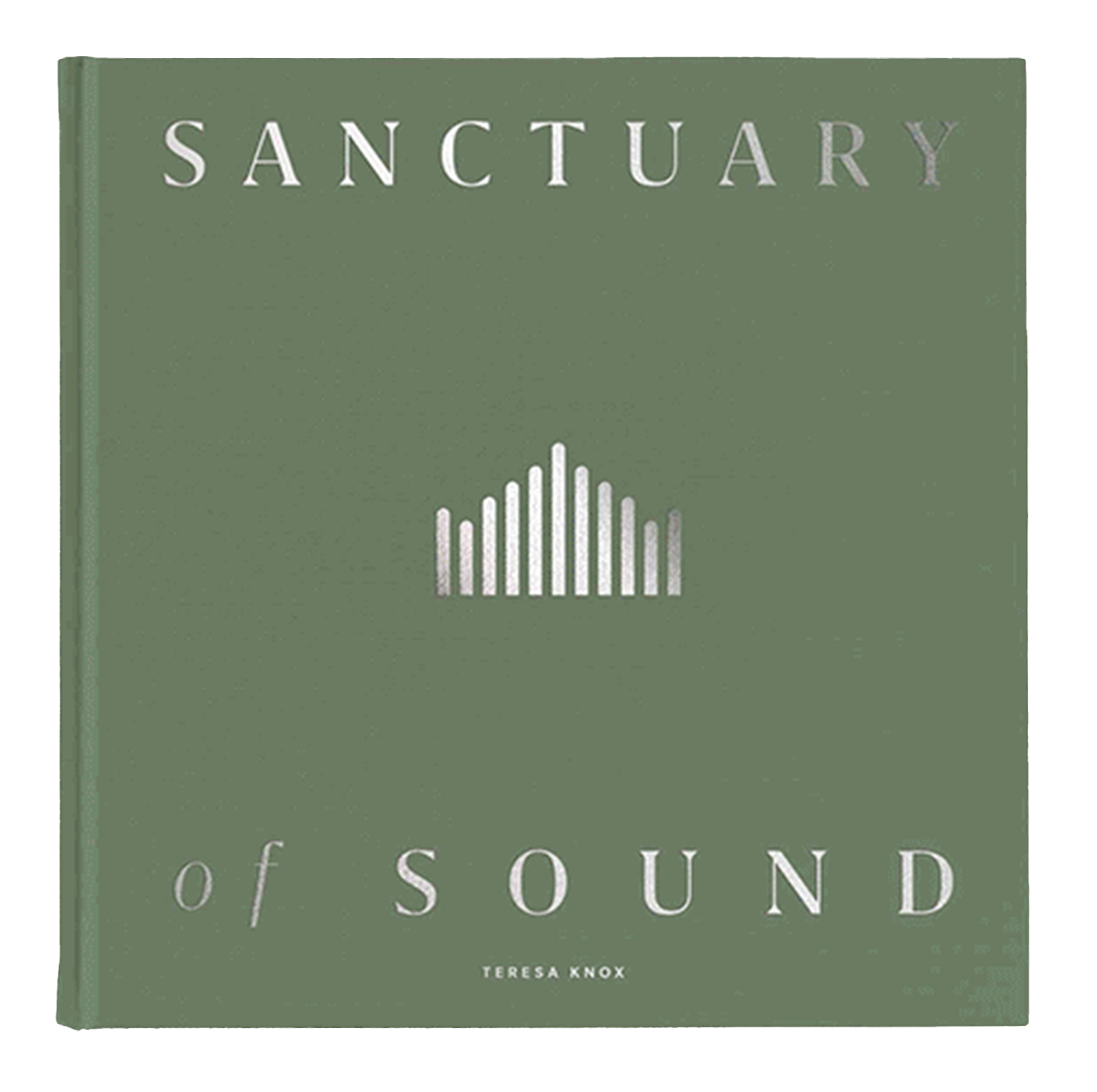
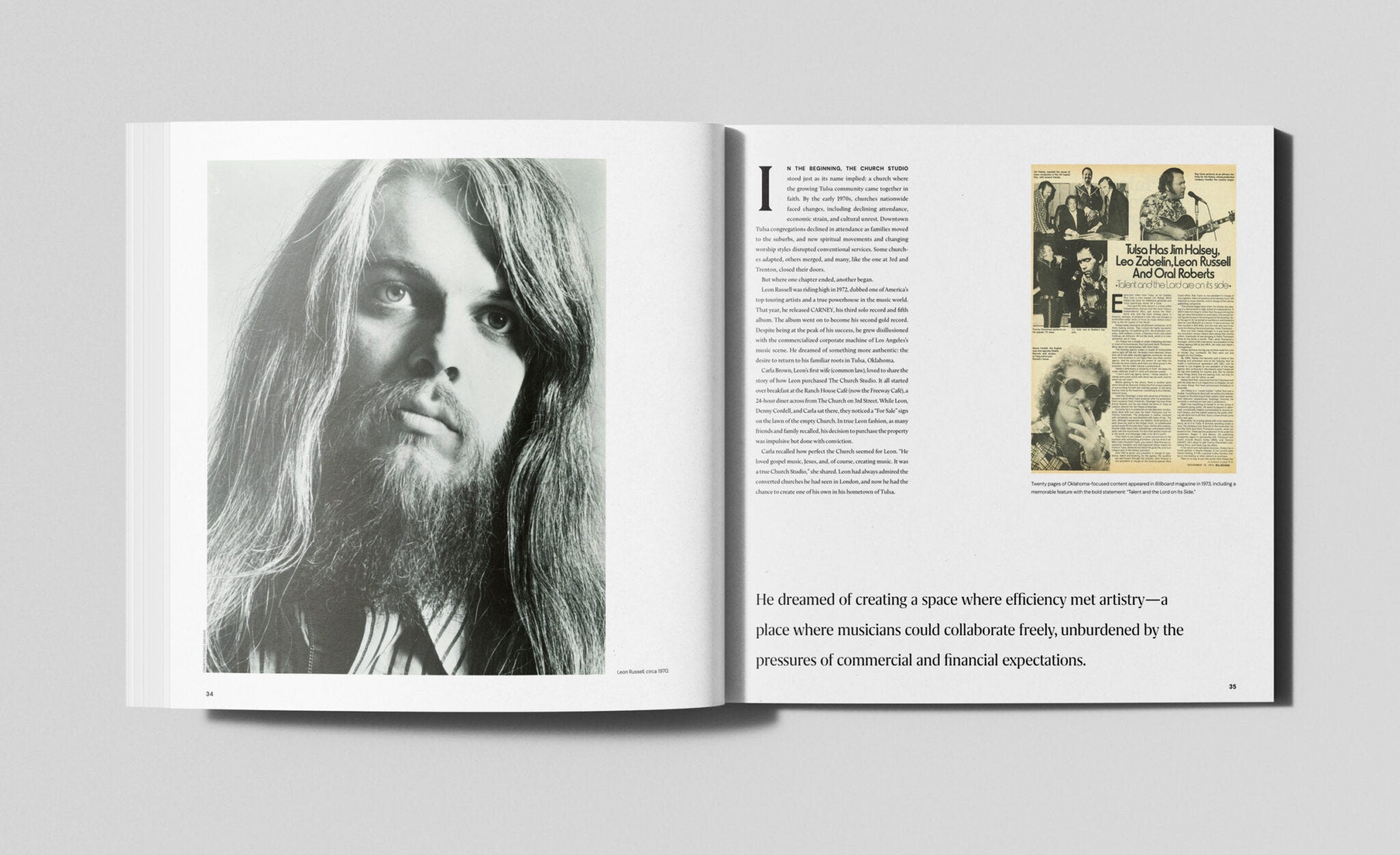
When Tulsa music fan and entrepreneur Teresa Knox bought the dilapidated Church Studio and spent more than five years renovating it, her goal was to launch a comeback for the musical haven founded in 1972 by Leon Russell. But when she penned "Sanctuary of Sound: The Church Studio Story," she wanted to take the history of the Tulsa landmark beyond the converted church that the late Oklahoma native and Rock and Roll Hall of Famer turned into a legendary recording studio.
"I start from the tribal land, from the Muscogee (Creek) Nation, to the early church, through the time period of Leon and (subsequent Church Studio owner Steve) Ripley and how we use it today," said Knox, the CEO of The Church Studio.
"I really do love that our model today is a little bit like the early church, where everyone was welcome in spite of your differences. And we can still do that while being very exclusive with our artists, protecting the recording process with privacy and integrity and excellence in sound capture."
Knox, who bought the converted church at 304 S Trenton Ave. in 2016 and reopened it in 2022 as a National Register of Historic Places landmark, museum and recording studio, released "Sanctuary of Sound" earlier this year. A 344-page coffee table book, it features the full history and star-studded stories of the iconic studio as well as rare, never-before-seen photographs from The Church Studio Archive.
The proceeds from the book benefit the nonprofit Church Studio Music Foundation.
A businesswoman, historic preservationist and fourth-generation Oklahoman, Knox — who also bought about six years ago the historic Harwelden Mansion and refurbished it as an event center and boutique hotel that recently has hosted U2's Bono and The Edge and been seen in the television series "The Lowdown" — will be featured at a special Q&A and book signing from 5:30 to 6:30 p.m. Nov. 4 at the Museum of Tulsa History, or MOTH, 2445 S Peoria Ave.
Hosted by MOTH CEO David Goldenberg with Amanda Swope as moderator, the Nov. 4 event is spotlighting Knox in the latest installment of the series “Women’s Voice.” Light refreshments will be served before the program, and autographed copies of "Sanctuary of Sound" will be available for purchase.
“We’re proud to feature Teresa Knox as part of our 'Women’s Voices' series that has highlighted women who have contributed to the culture, politics, creativity, and history of Tulsa, Oklahoma, the nation, and the world. Teresa’s work in preserving The Church Studio honors both Oklahoma’s musical past and its bright creative future," Goldberg said in a statement.
Ahead of the event, Knox spoke with The Oklahoman about her continuing vision for The Church Studio, her passion for historic preservation and more:
What Drives Passion for Restoring Historic Landmarks?
Both Harwelden and The Church Studio, they have such an incredible story. And when you think about what these buildings have witnessed — and I allude to this in 'Sanctuary of Sound' — there are very few buildings in our state and definitely in our city that have withstood World War I, the Great Depression, the Tulsa Race Massacre, World War II, the Vietnam War.
The Church Studio and Harwelden — and it's not as old as The Church Studio — have withstood the test of time. When you find out the stories of these buildings, you think about those early trailblazers of our city, and you think about their lives and their songs and their dreams for a new life in Oklahoma.
I think it's really, really special, and it's an honor to get the facts straight, document the facts, share the facts, and, again, pay tribute to these people that have shaped our city, and then specifically, with The Church Studio, the Tulsa Sound.
What Inspired Writing "Sanctuary of Sound?"
It's basically a book about the building. The building was relatively unknown. Of course, people knew it as Leon Russell's studio. But that was a short period of time; that was 1972 to '76.
When I acquired it, when I did just basic research, there was no documentation on the building. I could not easily find the denomination that it was the year that it was built (as a church). ... So, I just did a deep dive. I've interviewed like 400-plus people; most of that centered around the Shelter (Records) years, the '70s. But I went to the Methodist archive to see what I could find about this building. And then I went into early newspapers, primarily the Tulsa Daily World, which was the name of the Tulsa World at the time.
And I found that this building was built by the people, for the people, basically. And I hadn't seen a building like that here in town, because the oil barons basically built this city. But this was different. We're located on the other side of the tracks, literally, east of downtown Tulsa.
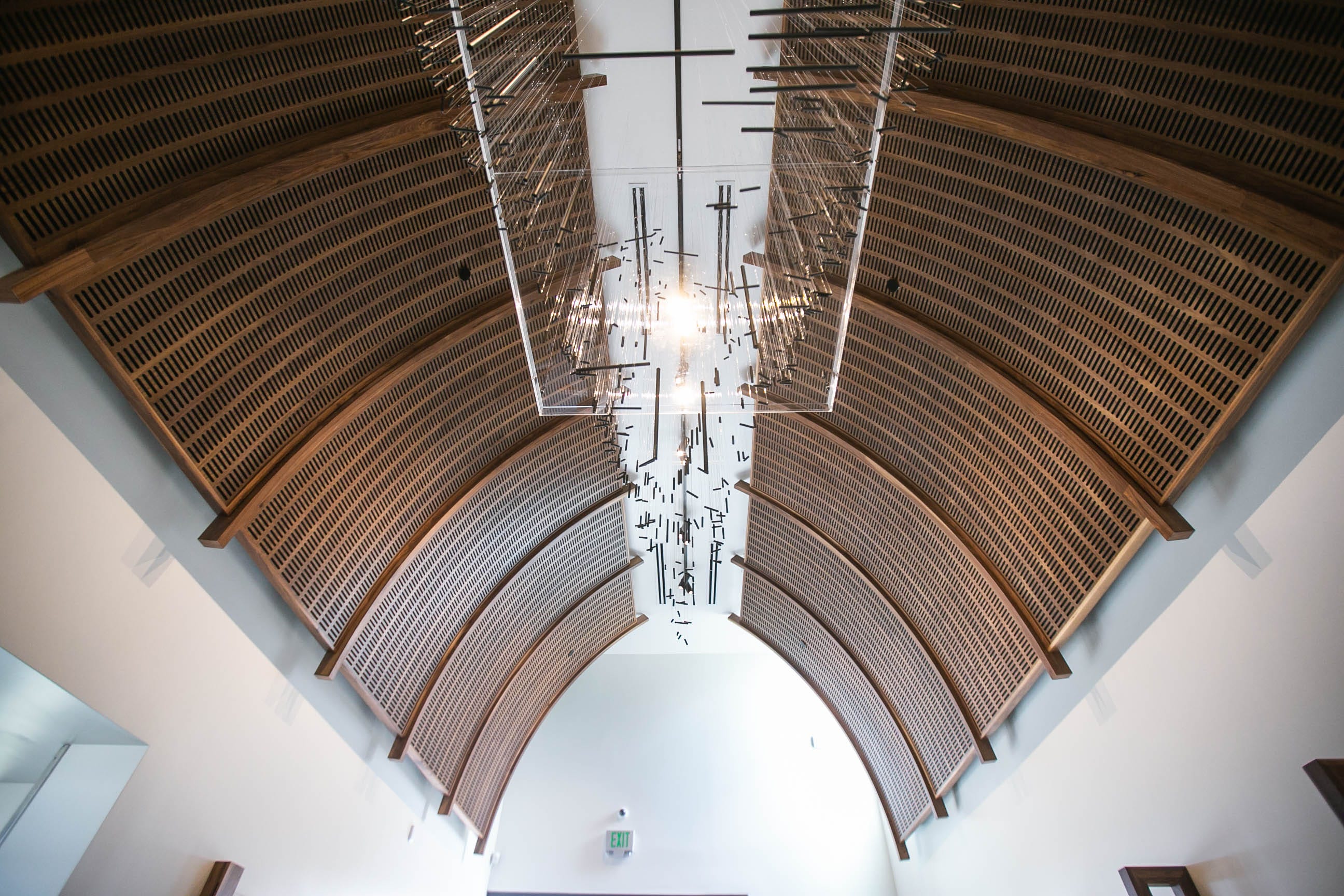
So, this building did not have formal building plans or architects. Something like all of the wood species ... there are 11 wood species, it's like, 'how did that come about?'
I found that the ladies were advertising chicken dinners if you could help them finish this church, like 'if you're a bricklayer, if you're a Mason, if you have any scrap wood.' So, something that was like a quilt — not a hodgepodge, but kind of thrown together — became really a beautiful part of the provenance of the building.
Since that had never been documented before, the more I learned, I just felt compelled (to write the book). What if something were to happen to me? I had some video interviews, I had some notes in my telephone and other things like that. But I just felt like this is a beautiful story that grew up with the city of Tulsa, and it needs to be documented. So, that's why I felt like I had to get it all down.
Turning The Church Studio into a Landmark
To be honest, I was really worried about it. I visited some other studios early on this project, like Muscle Shoals and Motown and RCA and others, and some had gone 100% into being a tourist attraction. Some did a little bit of both, like Muscle Shoals. They did recordings at nighttime, while they could take tourists during the day. Many said they do better financially sticking with tourism over the recording aspect — and Motown is an example. And I love Motown. I love Motown music, but it made me a little sad to just see things hung on the walls. And there's a whole generation that can't name any of the music from that era or those artists.
So, I knew first and foremost we wanted to be a recording studio, and so we went all in on our investment in vintage and analog recording gear and new stuff as well. We record in analog, but we have the latest in digital, so we can be relevant to all artists.
But that really is the key: We wanted to be relevant. We love the past. We pay tribute to the past. We learn by the past. Those stories connect us to who we are today. However, we wanted to be forward-thinking. ...
We have sessions six days a week, sometimes seven. We're very, very busy. But the intrigue of who's recording and that whole process really attracts tourists, too, because they know it's not a static place where you go in and you just look at exhibits and displays. I mean, you'll see a musician walking around, getting a cup of coffee, taking a break, or you'll see celebrity artists that are performing at BOK Center or Cain's Ballroom that are walking in the door. ...
I was very fearful that artists would be worried about the tourist aspect ... Can we be a serious recording studio, a quote-unquote, world-class recording studio? Will they think it's gimmicky that tourists are going in? But we've ... designed the space where we can lock the doors and have high security for the artist, while tourism and things are going on on the lower level.
So, we have found our place, and our musicians, most of them really, really like it. We do get those few that we sign an NDA (non-disclosure agreement), and they don't want to see anybody. They come in the back door.
But most of them really love it, and many find inspiration in walking down to the archive, looking at original handwritten lyrics or music or exhibits. And several have told us that they're going to tweak a song, or it gave them an idea for new music. And I really love that, because our No. 1 stakeholders are the musicians.
Teresa Knox Q&A and Book Signing
When: 5:30 to 6:30 p.m. Nov. 4.
Where: The MOTH, 2445 S Peoria Ave., Tulsa.
Admission: Free and open to the public but with limited seating. Reservations are required.
Information: https://tulsahistory.org/event/sanctuary-of-sound-the-church-studio.

Post a Comment for "Tulsa Music Fan Documents Church Studio's Legacy in 'Sanctuary of Sound'"
Post a Comment