
San Francisco Sues Coca-Cola and Kellogg Over Ultra-Processed Foods: What It Means
A Historic Legal Move Against Food Manufacturers
In a groundbreaking legal action, San Francisco has taken the lead by filing a lawsuit against major food manufacturers over ultra-processed snacks and drinks. The city claims that these products are negatively impacting the health of Americans. The lawsuit targets 10 of the most prominent food companies known for their highly processed offerings, including Kraft Heinz Company, Mondelez International, Post Holdings, The Coca-Cola Company, PepsiCo, General Mills, Nestle USA, Kellogg, Mars Incorporated, and Conagra Brands.
The suit does not aim to ban any products but instead seeks a statewide order that would prevent the companies from continuing what the city describes as "deceptive marketing" targeting children, especially in Black and Latino communities. Additionally, the city is requesting an unspecified amount of money to address what officials call a public health crisis.
This move echoes past legal battles against tobacco companies in the 1990s, where states sought to recover costs related to smoking-related illnesses. That effort resulted in a master settlement agreement that provided funds to states and restricted tobacco advertising. However, the connection between tobacco and food companies runs deeper, as many tobacco companies purchased food companies in the 1980s and used similar marketing techniques to promote unhealthy foods.
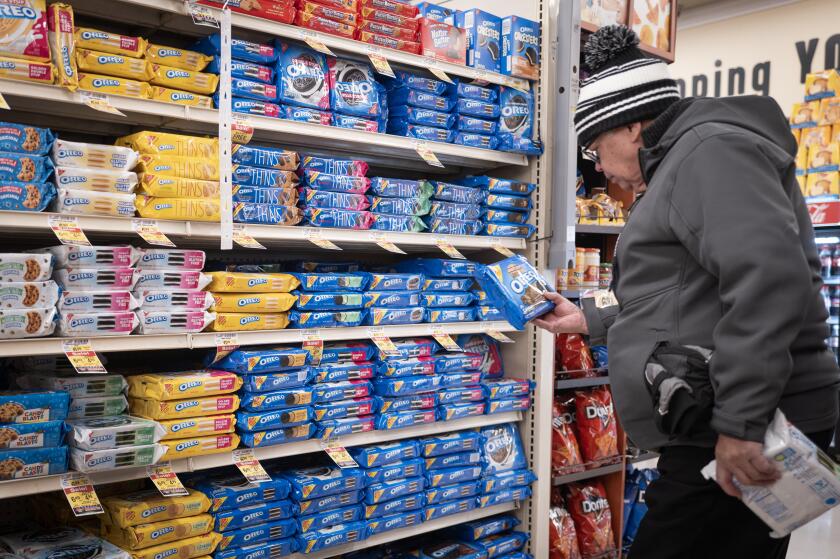
San Francisco City Atty. David Chiu highlighted this link during a news conference, stating that the food industry knew its products were harmful but continued to market them for profit. He pointed to a table filled with popular snacks like Oreos, Cheetos, and Hot Pockets, emphasizing the addictive nature of these products.
The companies named in the lawsuit have not yet responded to requests for comment. However, the Consumer Brands Assn., which represents many of the companies, stated that there is no universal scientific definition of ultra-processed foods. They also noted that manufacturers are introducing new products with increased protein and fiber, lower sugar and sodium, and no synthetic color additives.
Despite these efforts, the share of ultra-processed foods on grocery store shelves has risen significantly since the 1980s and 1990s. Today, about 70% of the U.S. food supply is ultra-processed, often containing added ingredients like sugar, salt, fat, and artificial colors or preservatives. While some ultra-processed foods like whole-grain breads and yogurts can be healthy, others are linked to chronic diseases.
San Francisco argues that the variety of products available gives the illusion of choice but forces consumers to choose between different configurations of chemicals that may harm their health. Ultra-processed foods are typically more affordable than non-processed options, but they come with their own costs, including health issues like obesity, type 2 diabetes, cardiovascular disease, and mental health disorders.
Research from the Harvard T.H. Chan School of Public Health found that participants who consumed the most ultra-processed foods had a 4% higher risk of all-cause mortality. However, experts at UC Davis note that much of the research on ultra-processed foods is observational, making it difficult to establish direct causation.
Despite these challenges, recent studies have shown more evidence linking specific processing methods to diet-related diseases. This has led to a shift in how these foods are viewed, with some experts suggesting that the data is now strong enough to support legal action.
Ultra-processed foods are high in sodium, added sugar, saturated fats, and chemicals designed to make them pleasurable to eat. Chiu shared a personal anecdote about his mother using Pringles to bribe him for swim lessons, highlighting the addictive nature of these products.
Confronting additives and ultra-processed foods has become a bipartisan issue. U.S. Secretary of Health and Human Services Robert F. Kennedy Jr. has criticized ultra-processed foods as part of his Make America Healthy Again agenda. In California, Governor Gavin Newsom signed a law to remove ultra-processed foods from school lunches.
Food experts like Gabby Headrick argue that consumers would benefit from more education on ultra-processed foods and a nationwide policy of front-of-label packaging. Similar labels in other countries have helped consumers make informed choices without relying on complex nutrition facts labels.
A previous case in Pennsylvania was dismissed due to insufficient evidence linking a teen's diabetes to specific companies. However, San Francisco's lawsuit avoids this issue by focusing on healthcare costs stemming from deceptive conduct in the aggregate.
If successful, the case could lead to significant improvements in the food supply and better health outcomes for vulnerable communities. As the legal battle unfolds, the implications for public health and the food industry remain profound.

Post a Comment for "San Francisco Sues Coca-Cola and Kellogg Over Ultra-Processed Foods: What It Means"
Post a Comment