
The Trumpian Nightmare Isn't Over Yet
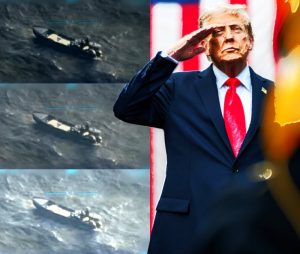
The Trumpian Nightmare: A New Era of Chaos and Cronyism
The political landscape in the United States has been marked by a significant shift since the return of Donald Trump to the White House. His second term, which began on January 20, 2025, has already left a profound impact on both domestic and international affairs. Many observers feel that Trump’s presence in power has felt like an extended period, even though he has only been in office for just over ten months. This perception is rooted in the actions and policies that have characterized his administration thus far.
The Nature of Trump's Leadership
C. J. Polychroniou, a political scientist and journalist, describes Trump's leadership as one marked by "depraved cruelty, moral blindness, and unprecedented corruption." He argues that Trump's actions are not merely about politics but represent a broader attempt to reassert US dominance in global capitalism. This approach involves spreading fear and oppression against those who oppose his vision of a neofascist, white Christian America run by oligarchs.
Trump is seen not just as a liar and con artist but as a malignant narcissist who believes he can operate outside legal and constitutional boundaries. His disdain for democracy and the rule of law is evident in his policies and public statements. Polychroniou warns that the Trumpian nightmare is just beginning, and it will require significant resistance to counteract the damage being done to civil society, the environment, and the climate crisis.
Approval Ratings and Political Shifts
Despite his controversial policies, Trump's approval ratings remain relatively high among core Republican voters. According to recent polls, his job approval rating stands at around 36%, while other surveys suggest higher numbers. However, these figures do not necessarily reflect a change in his policies. Polychroniou notes that Trump's base remains largely supportive, with divisions within his movement primarily centered around the Epstein files.
He does not anticipate any significant shifts in Trump's policies, suggesting that the current trajectory is unlikely to change. The main issue dividing his supporters appears to be more about internal party dynamics rather than policy changes.
Neoliberalism and Economic Policies
The debate surrounding Trump's economic policies often centers on whether he represents a departure from neoliberalism. Polychroniou argues that the concept of a "free market" is a myth, and that neoliberalism has always relied on state intervention to enforce its agenda. He points out that the global economy has been shaped by state-driven initiatives, with the United States playing a significant role in promoting neoliberal policies.
Trump's protectionist approach, labeled as "economics nationalism," aims to restore US supremacy in global economics. This includes enforcing tariffs on imports and using military force to regain control over regions like Latin America and the Pacific. However, Polychroniou believes these policies are destined to fail, causing harm to many people in the process.
He also highlights that Trump's domestic policies are still fundamentally neoliberal, with a focus on deregulation and reducing workplace protections. The relationship between capital and labor remains a central contradiction in the global capitalist system, with workers' rights continuing to decline worldwide.
Cronyism and Capitalism
The discussion of cronyism in the context of Trump's administration raises questions about the nature of capitalism itself. Polychroniou argues that cronyism is inherent to capitalism, as it tends toward oligopolies where businesspeople and government officials form close relationships. While Trump has taken cronyism to a new level, he emphasizes that this phenomenon is not unique to his administration.
He points to the George W. Bush administration as an example of previous instances of cronyism. Additionally, research indicates that neoliberal policies promoted by institutions like the IMF have fostered crony capitalism in developing countries. Thus, the distinction between cronyism and neoliberalism is not as clear-cut as some may believe.
The Geopolitical Motivations Behind Potential Action in Venezuela
One of the most pressing questions is why Trump is preparing to strike Venezuela. Polychroniou suggests several reasons, including the need to manufacture crises to divert attention from domestic issues and to undermine the Maduro regime due to its ties with China and Russia. He views this as part of a broader strategy to reassert US dominance in Latin America.
The US military buildup in the Caribbean is not solely about fighting drugs, and Trump is unlikely to seek congressional authorization for such an action. This reflects a pattern of executive overreach that has been established long before Trump's presidency. Polychroniou concludes that Trump's approach embodies the idea of an imperial president both at home and abroad.

Post a Comment for "The Trumpian Nightmare Isn't Over Yet"
Post a Comment