
Trump's Healthcare Plan Faces Setback as Subsidies Near Expiration
The Stalled Health Care Plan
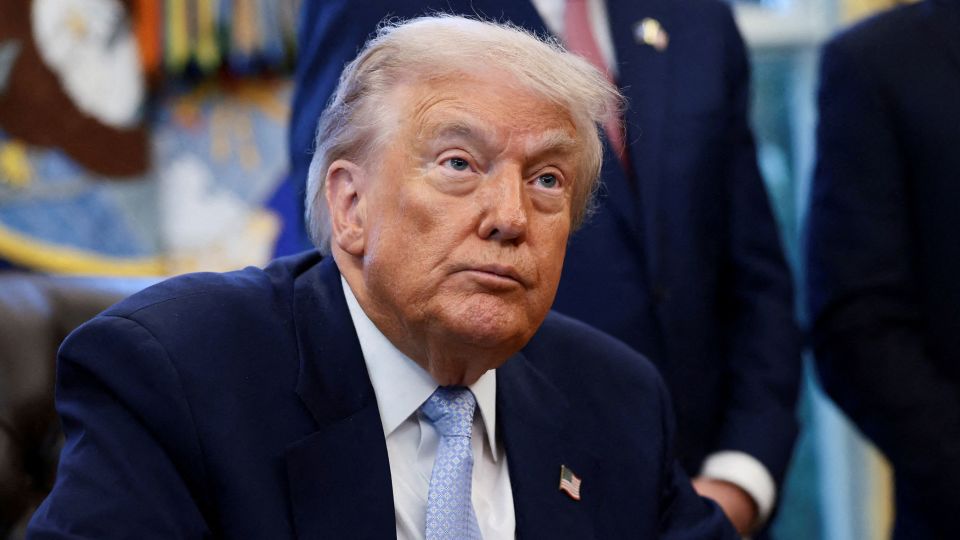
President Donald Trump's initiative for a new health care plan has encountered significant delays, primarily due to disagreements within the Republican Party regarding the extension of key enhanced Affordable Care Act (ACA) subsidies. Three individuals who are aware of the situation have shared this information with The News Pulse.
The conflict has slowed the administration’s efforts to prevent a surge in health insurance premiums, raising concerns about whether any proposal will be ready for a Senate vote as early as next week. This vote could determine the fate of the ACA subsidies that approximately 22 million people depend on.
Initially, the White House had planned to unveil a strategy last week that would combine an extension of these subsidies with several conservative reforms meant to limit their scope. However, this plan was abandoned after strong opposition from Republican lawmakers who were caught off guard by the framework and strongly opposed its main elements.
Trump officials attempting to revise the proposal are now unlikely to finalize a new plan this week, according to the individuals familiar with the matter. This development increases the likelihood that Senate Republicans may not have a Trump-endorsed proposal to counter Democrats' call for a straightforward extension of the ACA subsidies before the funding expires at the end of the year.
The White House has not provided any comment on the matter.
Despite the challenges, Trump continues to urge his aides to develop a health care plan due to concerns that voters might hold him responsible for rising premiums if he fails to present an alternative. The administration could still achieve a sudden breakthrough, as cautioned by those familiar with the situation.
At a Cabinet meeting on Tuesday, Trump insisted that “something’s going to happen,” although he acknowledged it was far from a certainty.
“It’s probably not going to be easy,” he said, criticizing Democrats for not wanting to make a good deal for the people.
Pressure on GOP Lawmakers
Republicans in Congress have been increasing pressure on the administration to support a plan that prevents steep price hikes in 2026, a crucial midterm year that could threaten their own seats. Some GOP lawmakers, especially moderates, recognize that many ACA enrollees are Republicans. In fact, the enhanced subsidies contributed to a record 24 million people signing up for 2025 coverage, many from red states. More than half of Obamacare enrollees live in districts represented by a Republican, according to KFF, a nonpartisan health policy research group.
“I encouraged the president to continue on this path of trying to move forward with a temporary extension,” said GOP Rep. Nicole Malliotakis of New York, who added that Congress would still need to overhaul the underlying structure of the ACA subsidies. “We have to do our best to protect American people and consumers.”
If the Biden-era subsidies expire, the premiums people pay are expected to more than double next year, according to KFF. Plus, an estimated 2 million more people will be uninsured next year, the Congressional Budget Office found.
Still, the administration’s initial setbacks highlight the significant challenge the White House faces in securing consensus within the GOP on any major health care proposal—especially one that has a chance of gaining enough Democratic support to become law.
Diverging Views Within the GOP
Senate Republicans agreed to hold a vote this month on extending the ACA subsidies as part of a deal with Democrats to fund the government and end a record-long shutdown. Most Republican lawmakers are staunchly opposed to a simple extension.
“The bottom line is, let them expire,” GOP Rep. Keith Self of Texas said when asked about his preferred plan for addressing the looming cliff.
Trump has similarly signaled his opposition to a simple extension, calling instead for a plan that would send federal funding directly to consumers rather than paying it to insurance companies to subsidize health care premiums. He repeatedly criticized the ACA as an unsalvageable “disaster,” prompting a scramble among Republican lawmakers to draw up plans that align with his mandate that “all the money go to the people, and that the people go out and buy their own health care.”
Challenges in Finding Consensus
Yet within the administration, officials ultimately opted for a somewhat different approach, crafting a proposal that modified the existing ACA subsidy program rather than overhauling it in hopes of putting pressure on moderate Democrats to strike a quick deal.
The White House’s original framework would have extended the subsidies for two years but set new income limits and required that all enrollees pay a minimum monthly premium. It also proposed incentivizing people to pick lower-tier plans by allowing them to funnel some federal aid into health savings accounts. And it would have set the stage to allow consumers to pick less expensive but less comprehensive plans outside the Affordable Care Act exchanges, which would likely undermine Obamacare.
The dissonance between Trump’s rhetoric and his plan surprised many conservatives on Capitol Hill, who rejected the idea of voting to continue part of a health care law they’ve opposed for more than a decade. That division over continuing the subsidies in any form, or allowing them to expire, has prevented the party from coalescing behind a single proposal.
Roughly 22 million people benefit from the enhanced tax credits, which polling shows are broadly popular with voters. That has raised fears among some Trump advisers and Republican lawmakers about the political ramifications of letting them run out, which would push premiums higher at a moment when much of the electorate is already unhappy with the cost of living.
“I think we need to do something,” said Rep. Nick LaLota of New York, a battleground Republican who has been a vocal supporter of preventing those health care price hikes while working to fix what he calls a broken system.
Bipartisan Efforts
Some Republicans, like Malliotakis, have been in private talks with rank-and-file Democrats for weeks to find a path forward that can win support in both chambers.
“This is not a problem that Republicans created, and so Republicans on their own will not be able to resolve it,” Malliotakis said. “This needs to be a bipartisan solution.”

Post a Comment for "Trump's Healthcare Plan Faces Setback as Subsidies Near Expiration"
Post a Comment