
San Diego Faces $1 Billion Challenge to Maintain Road Repair Progress, Officials Warn
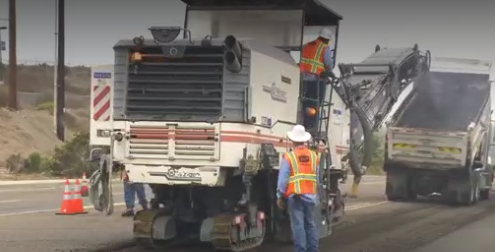
SAN DIEGO (FOX 5/KUSI)—San Diego appears set to enhance its overall road quality rating by the close of this year. However, according to officials from the city’s Transportation Department, these advancements might not last unless an extra $1 billion is invested within the coming ten years.
During a presentation to the city officials, The Active Transportation and Infrastructure Committee met on Thursday. The department stated that if funding for upkeep and restoration stays constant, the city’s average pavement condition index might drop over 10 points to 53—a "poor" score—by the 2035 fiscal year.
The present average pavement condition index for the city stands at 63, categorized as "fair," with an anticipated increase to 65 by the conclusion of 2025.
"Significant deterioration in our pavement condition scores will occur if we fail to secure extra funds, even with the current available financing," stated Bethany Bezak, who leads the Transportation Department.
The projection was presented during an informational briefing about the city’s inaugural Pavement Management Plan, launched the previous year. Under this initiative, municipal authorities aimed to achieve an average roadway condition index of 70—a mark classified as "good"—by the middle of the 2030s.
To achieve this objective, the department mentioned that they managed to increase the investment threefold over the past two years as opposed to the 10-year yearly average, which facilitated the execution of several hundred miles worth of road maintenance and rehabilitation initiatives—the highest number seen in the last ten years.
As stated by the Transportation Department, they will require approximately $1.9 billion in continuous funding over the coming decade to proceed with this project toward achieving a target score of 70. This amount is about $1.2 billion beyond what is anticipated to be provided by the current funding sources utilized by the city.
At present, the city expects to obtain dedicated funds solely from these four sources: California’s Road Maintenance and Rehabilitation Program, TransNet, as well as the city’s gas tax and street repair fees.
To keep even with a benchmark of 65 for this year, the department predicts that an extra $1 billion would have to be allocated to bridge the financial shortfall expected over the coming ten years from projected funds and actual requirements.
"Unreliable financing can lead to delayed and pricier upkeep and repairs, making long-term project planning difficult," stated Transportation Department Deputy Director Maggie McCormick during her presentation on Thursday.
She mentions that the department intends to propose keeping a score of 65, considering the city’s current budget limitations.
The impending financial hurdles are merely one of the obstacles hindering the city's advancement toward its street maintenance objectives, as highlighted by transportation department representatives on Thursday.
The lengthy delays in receiving crucial equipment bought for the department’s new internal milling and paving crews, coupled with a citywide embargo on hiring and overtime due to a $258 million budget shortfall, have resulted in postponements of various repair initiatives, according to Bezak.
Furthermore, the scarcity of potential contractors capable of performing specialized road repairs has resulted in increased expenses and extended deadlines because of their limited availability.
Councilman Henry Foster, a member of the Active Transportation and Infrastructure Committee, stated that he sees handling an increased amount of the city’s street maintenance internally as a means to escape from certain ongoing financial limitations.
“We definitely have a backlog,” he stated. “This is a good sign, and it motivates us to explore ways of expanding our workforce and taking charge of this situation.”
Councilmember Marni von Wilpert, who also serves as a committee member, requested that the department include more detailed information about how these issues—particularly those related to equipment—are affecting the city’s project backlog. She made this request with the intention of presenting this enhanced data at the upcoming meeting of the full City Council next month.
She mentioned that she wants to grasp how inflation is contributing to the increase in long-term cost estimates for road projects as well.
Copyright 2025 Nexstar Media, Inc. All rights reserved. This content must not be published, broadcast, rewritten, or distributed.To stay updated with the most recent news, weather forecasts, sports updates, and live streams, visit FOX 5 San Diego & KUSI News.

Post a Comment for "San Diego Faces $1 Billion Challenge to Maintain Road Repair Progress, Officials Warn"
Post a Comment