
5 Surprising Benefits of Spatial Computing You Won't Believe
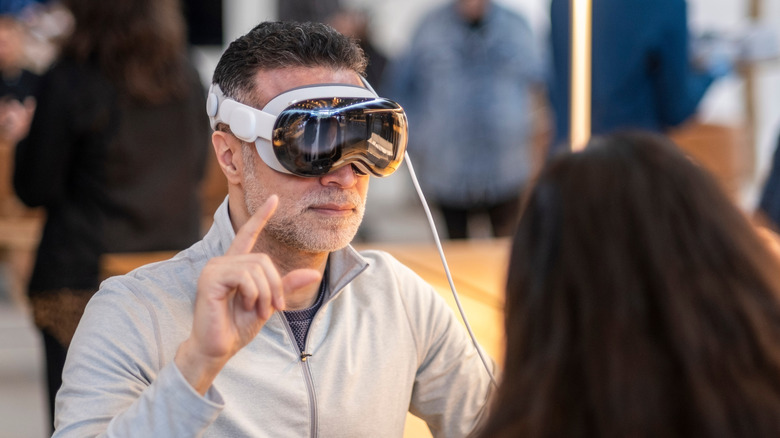
The Evolving Landscape of Spatial Computing
When Google introduced Google Cardboard in 2014, it was seen as a promising step toward making Virtual Reality (VR) accessible to the masses. However, VR remained more of a novelty than a mainstream technology until gaming and immersive experiences gained traction. Companies like Meta (formerly Oculus) led the charge with VR headsets, and over time, standalone devices such as the Meta Quest 3 showcased the potential of modern VR. Now, with advancements in both VR and Augmented Reality (AR), spatial computing is stepping into the spotlight, offering applications far beyond entertainment.
Spatial computing, which involves using AR and VR to create interactive digital environments, has a wide range of applications that extend well beyond gaming or media consumption. Its potential lies in areas such as healthcare, education, and training, where it can significantly enhance learning and productivity.
Enhanced Collaboration Through Spatial Computing
The shift to remote work during the pandemic highlighted the challenges of collaboration across different locations. Spatial computing offers a solution by enabling teams to work together in shared virtual spaces. Using AR and VR headsets, colleagues can interact with 3D models, annotate documents, and brainstorm in real-time on virtual whiteboards. This mimics the experience of being physically present, something traditional video conferencing cannot achieve.
For instance, architects and engineers can use platforms like Microsoft Mesh to explore virtual building models, identifying design flaws before construction begins. Similarly, game developers can co-create complex virtual worlds, while startups can view and modify 3D prototypes without the need for physical models. Spatial computing also supports cross-cultural teamwork through real-time translation overlays, making it easier for people from different linguistic backgrounds to collaborate effectively.
Hands-On Training for Medical Professionals
Medical training is another area where spatial computing is making a significant impact. Traditional methods often rely on cadavers, which can be difficult to source and may not be comfortable for all students. With VR and AR, medical students can practice surgeries in highly realistic simulations. Platforms like Osso VR provide 3D anatomical models and haptic feedback to mimic the feel of real tissue, allowing trainees to refine their skills and build confidence.
These tools also allow multiple trainees to practice in a virtual operating room, simulating emergency scenarios and improving teamwork. Surgeons can also use AR to overlay critical data, such as MRI scans, onto a patient's body during actual procedures. This not only enhances precision but also helps seasoned practitioners master new techniques.
Precise Industrial Training and Maintenance
In industrial settings, spatial computing is revolutionizing how technicians are trained and how equipment is maintained. AR glasses can provide precise, interactive simulations of complex machinery, helping technicians perform repairs and maintenance without extensive prior experience. This reduces the risk of errors and ensures safer training for new employees.
Additionally, VR platforms allow workers to train on high-risk equipment in a safe environment. For example, workers in aerospace or manufacturing can simulate working on offshore oil rigs or wind turbines. Remote expert assistance via AR can also guide on-site workers, making it easier to troubleshoot issues and improve efficiency across industries.
Immersive Learning Experiences
Education is another field where spatial computing is transforming traditional methods. Students can now explore historical events in an immersive way, experiencing them as if they were part of the action. AR enhances classroom learning by overlaying interactive elements, such as 3D molecular structures in chemistry or virtual dissections in biology.
Students from anywhere in the world can participate in online classes, breaking down geographical barriers. Personalized learning becomes possible as students engage with content at their own pace. Language learners can practice conversational skills in simulated environments, such as virtual marketplaces, providing real-world experience without leaving their homes.
Improved Navigation with AR
Navigation is another area where spatial computing is proving beneficial. While apps like Google Maps or Apple Maps are widely used, AR-enabled devices offer a more seamless experience. Imagine walking through a city and seeing turning directions or restaurant suggestions overlaid directly in your field of vision. This eliminates the need to constantly check a phone screen, making navigation safer and more efficient.
AR can also help in indoor environments, such as airports or malls, by guiding users to specific locations. Warehouse workers can locate items quickly, and visually impaired individuals can use audio cues for accessible navigation. Tourists can take guided tours through monuments with virtual overlays, enhancing their overall experience.
As spatial computing continues to evolve, its potential applications will only expand, making it a powerful tool for various industries and everyday life.

Post a Comment for "5 Surprising Benefits of Spatial Computing You Won't Believe"
Post a Comment