
Americans should embrace World Cup 2026 as a growth opportunity
The Impact of the World Cup on a Soccer Prodigy
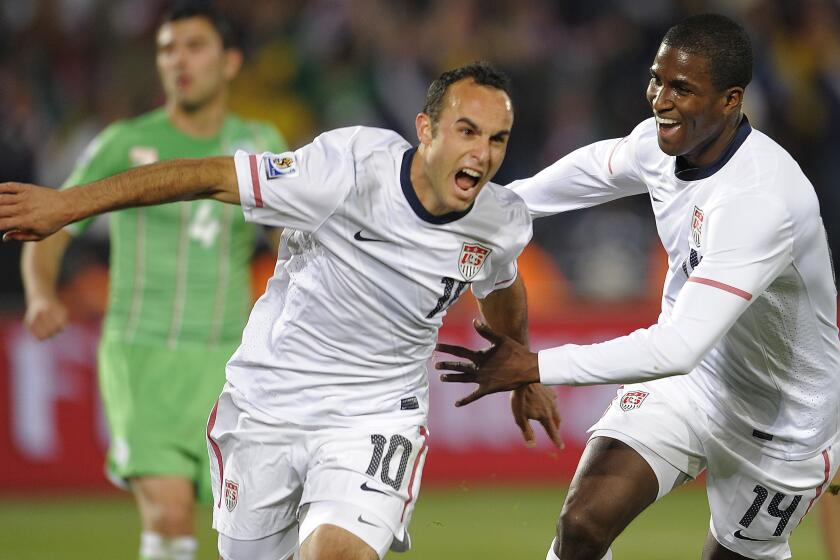
Landon Donovan often reflects on how the 1994 World Cup in Pasadena changed his life. At just 12 years old, he had no idea about the global scale of soccer. He attended one game and was completely unaware of the sport’s international significance. Back then, there were no TV broadcasts or internet access to keep him informed. The tournament opened his eyes to a whole new world of soccer, sparking a passion that would eventually lead him to become one of the most iconic players in U.S. history.
Eight years later, Donovan was scoring the final goal for the U.S. team in the 2002 World Cup, helping the Americans reach the quarterfinals for the first time in modern history. Now, the World Cup is set to return to the U.S., with two of the group stage games taking place at SoFi Stadium in Inglewood. For Donovan, this event represents more than just a sporting spectacle—it's an opportunity to inspire a new generation of young athletes, much like it did for him.
Inspiring the Next Generation
Donovan believes that the World Cup has the power to change lives. He recalls watching young girls at the 2015 Women’s World Cup final in Vancouver fall in love with the game right before his eyes. This experience deepened his connection to the sport and fueled his passion for supporting the national team.
His recent comments on the Unfiltered Soccer podcast highlighted his concerns about some players choosing not to participate in the CONCACAF Gold Cup, the last major tournament before the next World Cup. While he supports the idea of taking a break, he criticized the timing of these decisions, arguing that prioritizing the national team is essential.
Balancing Club and National Team Commitments
Donovan’s own sabbatical from the game in 2013 led to missed opportunities with the national team, but he returned stronger, achieving career-high stats. He understands the need for rest but believes players should manage their breaks carefully to avoid compromising their national team responsibilities.
Christian Pulisic, for instance, cited the need for both mental and physical rest after a demanding season with AC Milan. However, Donovan felt that the timing of his decision was problematic. He argued that Pulisic could have split his break between club and national team commitments, ensuring he remained available for crucial matches.
The Importance of National Team Priorities
The situation with Pulisic highlights a broader issue: the balance between club and national team obligations. For clubs like AC Milan, which rely heavily on key players, taking time off can be challenging. Pulisic, as one of the highest-paid players at the club, was instrumental in their efforts to secure a European spot, making a break difficult.
Despite this, Donovan remains focused on the importance of national team participation. He emphasizes that playing for the national team is an honor that shouldn’t be taken lightly. For him, the chance to play in a World Cup on home soil is something he never experienced, and he wants to ensure that future players don’t miss out on similar opportunities.
A Growing Soccer Culture in the U.S.
The 1994 World Cup marked a turning point for soccer in the U.S., leading to the growth of MLS, increased popularity of the sport, and greater investment in grassroots development. Today, the country has a thriving soccer culture, with talent emerging from all corners.
Donovan recently attended a Real Madrid tryout event, where he witnessed the incredible skill of young American players. He believes that the U.S. has a wealth of talent, but there is still room for improvement in player development. The upcoming World Cup offers a unique opportunity to close this gap and elevate the sport further.
A Crucial Opportunity
As the World Cup returns to the U.S., Donovan sees it as a pivotal moment for the nation’s soccer future. He hopes that the event will not only showcase the country’s growing talent but also inspire a new wave of passionate fans and players. With the right approach, the tournament can help solidify soccer’s place in American sports culture and create lasting legacies for generations to come.

Post a Comment for "Americans should embrace World Cup 2026 as a growth opportunity"
Post a Comment