
Iran's Post-War Weakness Threatens Ethnic Minorities
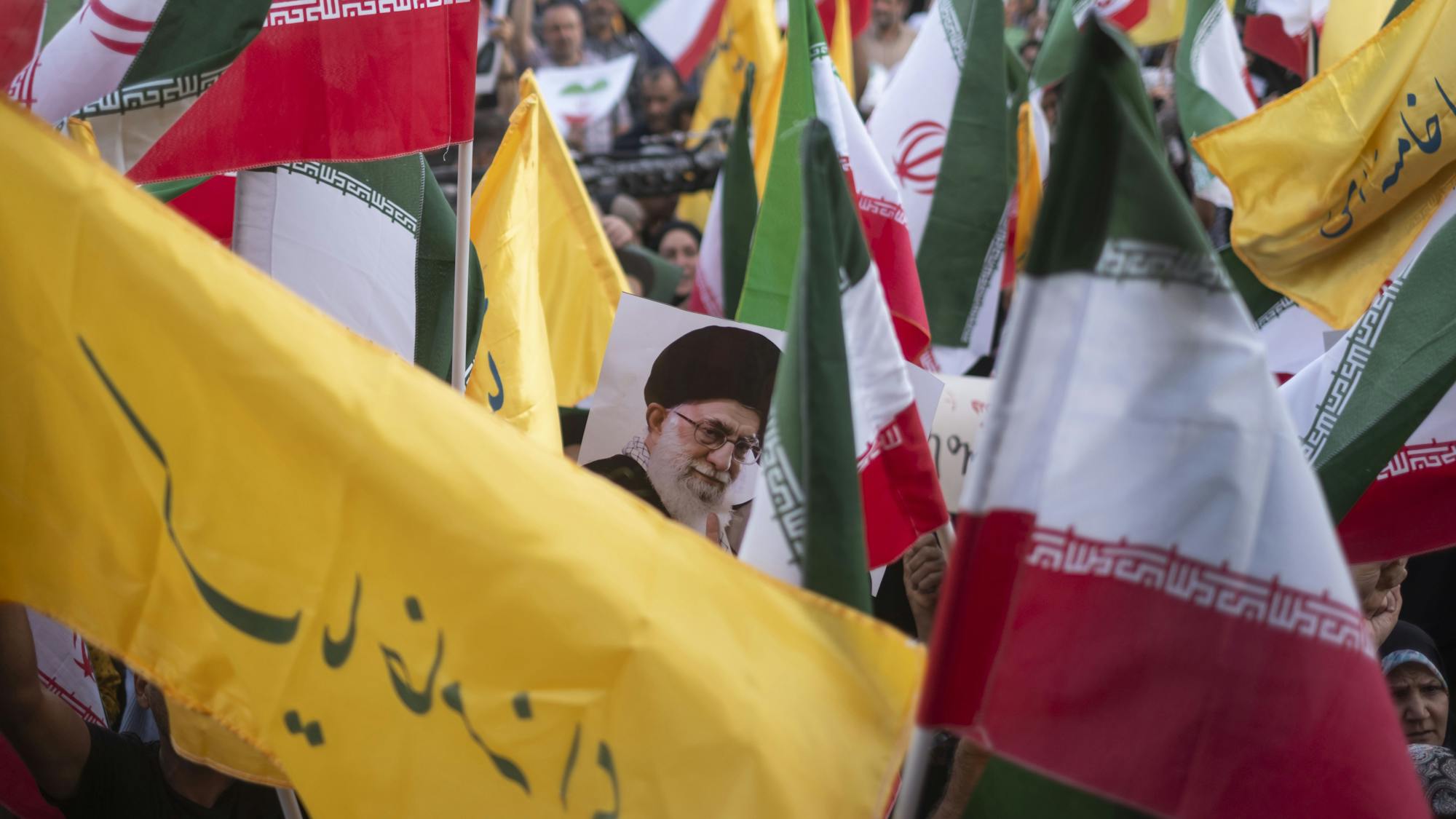
The Iranian Government's Crisis: A Nation in Turmoil
The 12-day confrontation between Iran and Israel in June 2025 may not have escalated into a full-scale regional war, but it marks a potentially critical turning point in Iran’s internal political landscape. The Islamic Republic has faced direct conflict with foreign adversaries before, but this time, it is doing so while significantly weakened militarily, internally fractured, and increasingly alienated from its own population.
Unlike the Iran-Iraq War of the 1980s, when national unity was evident in defending Iranian sovereignty, this conflict saw little public support for the government. While accurate polling within Iran is challenging, the absence of pro-government rallies, low approval numbers for the government before the war, and the subsequent crackdown all indicate widespread dissatisfaction.
As a researcher of different ethnic groups within the country, I know that many Iranians—especially those from historically marginalized communities—viewed the conflict with Israel not as a defense of the nation but as a reckless consequence of the government’s ideological adventurism and regional proxy campaigns. This situation places the Islamic Republic in its most vulnerable position since its establishment after the Iranian Revolution in 1979.
Diminished Soft and Hard Power
The Iranian government’s soft power, once built on revolutionary legitimacy, Shiite ideological influence, and anti-Western propaganda, has eroded dramatically. For decades, the Islamic Republic projected an image of being the only government bold enough to confront the United States and Israel, defend Muslim causes globally, and serve as the spiritual leader of the Islamic world. However, this narrative no longer resonates as it once did.
Even among Shiite populations in Lebanon, Iraq, and Yemen, support during the Israel-Iran confrontation was muted. Inside Iran, propaganda portraying Israel as the existential enemy has lost its grip, especially among the youth, who increasingly identify with human rights movements rather than government slogans.
Iran’s hard power is also getting weaker. The loss of senior commanders and the destruction of important military infrastructure show that the government’s intelligence and security systems are severely compromised. Even before Israel’s attack, reports indicated that Iran’s military was in its weakest state in decades. The real surprise in the recent war came not from the scale of the damage by Israeli and U.S. bombs but from how deeply Israel had penetrated the upper echelons of the Iranian military and intelligence sectors.
Externally Defeated, Internally Adrift
As its power across the region appears diminished, so too is the Iranian government’s grip loosening internally. A 2024 survey by Iran’s Ministry of Culture revealed “discontent” among the population, with over 90% of Iranians “dissatisfied” with the country’s current position. Elections in November 2024 saw a turnout of under 40%, further underscoring Iranians’ discontent with the political process.
Reporting from inside Iran suggests many Iranians blame government policies for the war with Israel. One resident of Rasht told Reuters, “I place the blame on this country’s decision-makers; their policies have brought war and destruction upon us.”
The government has responded with repression, a tactic it has used before. According to government-aligned media, over 700 people were arrested during and immediately after the conflict, accused of collaborating with the Mossad, the Israeli intelligence agency. Ethnic minority regions, particularly Kurdish areas, have been targeted. One day after the ceasefire with Israel, the government executed three Kurdish cross-border laborers who rely on smuggling goods to survive in Iran’s underdeveloped Kurdish provinces. These executions, done without trial or legal counsel, fit a pattern of how the government uses ethnic scapegoating to stay in power.
A Historical Pattern of Repression
Kurds are estimated to number 10-12 million in Iran, making them the third-largest ethnic group after Persians and Azeris. When the Islamic Republic was established in 1979, many ethnic groups supported the revolution, hoping for a more inclusive and democratic Iran. However, these hopes were quickly dashed as the government rejected pluralism and promoted a unifying ideology centered on Shiite Islam and Persian identity.
Khomeini marginalized non-Persian and non-Shiite groups, viewing other ethnic groups with suspicion. He declared jihad against Kurdish resistance groups, labeling them infidels, separatists, and agents of Israel and the United States. Armed with advanced weaponry inherited from the last Pahlavi shah, the government launched a military campaign in Kurdistan province, destroying many Kurdish villages and towns. Approximately 50,000 Iranian Kurds were killed between 1979 and 1988.
After the Iran-Iraq war ended in August 1988, the government, economically strained and militarily weakened, feared a domestic uprising. Instead of embracing political reform, it responded with one of the most brutal crackdowns in Iran’s history. Khomeini issued a fatwa ordering the execution of political prisoners, including large numbers of Kurdish dissidents. Between late July and September 1988, thousands of political prisoners were executed—many without trial or any legal process.
A New Crisis, the Same Strategy
The Islamic Republic appears to be using the same playbook now, but under far more fragile conditions. Given the precarious state of the government, it is fair to ask why there are not more protests now, especially in ethnic minority regions. For many, the answer is fear over what happens next.
Many Kurds have learned from previous uprisings, particularly the 2022 “Women, Life, Freedom” movement, that when they lead protests, they face the harshest crackdown. Over 56% of those killed and persecuted in the subsequent crackdown were Kurds.
Meanwhile, the overall opposition remains fractured and leaderless, both along ethnic lines and in terms of goals. The main opposition groups have traditionally been reluctant to acknowledge ethnic rights, let alone include them in any vision for a future Iran. Rather, they insist on “territorial integrity” as a precondition for any dialogue, echoing the Islamic Republic’s rhetoric.
This is a key legacy of the Islamic Republic: Its propaganda has not only shaped domestic opinion but also influenced the opposition, dividing Iranians at home and abroad. And it has long mobilized the dominant ethnic group against minorities, especially Kurds, by portraying them as internal enemies.

Post a Comment for "Iran's Post-War Weakness Threatens Ethnic Minorities"
Post a Comment