
Is Your City Overloaded With One Type of Tree? It Can Be a Problem
The Importance of Tree Diversity in Urban Environments
Trees have long been a cherished part of urban landscapes, offering beauty, shade, and a sense of tranquility. Beyond their aesthetic value, street trees provide numerous ecological benefits. They help combat the urban heat island effect by cooling the environment, reduce air conditioning needs, and filter pollutants from the air. Additionally, they absorb rainwater, reducing runoff, and serve as habitats for wildlife while also contributing to human health through improved air quality and mental well-being.
A dense and mature tree canopy amplifies these benefits, but many cities face challenges due to the limited diversity of their urban forests. In the United States, many city canopies are dominated by just a few species, making them vulnerable to pests and diseases that could wipe out large portions of the tree population.
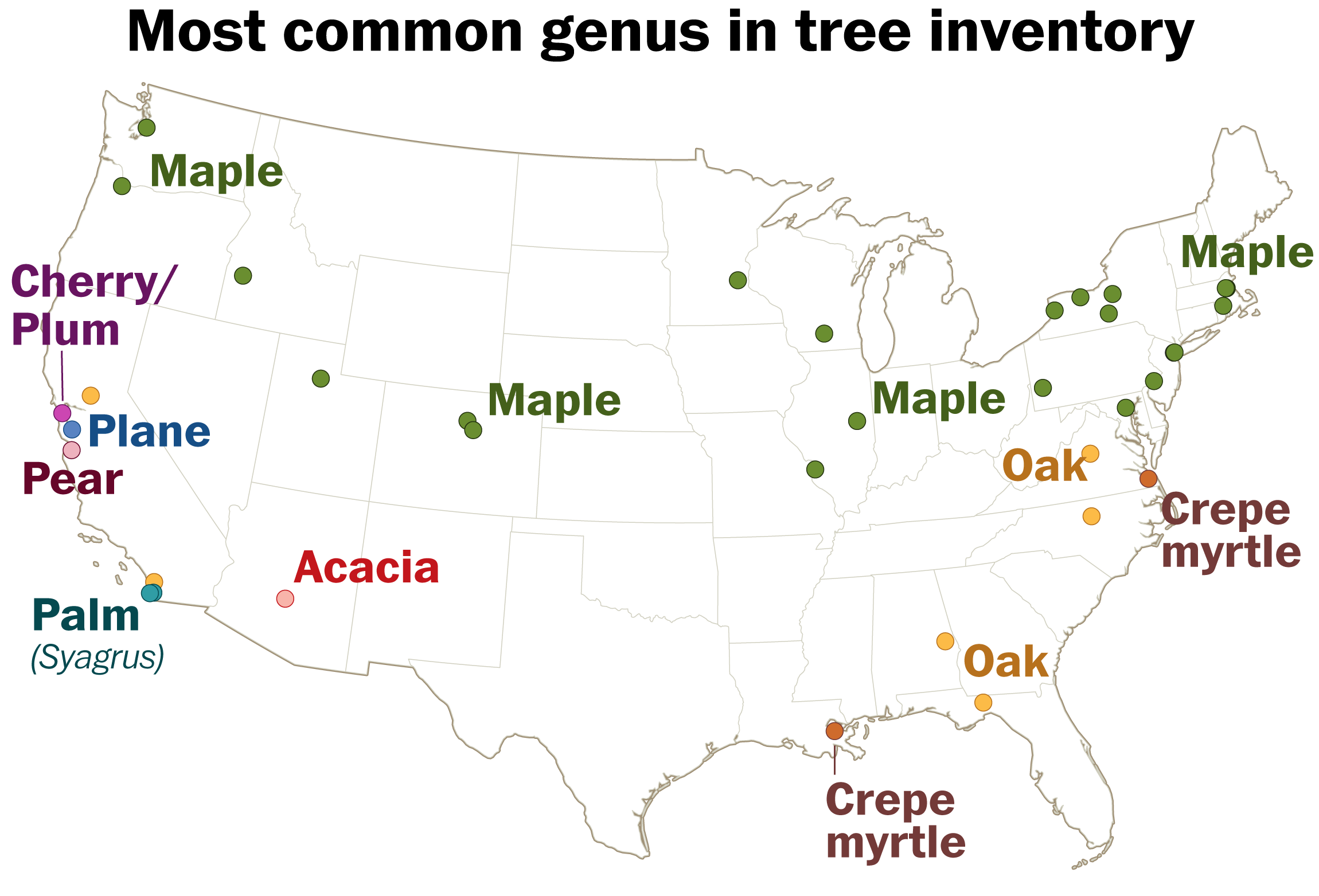
Portland, Oregon, is an example of this issue. Known for its lush greenery, the city has over 250,000 street trees. However, nearly a quarter of them are maples, which are susceptible to pests like the Asian longhorned beetle. Although Portland has 159 different tree genera, three of them make up 37.8% of the total, highlighting the risk of over-reliance on a small number of species.
This lack of diversity is not unique to Portland. A study of 35 cities revealed that the top three tree genera account for at least 25% of the urban forest in all nine cities with street tree counts. Buffalo, for instance, has maples, lindens, and elms making up 54% of its street trees. Fifteen cities had at least one genus representing more than 20% of their tree inventory.
The Consequences of Over-Reliance on Few Species
History has shown the dangers of relying heavily on a single type of tree. In the 1950s, Milwaukee was known for its towering elm trees, which made up 70% of the city’s street trees. However, the spread of Dutch elm disease, carried primarily by bark beetles, led to the loss of nearly all of these trees. Today, less than 1% of the original elms remain, and some neighborhoods have yet to fully recover.
In response, cities turned to ash trees, which were fast-growing and inexpensive. By 2018, ash trees accounted for about 20% of street trees in Wisconsin communities. But when the emerald ash borer arrived in 2002, it quickly devastated these trees. The invasive beetle, which lays eggs in ash bark, causes larvae to tunnel into the tree and block nutrient flow, leading to death within five years. The beetle has already killed over 100 million trees in the Midwest and Northeast, and it now threatens Oregon ash, a critical species in the West.
Why Cities Tend to Plant the Same Trees
The types of trees found in cities often depend on what is available in the market. Nurseries tend to grow species that have historically sold well, and commercial developers prefer trees that are fast-growing, affordable, and proven to thrive in local conditions. This cycle reinforces the dominance of certain species in urban environments.
Andrew Koeser, a professor of landscape management at the University of Florida, explains that when a large portion of the market is driven by buyers who prioritize cost and availability, nurseries focus on growing the most popular species. This creates a feedback loop where dominant trees continue to be planted, limiting diversity.
Additionally, trees take years to mature, while municipal budgets operate on annual cycles. This mismatch makes it difficult for nurseries to justify growing less popular species, as there is uncertainty about future demand.
Strategies for Promoting Tree Diversity
To address the issue of low diversity, experts suggest several strategies. Contracts between cities and nurseries can help reduce the financial risk for growers, encouraging them to cultivate a wider range of species. However, this requires coordinated efforts across multiple levels, from city planners to individual residents.
Philip Potyondy, a sustainable forestry coordinator in Minneapolis, emphasizes the importance of diversifying tree species at the block level. Clusters of the same genus or species create ideal conditions for pests to thrive and spread. Emily Meineke, a professor of urban landscape entomology at the University of California at Davis, notes that homogenous blocks are particularly risky in warming urban environments, where the loss of a large number of trees can hinder the recovery of new saplings.
City residents can also play a role in promoting diversity by participating in tree-planting programs that allow them to influence what is planted in their neighborhoods. Compared to commercial developers, private individuals are more likely to seek out unique and diverse tree species.
Preparing for Future Threats
For cities that have already faced invasive pests, proactive measures have made a significant difference. Milwaukee, for example, has invested $930,000 annually from 2024 to 2029 in emerald ash borer treatments, including insecticides that target both adults and larvae. While costly, these efforts help preserve the ecological and economic value of mature trees.
In Minneapolis, a different approach has been taken: gradually removing public ash trees and replacing them with less common species. This slow but steady strategy has helped reduce the dominance of a few species, improving the resilience of the urban forest.
Conclusion
Ensuring the health and resilience of urban forests requires a commitment to diversity. By adopting more inclusive planting practices, fostering collaboration between cities and nurseries, and engaging residents in decision-making, cities can build more sustainable and resilient tree canopies. As the examples of Milwaukee and Minneapolis show, preparation and proactive management are essential in protecting urban trees from future threats.

Post a Comment for "Is Your City Overloaded With One Type of Tree? It Can Be a Problem"
Post a Comment