
Israel's Military Announces Airdrop Aid for Gaza as Hunger Escalates
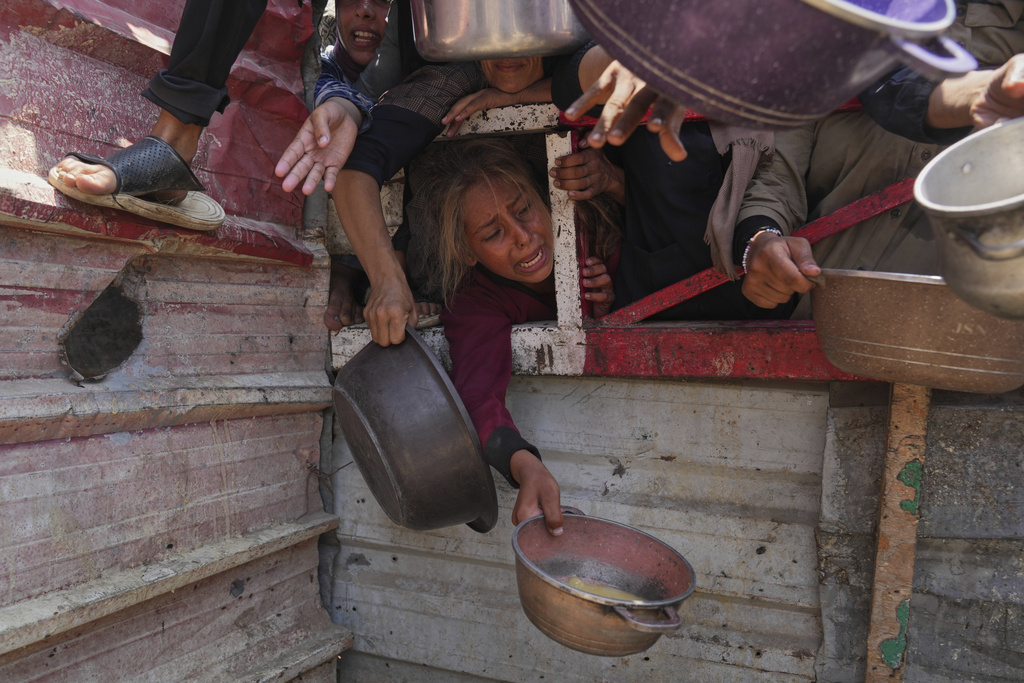
Israel Announces Airdrops and Humanitarian Corridors in Gaza Amid Rising Famine Concerns
Israel’s military has announced that airdrops of aid will begin on Saturday night in Gaza, along with the establishment of humanitarian corridors for United Nations convoys. This comes after growing reports of starvation-related deaths and increasing international concern over the deteriorating humanitarian situation in the region.
The statement came after months of warnings from experts about the potential for famine due to Israeli restrictions on aid. International criticism, including from close allies, has intensified as several hundred Palestinians have been killed in recent weeks while attempting to reach food distribution sites.
The military did not specify where the airdrops or corridors would be located. However, it stated that it is prepared to implement humanitarian pauses in densely populated areas. The Israeli foreign ministry added that these pauses would start on Sunday in “civilian centers” alongside the new corridors.
Despite these measures, the military emphasized that combat operations against Hamas continue in Gaza. It also claimed there is “no starvation” in the territory, though most of the population of over 2 million people has been displaced into a shrinking area with minimal infrastructure. Many rely heavily on external aid for survival.
Desperate Conditions in Gaza
Witness accounts from Gaza paint a grim picture. Health workers are reportedly so weakened by hunger that they have resorted to IV drips to maintain their ability to treat the malnourished. Parents have shown their emaciated children, and wounded men have described desperate attempts to reach aid under gunfire.
The military said airdrops would be conducted in coordination with international aid organizations, but the exact locations remain unclear. There is also uncertainty about the role of the recently established Israeli-backed Gaza Humanitarian Foundation (GHF), which aims to provide an alternative to the U.N. aid system. GHF chair Johnnie Moore stated the group is ready to assist.
Deadly Incidents Near Aid Sites
At least 53 people were killed in Israeli airstrikes and gunshots overnight and into Saturday, according to Palestinian health officials and local ambulance services. Most of the victims were shot while seeking aid.
In the north, deadly Israeli gunfire was reported twice near the Zikim crossing. In one incident, at least a dozen people waiting for aid trucks were killed, as reported by Shifa hospital staff. Israel's military claimed it fired warning shots to disperse a crowd, citing an immediate threat.
A witness, Sherif Abu Aisha, described how people ran toward what they thought were aid trucks but were instead met with gunfire from tanks. His uncle was among those killed.
On Saturday evening, Israeli forces killed at least 11 people and injured 120 others when they fired at crowds trying to access an entering U.N. convoy. Dr. Mohamed Abu Selmiyah, director of Shifa hospital, warned that the death toll could rise in the coming hours.
Challenges with Airdrops and Aid Delivery
While Jordan requested the airdrops and plans for food and milk formula deliveries have been announced, the head of the United Nations agency for Palestinian refugees, Philippe Lazzarini, warned that airdrops are costly, inefficient, and can even result in civilian deaths. He argued that they won’t reverse the rising levels of starvation or prevent aid diversion.
Although Israel claims it allows unlimited aid trucks into Gaza, the U.N. says its operations are hindered by military restrictions and instances of looting. Hamas-run police previously provided security for aid delivery, but they have been unable to operate after being targeted by airstrikes.
Growing International Pressure
Israel faces mounting pressure from more than two dozen Western-aligned countries and over 100 charity and human rights groups. These organizations have called for an end to the war and criticized Israel’s blockade and new aid delivery model.
More than 1,000 Palestinians have been killed by Israeli forces since May while trying to get food, mostly near aid sites run by the GHF, according to the U.N. human rights office. Charities and rights groups report that their own staff struggle to secure enough food for those in need.
Inside Gaza, children with no preexisting conditions have begun to starve to death. Wael Shaaban, feeding his family of six at a charity kitchen in Gaza City, expressed the desperation of many: “We only want enough food to end our hunger.”
Stalled Ceasefire Talks
Ceasefire talks between Israel and Hamas remain stalled. The U.S. and Israel recalled negotiating teams on Thursday, leading Israeli Prime Minister Benjamin Netanyahu to suggest considering “alternative options.” Meanwhile, a Hamas official said negotiations would resume next week, calling the team’s recall a pressure tactic.
Egypt and Qatar, mediators alongside the U.S., have indicated talks will restart but have not set a date. Zahiro Shahar Mor, nephew of a hostage held by Hamas, expressed frustration: “Our loved ones do not have time for another round of negotiations, and they will not survive another partial deal.”
Ongoing Conflict and Casualties
According to Gaza’s Health Ministry, more than 59,700 Palestinians have been killed during the war. While the ministry does not distinguish between militants and civilians, it states that more than half of the dead are women and children. The U.N. and other international organizations consider this data the most reliable source of casualty information.
As the conflict continues, the humanitarian crisis in Gaza shows no signs of abating, with families struggling to survive amid ongoing violence and limited access to essential resources.

Post a Comment for "Israel's Military Announces Airdrop Aid for Gaza as Hunger Escalates"
Post a Comment