
Marines Risk Future in Tankless Conflict
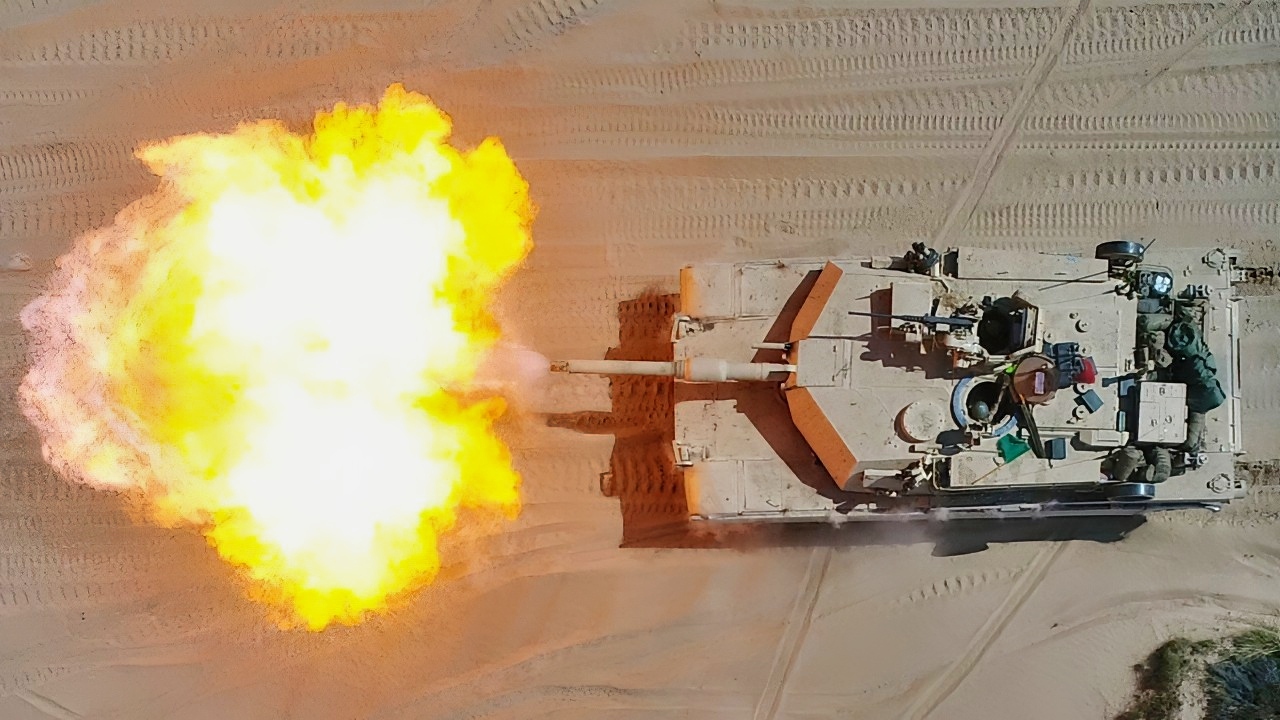
The Marine Corps' Decision to Eliminate Its Tank Force
In 2020, the U.S. Marine Corps made a significant and controversial decision to eliminate its entire force of M1 Abrams tanks. This move, which is still under debate, was part of a broader strategic shift aimed at adapting to modern warfare challenges.
The primary rationale behind this decision was a strategic pivot towards creating a lighter, more agile force optimized for island-hopping warfare in a potential conflict with China. The Marine Corps believed that focusing on speed and mobility would allow them to operate more effectively in the Indo-Pacific region. This approach emphasized the use of missiles and drones, which have become increasingly dominant in modern combat scenarios.
War games and simulations conducted by the Marines suggested that future conflicts would be dominated by missile strikes and drone technology. These predictions appeared to be validated by the experiences in Ukraine, where tanks suffered heavy losses due to anti-tank missiles and loitering munitions. Many of the American M1 Abrams tanks sent to Ukraine were knocked out by Russian forces, highlighting the vulnerability of traditional armored units in contemporary warfare.
Despite these developments, critics argue that a Marine Corps without tanks could be dangerously vulnerable in large-scale land wars, which the Corps has historically engaged in. The loss of tank capabilities raises concerns about the Marines’ ability to conduct operations in urban environments or on flat terrain, where tanks have traditionally played a crucial role.
Executing an Evolving Strategy
The decision to phase out the M1 Abrams tanks resulted from a strategic shift that aimed to make the Marine Corps more nimble and adaptable. The goal was to focus on island fighting supported by missile strikes, with the Army taking on the role of managing large tank formations. Former Marine Corps Commandant Gen. David H. Berger emphasized that while the Army is essential for winning wars, the Marine Corps is tasked with winning battles.
This shift allowed the Marines to return to their World War II roots, operating in closer cooperation with the Navy. It also provided financial benefits, as funds previously allocated for tanks were redirected towards missiles and amphibious assets. The Marine Corps also sought to enhance its capabilities in jungle warfare and rapid territorial seizures, which are seen as critical in potential conflicts with China.
The Rise of the Littoral Regiment
As part of this transformation, the Marine Corps introduced a new concept known as the "littoral regiment." This unit combines dismounted fighters with artillery, logistics, and anti-air batteries. The objective is to enable small units of 75 Marines down to squad-sized elements to disperse across vast distances but remain at key chokepoints to support naval operations.
However, this strategy raises questions about the Marines’ readiness for large-scale land wars, such as those seen in Europe. A lighter force without tanks may struggle in all-out warfare on rural terrain, and urban combat could become more challenging without armored support. Experts like Mark Cancian, a CSIS fellow and former Marine, warn that the Corps' current design may not be suitable for the land campaigns it is most likely to face.
The Future of Warfare
The Marine Corps is betting heavily on future conflicts being fought in the Pacific, where speed and agility will be critical. By eliminating tanks, the Corps aims to position itself as a Day One force capable of countering China’s anti-access/area denial strategy. This approach involves quickly inserting Marines into battle to challenge Chinese aggression against Taiwan or other U.S. allies.
While the war in Ukraine has demonstrated the vulnerabilities of tanks, there is still a need for armored protection in certain scenarios. Tanks could serve as mobile artillery in the rear, supporting infantry operations. In a potential conflict around Taiwan, the Marines may rely on anti-tank missiles and drones, similar to the tactics used in Ukraine.
Despite the uncertainties of future warfare, the Marine Corps has shown a willingness to make difficult strategic decisions and adapt to changing threats. The elimination of its tank force represents a bold move, one that reflects a commitment to redefining its role in modern military operations. Whether this decision proves to be the right one remains to be seen, but it underscores the ongoing evolution of military strategy in response to emerging challenges.

Post a Comment for "Marines Risk Future in Tankless Conflict"
Post a Comment