
Oregon Tribes Prioritize Community, Language, and Culture in Early Education
Preschoolers Speak in Chinuk Wawa, a Language of Cultural Revival
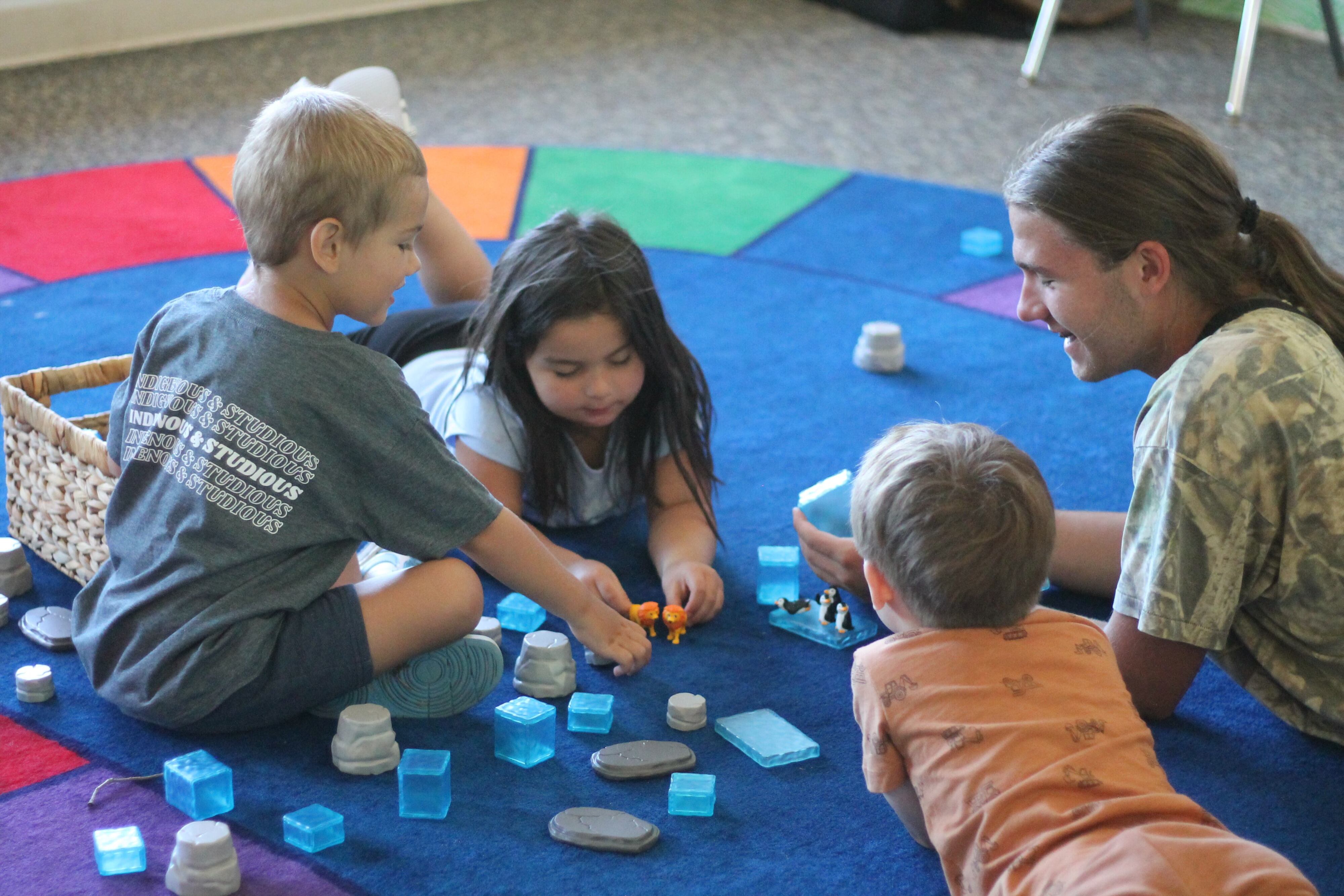
Eleven preschoolers are spread out across a classroom at Shawash-iliʔi Skul, an immersion school run by the Confederated Tribes of Grand Ronde in northwestern Oregon, chatting away. However, their conversation isn’t just in English. It’s interwoven with Chinuk Wawa, a historical language of the tribe. For the children, this is normal, but it holds deep significance for tribal members who have long fought to preserve and promote cultural traditions alongside academic learning.
The teachers, whom the children affectionately call “auntie” and “uncle” in Chinuk Wawa, move around the room, helping with tasks like sharpening pencils or joining in on games. Their presence reinforces a sense of community and belonging that is central to the school's mission.
Creating such early learning programs has not been without challenges. Efforts to establish a dedicated Tribal Early Learning Hub over the past two years were met with obstacles in 2023, despite $2 million in state and federal funding. Concerns about tribal sovereignty among the nine tribes in Oregon led to setbacks. However, tribal education advocates regrouped and successfully lobbied lawmakers to pass a bill creating a new fund that allows each tribe to design its own early education approach.
A Rocky Path to the Fund
For many years, tribal leaders have encountered barriers when trying to pass along their cultures, languages, and traditions through early education. Oregon’s financial support for early childhood education is distributed through 16 geographic hubs, but accessing these funds was a significant hurdle for some tribal nations.
Angela Fasana, Grand Ronde’s education manager, noted that while some hubs were welcoming and shared resources, others were less so. In 2021, state lawmakers attempted to address this issue by creating a dedicated Tribal Early Learning Hub. However, this initiative did not fully meet the needs of the tribes, as they were often required to go through third-party intermediaries to access the funds.
Valerie Switzler, education manager for the Confederated Tribes of Warm Springs, explained that the process was further complicated by frequent changes in leadership within the Department of Early Learning and Care’s tribal affairs positions. This instability made it difficult for tribes to navigate the system effectively.
The New Tribal Early Learning Fund
After a year of discussions among tribal leaders, a new Tribal Early Learning Fund was established with bipartisan support in June. This fund aims to recognize the unique needs of each tribe and empower them to create early learning systems rooted in their language, culture, and values.
Paulina Whitehat, the state early learning department’s tribal affairs director, emphasized that the fund represents a shift toward more self-directed approaches to early education. While Governor Tina Kotek’s recommended budget included $4.75 million for the initiative, lawmakers reduced it to approximately $700,000 for the 2025–2027 biennium. This amount is enough to maintain current services but not to expand them significantly.
Councilor Julie Siestreem of the Confederated Tribes of Coos, Lower Umpqua and Siuslaw expressed relief that the program could continue, even if it meant no growth. She mentioned that her tribe currently lacks a dedicated space for early childhood education and would use additional funds to build one.
Cuts to Other Early Learning Funding
Four tribes—Grand Ronde, Warm Springs, Cow Creek Band of Umpqua Tribe of Indians, and Klamath Tribes—participate in state programs like Preschool Promise, the Equity Fund, and Oregon Prenatal to Kindergarten. However, legislative cuts to the Department of Early Learning and Care’s budget in May threaten some of these programs.
According to data from the Department of Early Learning and Care, the Equity Fund and Preschool Promise supported 145 tribal children during the 2023–2024 school year. Both programs face a 10% reduction in funding, which has raised concerns among tribal leaders.
Fasana expressed uncertainty about how these cuts will affect the tribes, noting that the state agency is still determining the full impact. Whitehat said the agency is working to understand how these reductions might affect tribal access to funding.
An Indigenous Approach to Education
At Shawash-iliʔi Skul, students learn about their natural resources, the importance of community, their history, and the tribe’s long-held ethics, all while immersed in the Chinuk Wawa language. Jeff Mercier, a longtime teacher at the school, emphasized that identity is a core part of the curriculum.
Justine Flynn, the administrator of the school, hopes that the immersive experience will help her daughter feel proud of her heritage, even if she faces challenges in public school. She worries that her daughter might be mocked for using her native language or singing traditional songs.
Tribal education leaders believe that robust early education services are essential for both cultural preservation and academic success. Studies show that quality early childhood education can improve attendance and performance in reading and math, according to state data.
A Hopeful Future
Fasana and Mercier have already seen positive changes as the immersion school grows and more families begin learning Chinuk Wawa alongside their children. Fasana noted that the language is thriving in her home, thanks to her granddaughter’s enrollment at the school.
The Grand Ronde tribe has also expanded its early childhood education offerings in recent years. Plans include opening at least one more classroom next school year and expanding the language immersion school further.
“We’ve never not had a wait list for early childhood services,” Fasana said. “My dream is to open enough classrooms to meet the needs of our entire community.”
For many tribal education leaders, continuing to grow and expand early childhood support is crucial for the future of their youth, the preservation of their culture, and the strength of their communities.
“This is part of something bigger than just education,” Mercier said. “It’s both school and lifestyle.”

Post a Comment for "Oregon Tribes Prioritize Community, Language, and Culture in Early Education"
Post a Comment