
Ready for Solar Power in Your RV? Key Things to Know First
The Evolution of My Camping Experience
I've always loved camping, but my approach has changed significantly in recent years thanks to the addition of solar panels to my gear. In the past, I would hike deep into the woods with a heavy backpack weighing around forty pounds—something I now realize was excessive. One day, my body sent me a clear message: "Hey, stupid! You're 50!"
The next morning, I was supposed to get up early, break down camp, and hike back to my car. Instead, I ended up taking all the aspirin in my bag and sitting in my camp chair until my aching back was ready to join me for the day's activities. That moment was a turning point. I decided to trade in my backpack for an old RAM 1500 and an older camper shell that fits—even if it doesn’t match the color of the truck.
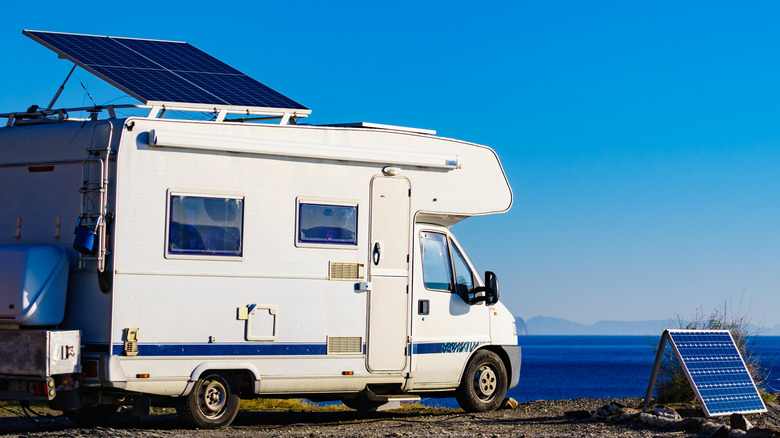
I converted the box of that truck into a mini-RV equipped with a TV, a fan, lights, and sometimes an air conditioner. All these devices, along with my laptop and smartphone, require electricity. Since I don't like being tied to expensive, crowded campsites with electrical hookups, I added solar panels to my modest camping rig.
The Appeal of Solar Power for RVers
Soon enough, I realized that the roughing it part wasn't what I loved about camping. I think this is also true for most RV enthusiasts, which is why there's a growing market for luxury RVs that bring all the comforts of home. However, the one thing that makes all this possible is power, which is why solar panels have become such an important part of RV camping.
For many RVers, solar panels are not essential. Weekend warriors who occasionally go out for two days at a time don’t have significant power needs. They might only need to recharge their phones and keep some lights on. In that case, a fully charged power bank or battery could suffice.
Other campers use gas or propane generators. While these can be a good source of power when used safely, they come with disadvantages. Generators can be noisy, leading to rules about when they can be operated. There are also safety concerns and the cost of fuel to consider. If you have significant power needs and running a generator isn’t right for you, solar panels may be the way to go.
The Freedom of Boondocking
Shore power can certainly meet most electrical needs, but using solar power opens up a whole new world of camping. Camping without shore power or water hookups—known as boondocking—allows you to explore places like the millions of acres of open land in the Western U.S. managed by the Bureau of Land Management. Florida also offers certain areas for boondockers in the central part of the state. These campgrounds are typically free to use, unlike the crowded ones with hookups.
Choosing the Right Solar Panels
If you decide to go with solar panels, there are several decisions to make. Do you want rigid panels or flexible ones? Rigid panels are more efficient and last longer, but they take up more space and require drilling holes in your roof. Flexible panels are lighter and cheaper, but they are less efficient and don’t last as long. They also don’t require drilling holes since they can be mounted with magnets or adhesives.
There are two types of rigid solar panels: monocrystalline and polycrystalline. Monocrystalline panels are more efficient, converting more sunlight into power. They have an efficiency range of 17% to 22%, while polycrystalline panels range from 15% to 17%. This means that monocrystalline panels will take up less roof space. However, they are more expensive.
Calculating Your Solar Power Needs
Next, you'll need to figure out how much solar power you need. Online solar power calculators, like those from Renogy or eTrailer, can help. Enter the wattage for each appliance you’ll use, or let the calculator estimate based on standard power usage. Once you know how many watt-hours (Wh) you'll use, you'll have a better idea of how much wattage (W) you need from your solar panels.
Suppose the calculator says you'll use 400Wh throughout the day. That means you'll need at least 400Wh from your solar panels during the day to keep your batteries topped off. You want to keep your battery topped off during the day so it can carry you through the night when your panels aren’t generating power.
Essential Components Beyond Solar Panels
Solar panels are just one part of the puzzle. Batteries are equally important. Remember, solar panels won’t help if you intend to use power after the sun goes down. You’ll need batteries that store enough power to get you through the night, and maybe even the next day if it's overcast. Lithium batteries are popular among campers because they’re lighter, more efficient, and last longer than alternatives like AGM and lead acid batteries.
In addition to cables, you'll need a charge controller and an inverter. A charge controller regulates the voltage from your solar panels to your batteries, preventing overcharging. An inverter converts DC power from your battery to AC power, allowing you to plug in your appliances. Fortunately, solar power conversion kits that include panels, charge controllers, and inverters are available. Some even include batteries.
Are Solar Panels Worth It?
A basic 400W solar kit that includes panels, batteries, an inverter, and charge controller costs around $1,500. If you're using electricity to heat or cool your RV, you'll need more power, which means spending much more. For instance, a 1600W system can run you around $5,000. Considering the average campsite with electrical hookups runs around $30 per night, you’ll need to do a lot of boondocking before the system pays for itself.
Let’s be honest—you didn’t buy your continually depreciating RV as a financial investment, despite what you may have told your spouse. Money spent on camping isn’t an investment for the future; it's an investment for the here and now. You're building memories, often with loved ones, in the outdoors. So, if you have the funds and solar panels help you enjoy camping that much more, they might just be worth the expense.

Post a Comment for "Ready for Solar Power in Your RV? Key Things to Know First"
Post a Comment