
The Secret World of the World's First Medical Text
The Ancient Wisdom of the Sakikkū
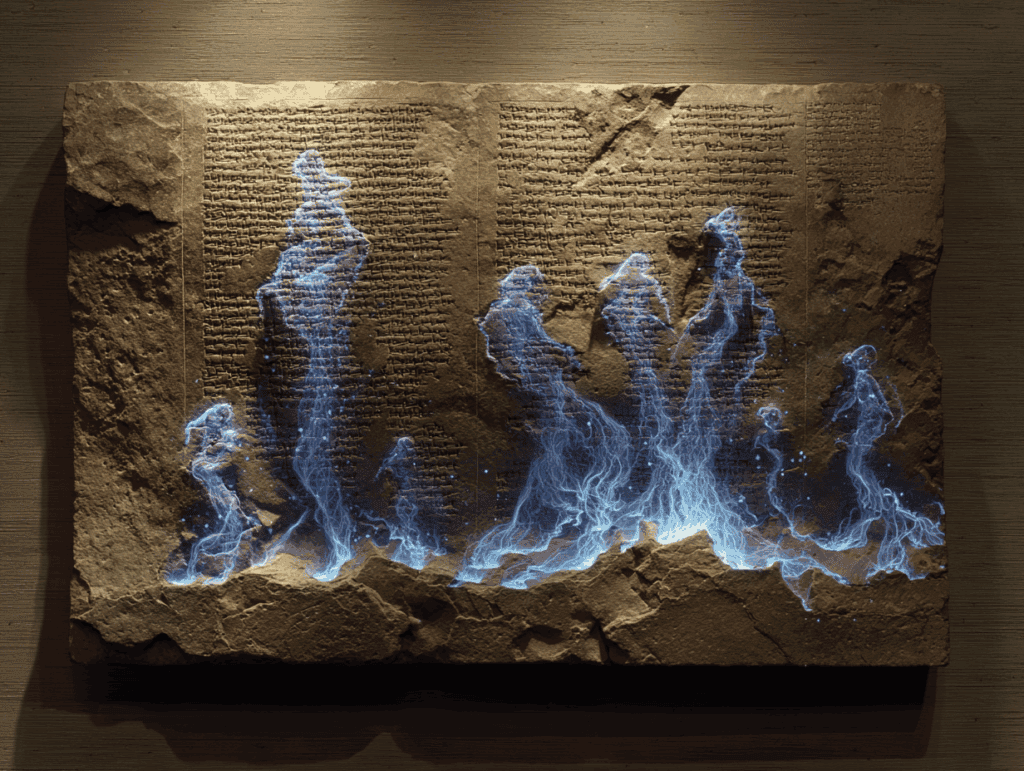
The concept of teething has been understood for thousands of years, with early descriptions dating back to a 3,000-year-old medical text known as the Sakikkū. This ancient Babylonian diagnostic handbook provides a detailed account of various symptoms and conditions, including those related to infant health. It describes how an infant might have a lukewarm body temperature, a feverish head, and excessive drooling due to emerging teeth. According to this text, such issues may last up to 14 or 20 days, but the child is expected to recover.
This remarkable document predates many modern medical advancements by millennia. Before the invention of the stethoscope, before the discovery of bacteria, and even before the time of Hippocrates, the Sakikkū was already in use. Carved in cuneiform on 40 clay tablets, it contains precise descriptions of conditions ranging from gastrointestinal problems to strokes. However, unlike modern medicine, the ancient Assyrians and Babylonians did not attribute illness to biological causes. Instead, they believed that diseases were caused by divine punishment, demonic attacks, or witchcraft.
Disease and the Supernatural
In the ancient world, the relationship between health and the divine was deeply intertwined. When someone fell ill, it was not seen as a result of a virus or genetic disorder. Rather, it was interpreted as a sign of divine displeasure or a supernatural attack. The Assyrian and Babylonian cultures viewed illness as a complex phenomenon, often filled with fear and uncertainty. Their approach to medicine was heavily influenced by their religious beliefs, making the practice of healing a spiritual endeavor.
There were two main types of healthcare professionals in Babylonia: the asû and the āšipu. The asû was a practical healer who treated wounds, prepared herbal remedies, and provided care. They were well-regulated, with legal protections outlined in texts like the Code of Hammurabi. Meanwhile, the āšipu was a scholar-priest responsible for diagnosing illnesses. These priests used the Sakikkū as their primary reference, interpreting symptoms through a supernatural lens. Their role was to determine whether a god, demon, or other mystical force was behind the illness, and to prescribe appropriate rituals or treatments.
The Structure of the Sakikkū
The Sakikkū is more than just a collection of medical knowledge; it is a sophisticated system of diagnosis and treatment. Although it does not have a single author, it is believed to have been compiled over generations, with its final form attributed to a scholar named Esagil-kin-apli. This work served as a comprehensive guide, much like a "Wikipedia" of its time, organizing vast amounts of information into a structured format.
The text is divided into six chapters, each addressing different aspects of illness. The first chapter outlines how to approach a sick person’s home and interpret omens. The second focuses on examining the patient, while the third discusses infectious diseases. Subsequent chapters cover neurological conditions, skin lesions, fevers, women's health, and infant care. The entire structure reflects a deep desire to understand and categorize disease, using a systematic and formulaic approach.
A Diagnostic Matrix
At the core of the Sakikkū is a consistent "if-then" structure. Each entry begins with an observed symptom and concludes with a corresponding interpretation or outcome. For example, if a patient’s face is pale, it may indicate the presence of a ghost. If sweat appears on the face, it could mean the hand of the god Šamaš is upon them, suggesting recovery. These entries reflect a highly organized system, aiming to transform medicine into a predictive science by decoding divine will through empirical observation.
The text also includes unusual signs, such as the sighting of a multi-colored pig, which could be interpreted as an omen of edema. While these premises may seem irrational by today’s standards, the system itself was remarkably structured and logical, reflecting the worldview of the time.
Rediscovery and Legacy
For nearly two millennia, the Sakikkū lay buried beneath the sands of modern-day Iraq. Its rediscovery in the 1850s, when British archaeologists uncovered the royal library of King Ashurbanipal in Nineveh, marked a turning point in understanding ancient medical knowledge. The clay tablets, preserved by fire, provided scholars with invaluable insights into the medical practices of the ancient world.
Despite its supernatural framework, the Sakikkū reveals a level of analytical rigor and classification that rivals modern medical systems. It demonstrates an early attempt to organize and understand illness, using a structured approach that mirrored empirical methods seen in later traditions. While the metaphysical explanations may differ from contemporary science, the intellectual effort behind the Sakikkū is undeniable.
Even today, the Sakikkū continues to offer valuable perspectives on the evolution of medicine, reminding us that the quest for knowledge and understanding of the human body has always been a fundamental part of human civilization.

Post a Comment for "The Secret World of the World's First Medical Text"
Post a Comment