
Trump's War Fraud Scandal
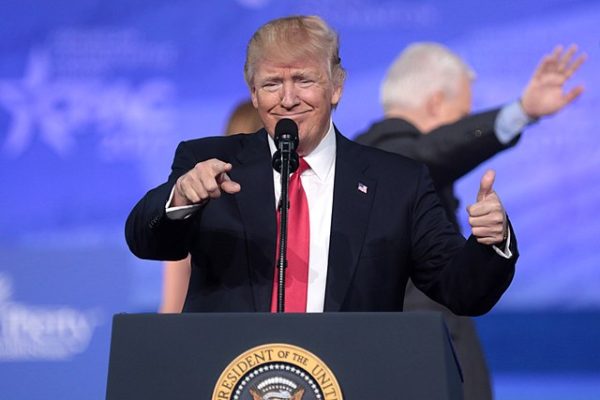
Trump’s Anti-War Rhetoric vs. Military Actions
During the 2024 US presidential election, Donald Trump positioned himself as a strong advocate for ending America's "endless wars." He criticized previous administrations for dragging the United States into prolonged and costly foreign conflicts, promising to bring an end to such engagements. However, his actions as president have revealed a stark contradiction in his stance. By supporting Israel’s military operations against Iran and authorizing attacks on Iranian nuclear facilities, Trump has once again exposed the hypocrisy of his so-called anti-war position.
Trump’s first term was marked by numerous instances that undermined his claims of being anti-war or isolationist. For example, while former President Barack Obama faced criticism for his drone warfare policies, which resulted in significant civilian casualties, the number of drone strikes under Trump increased dramatically. During his first two years in office, there were 2,243 drone strikes compared to 1,878 over Obama’s eight-year presidency. Additionally, the Trump administration eliminated a requirement for reporting drone strike deaths, making these operations less transparent and reducing accountability.
Escalation of Air Strikes and Civilian Casualties
A study by the Watson Institute at Brown University found that civilian deaths from US and allied airstrikes in Afghanistan rose sharply during Trump’s tenure. This increase coincided with the Pentagon relaxing its rules of engagement, leading to a more aggressive air war in the region. Similarly, US air strikes in Yemen saw a sixfold increase in 2017 compared to the previous year. Civilian deaths also spiked from US-led strikes on ISIS in Syria and Iraq during the first Trump administration.
According to Micah Zenko, a senior fellow at the Council of Foreign Relations, this surge in violence may have been influenced by a shift in tone within the military leadership. Then-US Secretary of Defense James Mattis spoke openly about an “annihilation campaign,” aligning with Trump’s 2016 promises to target terrorists and their families. In 2019, Trump vetoed a bipartisan resolution aimed at ending US involvement in Saudi Arabia’s actions in Yemen, further highlighting his disregard for international norms and humanitarian concerns.
Escalating Tensions with Iran
Trump’s decision to assassinate Iranian General Qasem Soleimani in early 2020 significantly heightened tensions between the US and Iran. This move risked triggering a major conflict with potentially devastating consequences for the Middle East. Similarly, his recent attacks on Iranian nuclear facilities could have led to a large-scale war. While Iran’s restraint prevented full-scale escalation, it is important to note that Trump’s actions do not reflect genuine anti-war principles. Instead, they demonstrate a willingness to engage in reckless and illegal military actions, hoping for the best outcome without considering the potential fallout.
The Joint Comprehensive Plan of Action (JCPOA), a deal aimed at limiting Iran’s nuclear program, was terminated by Trump despite Iran’s compliance with the agreement. This move not only escalated tensions but also undermined diplomatic efforts to maintain peace in the region.
The Flawed Concept of “Anti-War” Leadership
Some argue that Trump is an “anti-war” president because he has not initiated any new wars. However, this perspective overlooks the fact that his actions have often avoided conflict through sheer luck rather than a principled stance. The bar for being considered “anti-war” appears low if one can be labeled as such simply for avoiding George W. Bush-style ground invasions. Moreover, it was Joe Biden who ended the longest “forever war” by withdrawing US troops from Afghanistan.
Trump has also threatened to invade Panama and Mexico, actions that contradict his self-image as a peacemaker. His authorization of Israel’s military offensive in Gaza further illustrates his willingness to support aggressive actions, even when they undermine existing ceasefires.
Right-Wing Allies and Their Hypocrisy
Trump’s allies have also shown a lack of consistency in their professed anti-war ideals. Tucker Carlson, a prominent right-wing media figure, once claimed to oppose US involvement in the Israel-Iran conflict. However, after facing criticism from Trump, he shifted his stance, expressing hope that the bombing of Iranian nuclear sites would succeed. This demonstrates a troubling flexibility in his views, where aggression becomes acceptable if it leads to a favorable outcome.
Charlie Kirk, another right-wing commentator, praised Trump’s “surgical strike” on Iran, claiming that Iran was pursuing a nuclear weapon. This assertion contradicts statements from US intelligence officials, including Director of National Intelligence Tulsi Gabbard, who confirmed that Iran was not building a nuclear weapon. Similarly, International Atomic Energy Agency Director General Rafael Grossi noted that Iran no longer had a structured effort to develop a nuclear device.
Steve Bannon, Trump’s former chief strategist, also supported the idea that Trump’s base would back him even if the US became involved in Israel’s conflict with Iran. Most of Trump’s supporters expressed approval of his actions, with only a few exceptions like Representative Thomas Massie and Senator Rand Paul, who demonstrated real anti-war commitments.
Conclusion: A Question of Loyalty Over Principles
What all of this highlights is that loyalty to Trump often outweighs any genuine commitment to anti-war or isolationist principles among his supporters. While forging alliances across ideological lines on critical issues like preventing war is possible, many right-wing figures’ anti-war rhetoric lacks sincerity. Trump’s actions, along with those of his allies, reveal a pattern of inconsistency and opportunism that undermines any claim of principled opposition to war.

Post a Comment for "Trump's War Fraud Scandal"
Post a Comment