
A Former Army Officer's Doubts About China's J-36 'Super Fighter'
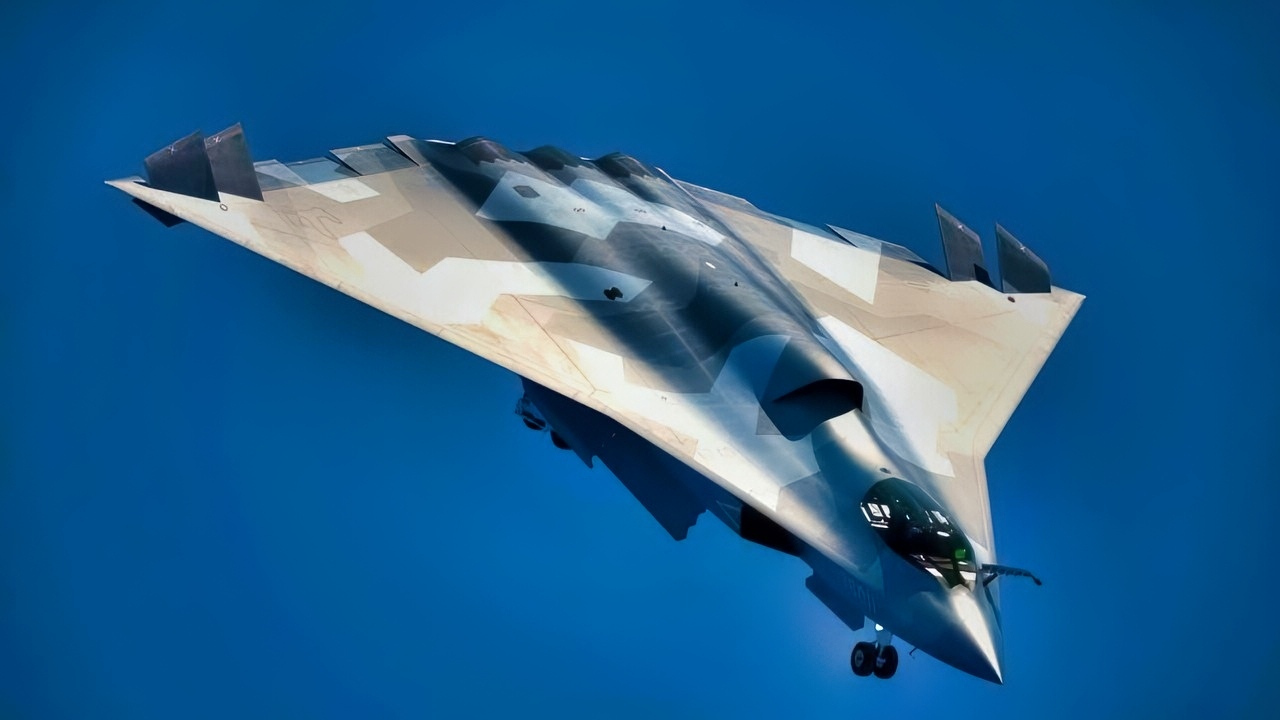
The Mysterious J-36: China's Potential Sixth-Generation Stealth Fighter
China’s J-36 stealth fighter has become a subject of intense speculation and curiosity. This rumored sixth-generation aircraft has been spotted on at least two occasions in the past year, sparking debates about its capabilities and purpose. While much about the J-36 remains unknown, its design features suggest it could represent a significant leap forward in Chinese aerospace technology.
The J-36 is believed to have a tailless delta wing configuration and a unique three-engine setup. These characteristics hint at a design that prioritizes stealth, maneuverability, and power. However, experts are cautious about assuming the J-36 is an operational aircraft. Instead, many believe it may be a technology demonstrator or a prototype intended to test advanced concepts for future fighters.
One of the most intriguing aspects of the J-36 is its potential role in manned-unmanned teaming. If realized, this capability could allow the J-36 to operate alongside drones, enhancing its effectiveness in various combat scenarios. Additionally, the aircraft is thought to feature next-generation design elements that could mark a departure from traditional Chinese warplane manufacturing approaches.
Is the J-36 a Carrier-Based Aircraft?
Some reports suggest that the J-36 may have landed on the Fujian aircraft carrier during a storm. This claim, however, is met with skepticism. The J-36 is likely more of a concept prototype rather than a fully developed carrier-based aircraft. It is possible that the sighting was of a different aircraft, but the idea of the J-36 as a naval asset has captured the imagination of aviation enthusiasts.
The designation "J-36" is not officially recognized, but it comes from a serial number observed on the tail of the aircraft in 2024. This suggests that the J-36 is still in development and not yet ready for mass production or deployment.
The Strategic Implications of the J-36
If the J-36 is real and eventually becomes operational, it could significantly impact the strategic balance in East Asia. China already has the J-35B, a naval version of the J-35A land-based stealth fighter. With three functioning aircraft carriers, China has the capability to maintain two at sea simultaneously, projecting power across the region.
The introduction of the J-36 would add another layer to China’s naval strategy. As a heavy fighter-bomber capable of carrying nuclear-equipped hypersonic weapons, the J-36 could pose a serious threat to regional stability. This capability would give China a new tool to challenge U.S. dominance in the Pacific.
Could the J-36 Be China’s Answer to the F-47?
There is speculation that the J-36 might be China’s response to the U.S. Air Force’s F-47, a futuristic aircraft designed to function as a “flying super computer” with advanced artificial intelligence. The F-47 would be capable of controlling a fleet of Collaborative Combat Aircraft—drones that could assist in ground strikes, intelligence gathering, and electronic warfare.
If the J-36 is indeed a counterpart to the F-47, it would represent a major advancement in Chinese military technology. This development could complicate U.S. efforts to maintain technological superiority in the region. President Donald Trump, who has expressed support for the F-47, might find such developments concerning.
Design and Capabilities of the J-36
According to some estimates, the J-36 is expected to be around 22 meters long with a wingspan of approximately 20 meters. Some sources suggest it could be even longer, up to 26 meters. The aircraft is described as having a low-observable, double delta tailless flying wing planform with a voluminous and blended fuselage. A canopy is present, and there are unconfirmed rumors of a two-pilot cockpit with side-by-side seating.
One of the most distinctive features of the J-36 is its three-engine configuration. These engines, potentially WS-10s or WS-15s, would provide ample power for thrust vectoring and high-altitude performance. Even if one engine fails, the J-36 would still have sufficient power and speed to remain effective in combat.
Development History and Future Prospects
The origins of the J-36 trace back to 2018 when Wang Haifeng, chief designer at the Chengdu Aerospace Corporation, explored various concepts for a sixth-generation fighter. Chengdu submitted eight proposals, tested four prototypes, and conducted extensive wind tunnel testing.
A pivotal moment in the J-36’s development came in October 2021 when a tailless aircraft was spotted at CAC facilities. This sighting aligned with intelligence reports suggesting that Chinese designs would incorporate tailless flying wing or flying arrowhead configurations. These choices were made to enhance broadband stealth characteristics compared to fifth-generation fighters.
Despite the intrigue surrounding the J-36, there is still much uncertainty. Only two confirmed sightings have been reported so far, and the carrier landing remains questionable. While the J-36 could serve as a heavy fighter-bomber capable of carrying nuclear-equipped hypersonic weapons, its actual development timeline and capabilities remain unclear.
China’s growing nuclear capabilities and lack of plans for arms control talks with the United States make the potential deployment of the J-36 even more significant. As the J-36 continues to evolve, it will be essential to monitor its progress and implications for regional security.

Post a Comment for "A Former Army Officer's Doubts About China's J-36 'Super Fighter'"
Post a Comment