
ADATA XPG Mars 980 Blade
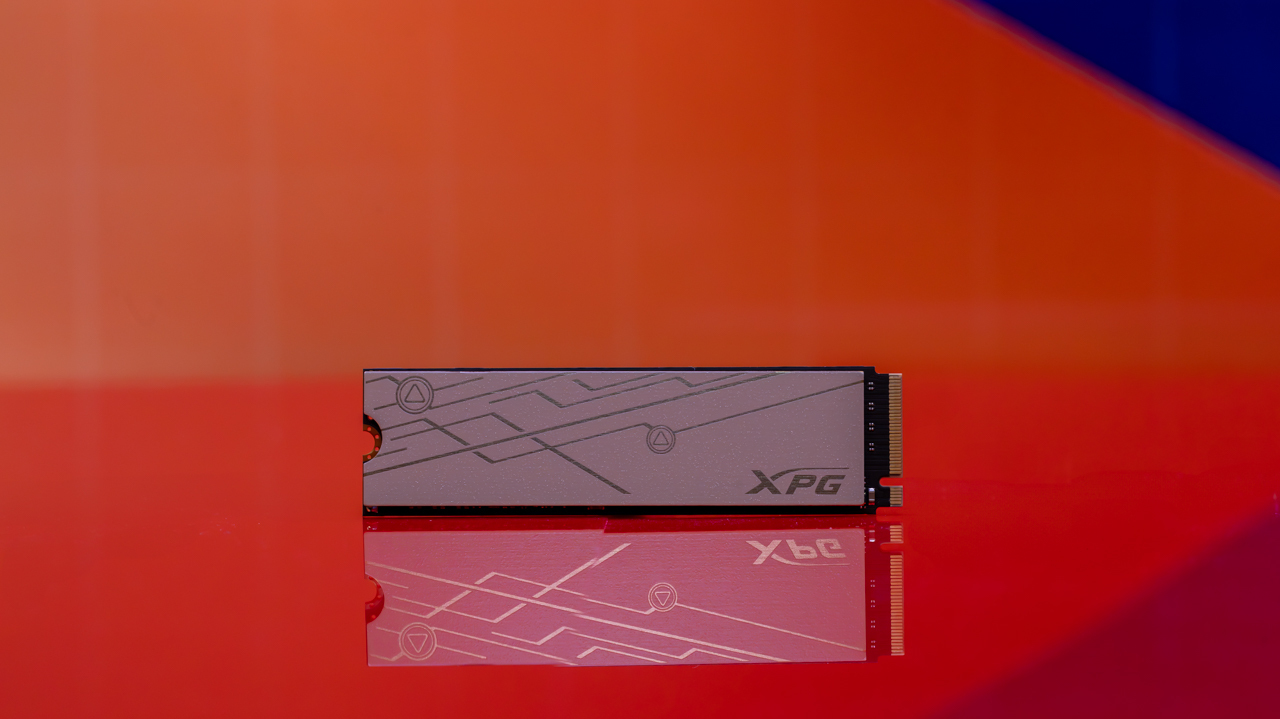
Overview of the ADATA XPG Mars 980 Blade SSD
The ADATA XPG Mars 980 Blade is a high-performance internal solid-state drive (SSD) that utilizes the PCIe 5.0 interface, offering significant improvements in sequential read and write speeds compared to its predecessor. This model is available in capacities of 1TB, 2TB, and 4TB, with prices starting at $129.99 for the 1TB version and $199.99 for the 2TB tested. While it delivers competitive performance, it may not be the top choice for all users due to its overall performance being slightly behind some other models on the market.
Design and Components
The Mars 980 Blade operates on a four-lane configuration using the NVMe 2.0 protocol over a PCIe 5.0 bus. It comes in the standard M.2 Type-2280 form factor, making it suitable for a wide range of systems. The drive features chips on both sides, utilizing Micron's B58R 232-layer 3D TLC NAND flash and a Silicon Motion SM2508 controller. This controller is known for its efficiency and performance, and unlike some DRAM-less SSDs, it includes its own DRAM cache.
A notable feature of the Mars 980 Blade is the included aluminum heat spreader, which helps manage heat effectively. This makes it compatible with systems like the Sony PlayStation 5, although it will operate at PCIe 4.0 speeds when used in this context. The Blade's pricing places it among the more affordable PCIe 5.0 SSDs, though actual street prices may vary.
Durability and Warranty
In terms of durability, the Mars 980 Blade offers a lifetime write capacity (TBW) that surpasses several other drives, including the Corsair MP700 Pro, ADATA Legend 970, and Gigabyte Aorus 10000 Gen 5. It also outperforms the Crucial T700, T705, and T710 in durability ratings. The Seagate FireCuda 540 holds the highest TBW rating for its size. The drive is covered by a five-year warranty or until the rated TBW is reached, whichever comes first.
Compatibility Considerations
To fully utilize the capabilities of a PCIe 5.0 SSD, users must have hardware that supports this standard. This typically includes recent desktops and laptops equipped with Intel 12th Gen or later Core CPUs or AMD Ryzen 7000 or 9000 processors paired with AM5 motherboards. However, even with the correct chipset, it's essential to confirm that the motherboard actually implements a PCIe 5.0-capable M.2 slot.
Performance Testing
During benchmarking, the Mars 980 Blade was tested using a dedicated testbed PC featuring an ASRock X670E Taichi motherboard, an AMD Ryzen 9 7900 CPU, and other high-end components. The drive was evaluated using Crystal DiskMark 6.0, UL's PCMark 10 Storage, and UL's 3DMark Storage Benchmark.
In Crystal DiskMark tests, the Blade exceeded its sequential read and write speed ratings, achieving impressive random 4K read and write results. However, in the PCMark 10 Overall Storage test, the Blade scored lower than many of its competitors, particularly in trace-based tasks. It was notably slow in launching applications like Photoshop and booting Windows.
The 3DMark Storage benchmark showed the Blade scoring second-lowest among the tested drives, indicating that while it excels in straight-line file transfers, it may not be the best choice for gaming or other demanding applications. Overall, the Mars 980 Blade is well-suited for tasks involving large file transfers and data archiving but may not match the performance of some PCIe 4.0 SSDs in everyday use.

Post a Comment for "ADATA XPG Mars 980 Blade"
Post a Comment