
After three failures, SpaceX tests mega rocket upgrades
Testing the Limits of a Revolutionary Rocket
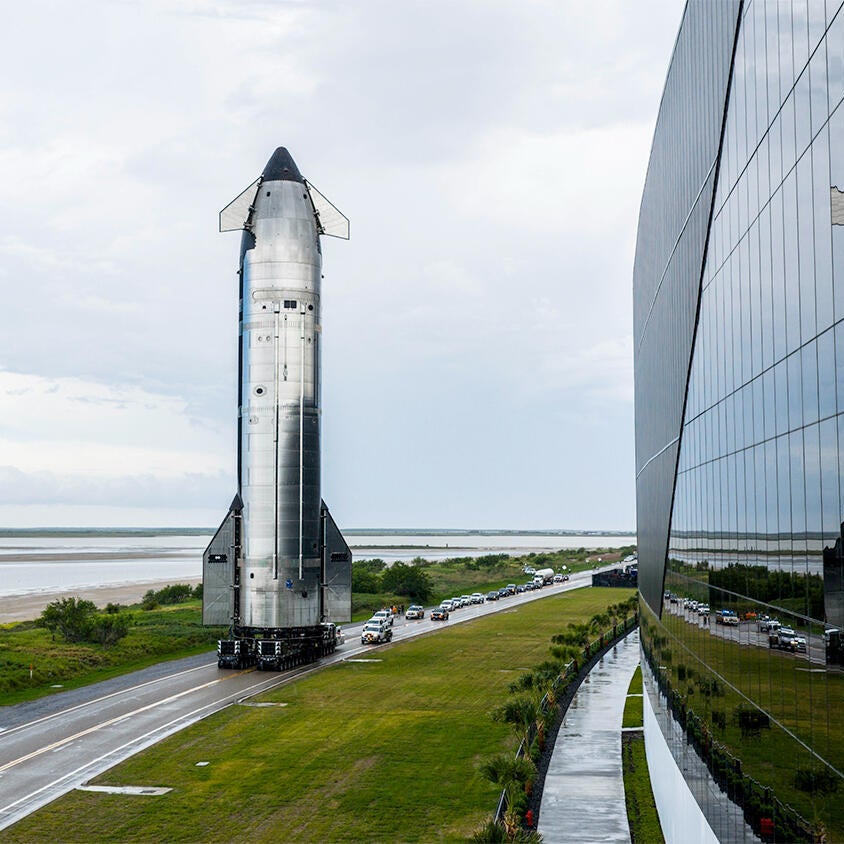
After experiencing three catastrophic in-flight failures in a row, SpaceX has prepared its massive Super Heavy-Starship rocket for another test flight. This upcoming launch is aimed at evaluating a range of upgrades and pushing the vehicle to its limits to better understand its capabilities.
The tenth test flight is scheduled to take place on Sunday evening from the Texas Gulf Coast, weather permitting. The Super Heavy booster, equipped with 33 methane-burning Raptor engines, will generate over 16 million pounds of thrust. It is expected to propel the Starship out of the lower atmosphere before separating and returning to Earth. Unlike previous attempts, this time the Super Heavy is anticipated to splashdown in the Gulf of Mexico rather than land back at the launch pad.
The primary focus of the test will be on the booster's landing burn. For this flight, one of the three center engines used during the final phase of landing will be intentionally disabled. This move is designed to gather data on the ability of a backup engine from the middle ring to complete a successful landing burn. The booster will then use two engines toward the end of its descent, hovering briefly before dropping into the Gulf.
Meanwhile, the 160-foot-tall Starship, powered by six of its own Raptor engines, will follow a suborbital trajectory that will take it halfway around the world. After reentering the atmosphere, the Starship will flip back to a vertical position and perform a rocket-powered descent to splashdown in the Indian Ocean.
During this flight, the Starship's flight computer will attempt several tests, including an in-space engine restart. These tests are meant to verify the performance of various upgrades implemented after recent test flight failures. Additionally, eight Starlink simulator satellites will be deployed.
A significant number of tiles have been removed from the Starship to stress-test vulnerable areas across the vehicle during reentry. The reentry profile is designed to intentionally push the structural limits of the upper stage's rear flaps while at the point of maximum entry dynamic pressure.
Critical Development for Future Missions
Working through the bugs in the giant launcher is essential for SpaceX and founder Elon Musk, who designed the ultra-heavy-lift rocket to launch thousands of next-generation Starlinks and other satellites into Earth's orbit. The rocket also has ambitions for future missions, including carrying settlers and equipment to Mars.
NASA is heavily invested in the project as well, having paid SpaceX more than $3 billion to develop a modified version of the Starship upper stage to carry Artemis astronauts to the surface of the moon in 2027. However, achieving this goal requires 10 to 20 Super Heavy-Starship flights just to refuel the "Human Landing System" (HLS) lander before it can head to the moon. Transferring super-cold liquid nitrogen and oxygen in space has never been attempted, and there are still uncertainties about how SpaceX plans to control propellant temperatures to minimize warming and gas venting.
Given the number of flights that must be successfully executed to demonstrate the reliability NASA expects, the 2027 target date for the Artemis 3 moon landing is considered unrealistic or even impossible by many aerospace observers. China, meanwhile, plans to launch its own astronauts to the moon in 2030, raising questions about whether NASA and SpaceX will reach the moon using the Starship lander before the Chinese do.
A History of Challenges
The sheer size and power of the Super Heavy-Starship make it one of the most powerful rockets ever built, surpassing NASA’s current Space Launch System (SLS) moon rocket in thrust. However, technical problems during development were not unexpected. Despite these challenges, the program has faced setbacks that have raised doubts about the overall mission architecture, particularly the requirement for 10 to 20 problem-free flights in quick succession to fuel the lander for its lunar journey.
The first three test flights of the Super Heavy booster and Starship upper stage in 2023 and 2024 ended in catastrophic failures, with both stages destroyed. The fourth flight in June 2024 was generally successful, with the Super Heavy returning to a controlled splashdown in the Gulf and the Starship following a planned sub-orbital trajectory to the Indian Ocean. Although the ship's fins were damaged, they functioned as required.
The fifth flight in October 2024 saw the Super Heavy return to the launch pad, where mechanical arms snagged it mid-air. The Starship again achieved a controlled splashdown in the Indian Ocean, though it suffered fin damage during reentry. The sixth integrated flight test in November 2024 saw the Super Heavy attempt a return to the launch site, but it was diverted to a Gulf splashdown due to sensor damage. The Starship again splashed down in the Indian Ocean with minimal flap damage.
However, the next three flights in January, March, and May of this year ended in catastrophic failures. Two Super Heavy boosters successfully returned to the launch site, but the most recent broke up over the Gulf while testing a high angle-of-attack entry. All three Starships were destroyed after catastrophic malfunctions, including propellant leaks, on-board fires, and multiple engine failures.
In addition to the flight record, another Starship was destroyed on the ground when a high-pressure nitrogen tank exploded during an engine test firing at the Starbase launch site.

Post a Comment for "After three failures, SpaceX tests mega rocket upgrades"
Post a Comment