
Consumer Watchdog Accuses Hotel Chain of Deceptive Practices Amid FTC Drip Pricing Ban
Consumer Concerns Over Little America Hotels' Booking Practices
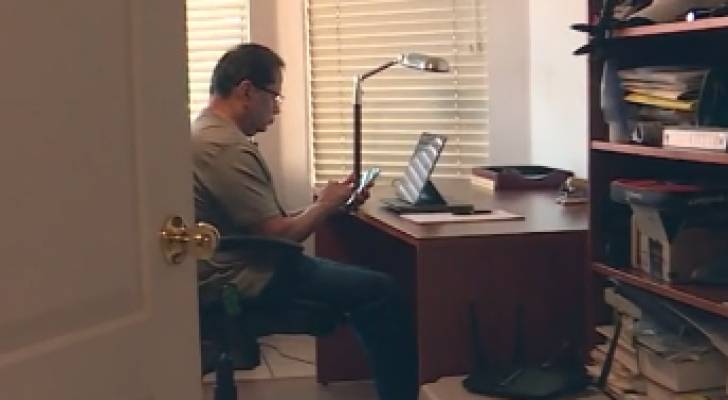
Little America Hotels is under increasing scrutiny after a consumer watchdog uncovered what appears to be manipulation on its booking platform, potentially leading to customers being overcharged. Abhay Padgaonkar, a data analyst known for identifying consumer fraud, has raised concerns about the hotel chain's pricing practices.
“It’s a rip-off of the customers. They’re shown one thing and charged another,” Padgaonkar told KPNX 12News in Phoenix. His findings reveal that a two-night stay at a Little America Hotel located two hours north in Flagstaff saw an increase of 21% compared to the advertised rate. While the online calendar listed prices of $124 and $195 per night, clicking through showed an average of $193.50—far higher than the expected $159.50 for two nights.
This type of pricing strategy is often referred to as "bait and switch." Padgaonkar highlighted that additional line items added $14.12 per night in taxes and fees, which should total $28.24, but instead came to $44. The second night, originally advertised at $195, jumped to $263.
“This is essentially the electronic version of [a store shelf] showing one price, then charging more at the register,” Padgaonkar said.
Widespread Pricing Issues
Reporters with 12News randomly sampled six Little America Hotels across five states: Utah, Wyoming, Idaho, California, and Arizona. Out of 20 nights, 13 showed higher totals than the advertised price—following the same pattern Padgaonkar discovered. The biggest offenders were Flagstaff, Salt Lake City, and San Diego, with prices as much as $30 more per night than advertised.
Padgaonkar noted that he first noticed these pricing issues last year and expressed concern about the potential cost to consumers. “The concern is, you know, $30 more, $60 more, $100 more per booking, and millions of bookings over how long? That could be an enormous amount of overcharge,” he said.
New FTC Rule and Industry Response
This situation comes on the heels of a new rule introduced by the Federal Trade Commission (FTC) in May, banning “unfair or deceptive fees.” The rule mandates that hotels disclose the “total price upfront.” When 12News asked Little America for a response regarding how long the problem has existed, how many customers were impacted, and whether the company would self-disclose the issue to the FTC or Attorneys General in Utah and Arizona, the company responded with the following statement:
“This matter was recently brought to our attention. We are performing an investigation and will act accordingly.”
Padgaonkar hopes Arizona Attorney General Kris Mayes, who recently led a price deception crackdown on Family Dollar, will investigate Little America. He also shared that he called a Little America hotel in Utah on July 4 to walk a reservations agent through the pricing discrepancies. According to Padgaonkar, the hour-long call was recorded by Little America and ended with the agent admitting the issue was “disturbing,” before adjusting the reservation to the lower rate.
“The employee honored the lower cost for the hotel stays,” he said. “I don’t know if I’ll keep the reservation, but for now I have the room booked.”
Days later, 12News reported that the company had removed nightly prices from the calendar view on its website. “While I appreciate the hotel acknowledging the problem and taking quick action, it still leaves many important questions unanswered,” Padgaonkar said. “Will they make the customers whole by honoring the lower prices shown?”
Broader Implications and Consumer Protection
The FTC’s new rule on “unfair or deceptive fees” aims to eliminate “drip pricing,” where a hotel advertises a low room rate and then adds mandatory fees such as resort fees, service charges, and other costs at checkout. This issue is timely and could be costing consumers a significant amount of money. The FTC estimates that the new rule will save consumers up to 53 million hours per year of time spent searching for the “total price.” The time savings is equivalent to more than $11 billion over the next ten years, according to the agency.
A Consumer Reports survey found that 34% of travelers encountered surprise hotel fees at checkout. These “junk” or hidden fees are unexpected charges not clearly disclosed up front, such as resort fees, service fees, booking charges, or convenience fees.
In December 2024, the FTC passed a landmark junk fees rule, requiring full, honest pricing for hotels, concerts, and travel sites. Violators risk federal enforcement. “People deserve to know up-front what they’re being asked to pay—without worrying that they’ll later be saddled with mysterious fees that they haven’t budgeted for and can’t avoid,” FTC Chair Lina M. Khan stated.
State Laws and Consumer Advocacy
A tidal wave of new state laws is also sweeping across the U.S. For example, California enacted SB-478 in 2024, banning businesses from advertising prices without including mandatory fees. Minnesota introduced a law prohibiting hidden fees in food service, lodging, and digital sales. New York now requires all-in ticket pricing—no surprise surcharges allowed.
There is also a multistate coalition, a 19-state alliance (including Arizona, Hawaii, and Pennsylvania) that supports the FTC’s rule and is pushing for local enforcement.

Post a Comment for "Consumer Watchdog Accuses Hotel Chain of Deceptive Practices Amid FTC Drip Pricing Ban"
Post a Comment