
Couch: Michigan State's Struggle Pales Next to Western Michigan's Challenges
The Challenges of a Mid-Major Program in Modern College Football
For Western Michigan University (WMU), competing against programs like Michigan State has always been an uphill battle. From the facilities and resources to the prestige of the Big Ten conference, it's clear that the playing field isn't entirely level. However, there was a time when the competition wasn't as one-sided. Both programs had similar structures in place for compensating their players, primarily through scholarships, and if they could develop NFL talent, they often retained those players throughout their college careers.
This dynamic made matchups like WMU’s visit to Spartan Stadium not just financial opportunities for the Mid-American Conference (MAC) school, but also a chance to prove their strength. These games were showcases for the top talent on both sides, and the difference in skill levels wasn’t always vast. For example, from 2004 to 2024, Michigan State produced 10 players selected in the first two rounds of the NFL draft, while WMU had nine. This number would change if Green Bay Packers’ 2023 second-round pick Jayden Reed — who transferred from WMU to MSU — was counted under the latter program.
A decade ago, the Super Bowl between the Green Bay Packers and Pittsburgh Steelers featured 15 players from the MAC and 15 from the Big Ten. It's hard to imagine current NFL stars like Greg Jennings, Corey Davis, or Taylor Moton playing their senior years at WMU today. Similarly, Darius Phillips, a standout return man and defensive back, would likely be with Michigan State now rather than being one of six NFL draft picks on the Broncos’ 2016 team that went undefeated until a loss to Wisconsin in the Cotton Bowl.
From 2006 to 2022, a MAC team beat a Big Ten team every single year. That included multiple wins in several seasons. However, the past two years have seen the MAC go 0-18 against the Big Ten. This shift is largely due to the rise of the transfer portal, Name, Image, and Likeness (NIL) deals, and revenue-sharing models. Northern Illinois' upset of Notre Dame last season is no longer a realistic scenario in this new era.
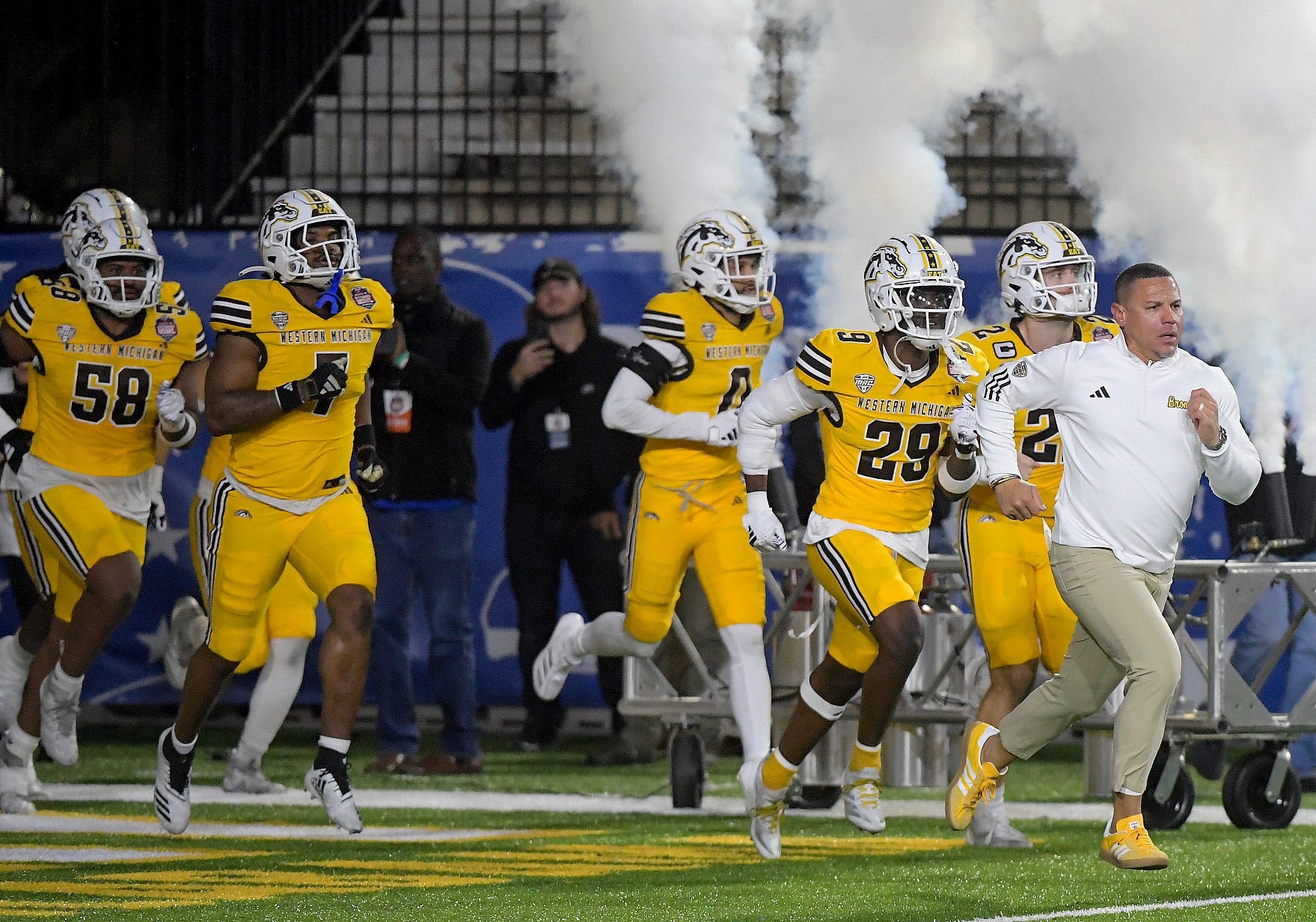
Third-year Western Michigan head coach Lance Taylor remembers the 2003 Huskies team that beat ranked teams like Iowa State and Alabama. But most of his experience with mid-major football has come in this new age. While he accepts much of the changes, he is concerned about the tampering with players on opposing rosters.
“With the transfer portal, NIL and revenue sharing, all the things that are so new to college football now, there is no blueprint,” Taylor said. “It just goes back to what we tell our players — you adapt and overcome, or you die.”
Taylor brings a WMU team to East Lansing that has over 50 new players, including 31 transfers. He expects at least 15 new starters on Friday night. Despite the challenges, he is proud that his program lost only three starters to the transfer portal — something he considers difficult to achieve. Several players with opportunities elsewhere have chosen to stay, which he sees as a sign of the program’s strength.
“In 18 years of coaching football, it's the most new players I've ever had on one roster,” Taylor said. “The real challenge, no matter how many transfers you take, no matter how many transfers you lose, no matter how many high school players you sign, it's who has the ability to connect and build relationships, to get guys to buy in and have that belief in a short period of time.”
One player who has chosen to stay is starting safety Tate Hallock, a legacy Spartan whose father, Ty, played for MSU. His sister, Theryn, is on the MSU women’s basketball team. Hallock led the Broncos in tackles two years ago and had interceptions last season. He was among the first players to commit to Taylor when he was hired at WMU in December 2022.
Junior running back Jalen Buckley, the MAC freshman of the year two years ago, and senior tight end Blake Bosma have also remained with the program.
“I think that's probably one of the things that I'm most proud of,” Taylor said. “They see how close we are. I think they believe what we're doing as a program and that we're going to win. And I think that it shows there's something special at Western Michigan.”
Despite the roster turnover and the need to start a new quarterback and offensive line, WMU still has a chance to succeed in the MAC. They won six games last season and reached a bowl. While other teams in the conference face similar challenges, the parity in the MAC has become a comfort for coaches.
“We're all operating with the same budgets,” Taylor said. “We're all playing with the same blue-collar, Midwest, probably under-recruited kids.”
This has always been the case, but it used to be that when a few of those diamonds in the rough turned out to be blue-chippers, they got to prove themselves against the Big Ten. Now, many of them transfer to bigger programs instead.

Post a Comment for "Couch: Michigan State's Struggle Pales Next to Western Michigan's Challenges"
Post a Comment