
First Laser-Engraved Coin Sparks Counterfeit Warning
The Growing Problem of Counterfeit Coins in the Collecting World
As the American Numismatic Association wraps up its annual convention, often referred to as the “World’s Fair of Money,” in Oklahoma City, the coin-collecting community is still grappling with a persistent challenge: an increasing number of Chinese-made counterfeit coins. These fakes are becoming more common and are frequently sold through online auction platforms like eBay, where unsuspecting collectors may fall for deals that seem too good to be true.
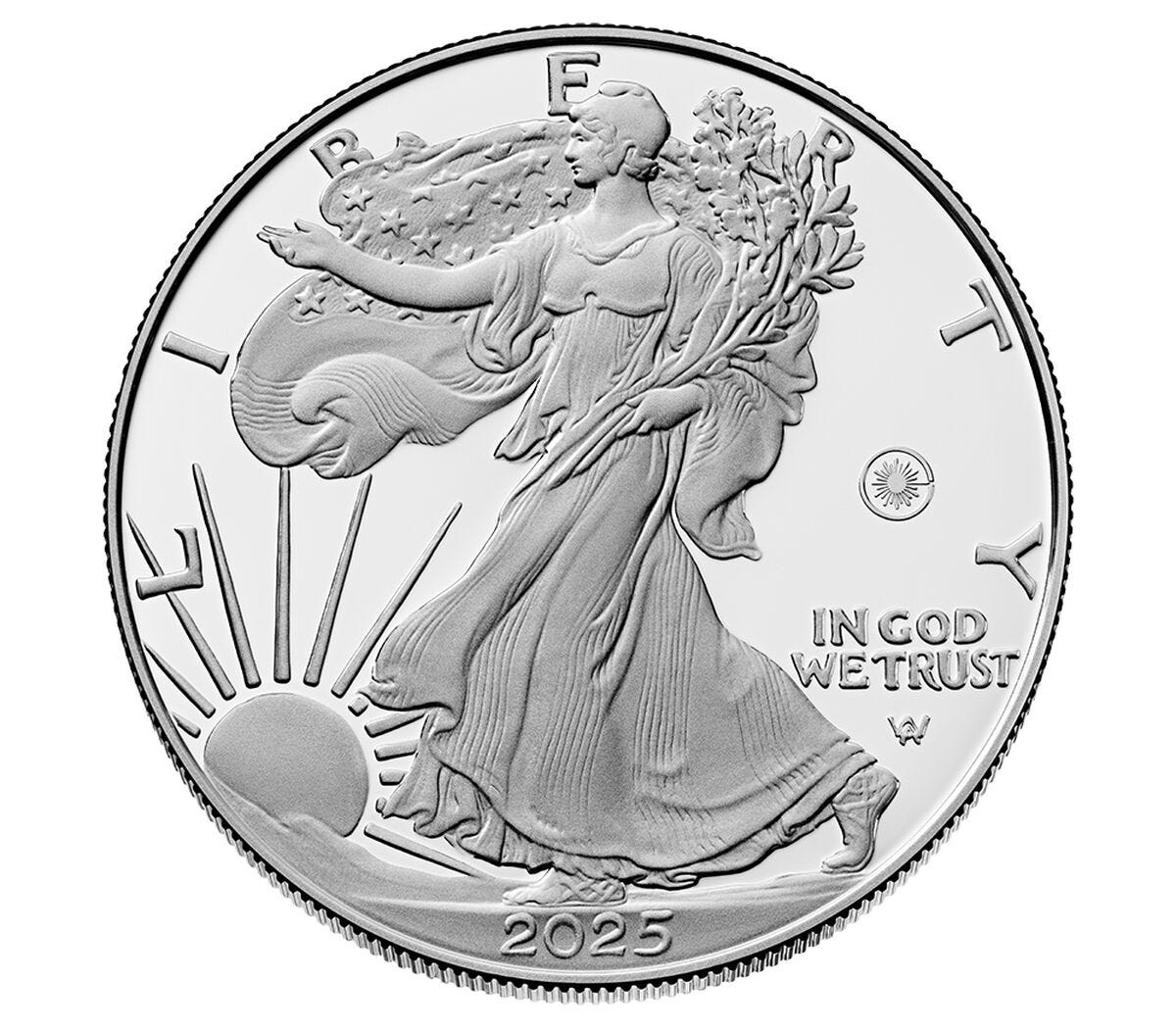
Experts believe that the U.S. Mint is making a strong statement by introducing new technology to combat these counterfeits. The latest release, the 2025 American Eagle Silver Proof, features laser engraving, which is seen as a significant advancement in the fight against fake coins. This move is viewed not only as a technological leap but also as a public warning to counterfeiters.
A New Era in Coin Production
The 2025 American Eagle Silver Proof is part of a long-standing series that began in 1986. It showcases the iconic “Walking Liberty” design on its obverse, originally created by Adolph A. Weinman for the 1916 half-dollar. The reverse displays a landing eagle with an oak branch, a design that has been used since 2021.
What sets this particular issue apart is the use of laser technology, specifically in the form of a privy mark. This design element is typically used for commemorative or marketing purposes. For example, a 2020 American Eagle coin featured a privy mark reading “V75” to mark the 75th anniversary of the end of World War II. The 2025 coin’s privy mark includes a laser beam, which many see as a direct message to would-be counterfeiters.
The Impact of Counterfeit Coins
Counterfeit coins have long been a problem for both collectors and authorities. In 2008, an investigation estimated over 100 counterfeit operations in China, many of which were small-scale. These fakes often appear on online auction sites at prices that seem too low, such as one-ounce silver coins being sold for $16 when the market value is much higher.
John Albanese, founder of Certified Acceptance Corporation, warns that many people fall for these traps. He suggests that if the price of silver is $34 an ounce and a coin is offered for $16, it's almost certainly a counterfeit. He emphasizes that while serious collectors know how to avoid such pitfalls, the general public remains vulnerable.
Challenges with Online Platforms
Although eBay claims to prohibit the sale of counterfeit items, users report that enforcement is often reactive. When one seller is shut down, another quickly takes their place. This cycle of removal and replacement makes it difficult to effectively curb the spread of counterfeit coins.
Detecting Fakes and Ensuring Authenticity
Albanese uses a magnet in his office to detect fake silver coins, which are often made of steel and will be attracted to the magnet. However, even with these methods, detecting fakes can be challenging. The 2025 American Eagle represents a step forward, but experts say it doesn’t solve all issues related to older coins.
The Role of Proof Coins
Proof coins, like the 2025 American Eagle, are known for their high-quality finish. They are struck multiple times with specially polished dies, resulting in a mirror-like surface. The laser-engraved details on the 2025 issue are described as unprecedented, offering a level of detail that has never been seen before.
Despite the excitement surrounding the new coin, Travers cautions that it may not be a sure investment. With a mintage of 100,000, it's considered low, but there are many other proof coins available. He suggests that collectors looking for profit should take advantage of the current buzz, but those interested in completing their collections may find it more appealing.
Looking Ahead
While the new technology offers some protection, experts agree that counterfeiting remains a significant issue. Travers points out that counterfeiters often backdate coins to make them appear older. He advises collectors to purchase coins that are independently certified by grading companies, which provide additional security through encapsulation and holograms.
In conclusion, while the U.S. Mint’s latest innovation is a positive step, it is just one part of a larger effort needed to combat the ongoing problem of counterfeit coins. Collectors must remain vigilant and rely on trusted sources to ensure the authenticity of their purchases.

Post a Comment for "First Laser-Engraved Coin Sparks Counterfeit Warning"
Post a Comment