
I Tracked My Health with WHOOP vs. Oura Ring for 3 Months – Which Won?
First Impressions
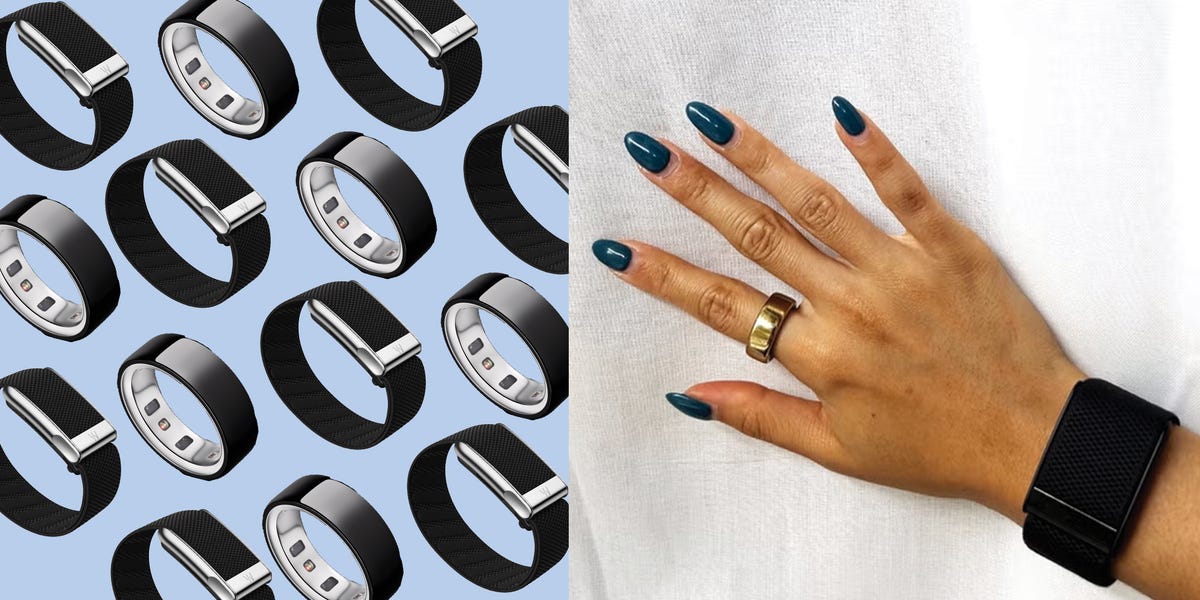
The Oura Ring is a ring, while the WHOOP is a small, flat device that you wear on a wrist band. Each connects to its respective app where you can view the data collected throughout the day. I found that syncing the WHOOP app with the device takes longer unless Bluetooth is kept on constantly, as there's a lot of information to process—especially after a night of sleep. In contrast, the Oura app updates more quickly. There were times when I thought my WHOOP had died overnight because I didn’t see any data until a notification came through 20 minutes later indicating that my sleep stats had processed. It definitely tested my patience.
The Oura app is very user-friendly. Every morning, you wake up to four scores—Sleep, Activity, Readiness, and Resilience—that summarize your data from the previous day, along with helpful charts and guides. The WHOOP app interface is a bit harder to navigate at first, but that’s mainly because it’s so packed with information. For someone ready to dive deep into their biometrics, the WHOOP app is ideal.
Models Tested
Here are the exact models I wore during the testing period:
- Oura Ring Gen 4
- WHOOP 5.0
Ease of Wear
I've often raved about how easy the Oura Ring is to style. It looks like an elegant piece of jewelry, especially if you choose silver or gold. It blends seamlessly with other rings and accessories, and I often forget I'm wearing it because it's so light and unobtrusive.
The WHOOP wristband is a bit trickier to style in a subtle way due to its default thick black band. However, the device can be worn on the bicep, waistband, or even inside clothing if you prefer to ditch the band. You can also purchase various accessories, such as sports bras, boxer shorts, and arm sleeves, which have slots for the WHOOP device.
Battery Life
Both the Oura Ring and the WHOOP last a long time. I could use both devices for multiple days and nights before needing to charge them. As someone who often forgets to charge her devices, I love that both wearables make my life easier—not harder.
One bonus feature of the WHOOP is that it charges with a clip-on battery pack that functions like a portable charger. You can even charge your WHOOP while wearing it, allowing you to wear it 24/7 and collect continuous data.
Sleep Tracking
If there's one thing that convinces you to invest in the WHOOP or the Oura Ring, it's the sleep-tracking feature. Both monitor sleep efficiency, nighttime breathing, the amount of time spent in each type of sleep (like REM or deep sleep), and any awakenings during the night.
The Oura app grades your sleep with a handy score (0-100) each morning, while the WHOOP app provides a sleep performance percentage (0-100%) that shows how much sleep you got compared to what you needed. One standout feature of the WHOOP is its sleep debt calculator, which tells you how much sleep you should’ve gotten based on your current stats, how much you actually got, and how many hours of missed sleep you've accumulated over the week.
This feature was eye-opening for me. There was one morning when my Oura app told me that my readiness score and sleep score were both through the roof, and they were! I felt great and had gotten some good sleep. But looking at my WHOOP data revealed that I had accumulated so much sleep debt that I actually needed one more hour of sleep than I got.
Additionally, both devices are great for checking whether lifestyle changes lead to noticeable improvements in sleep. For example, I noticed some breathing disturbances tracked on both apps, so I cleaned out my AC filter and started using the Jaspr Pro air purifier in my apartment. While this didn’t completely fix the issue, I did notice a slight increase in my sleep scores as a result!
Fitness Tracking
I’ve said this before, and I’ll say it again—the Oura Ring is an excellent smart ring that tracks steps, heart rate, activity, and caloric burn, but it's not primarily a fitness tracker. Sometimes it recognizes activities I’m doing, like boxing or climbing stairs, but other times, it asks if I spent 10 minutes dancing when I was really sprinting for the train.
The WHOOP, on the other hand, has been endorsed by many athletes. The resilience and recovery functions of the Oura Ring are also helpful for training. The WHOOP is great at automatically detecting what you're doing—like kayaking. It logs the activity, how long you spent in each cardio zone, and exactly how strenuous it was.
The strain feature is unique to WHOOP. It calculates how much stress you're putting on your body throughout the day, ranging from 0 to 21. WHOOP also offers a VO2 Max estimation, which is the maximum amount of oxygen your body can use during exercise. A higher VO2 Max means better cardio abilities, making it a useful measure of fitness.
Cycle Tracking
Tracking your cycle is essential for understanding your body. The Oura Ring takes your temperature as you're sleeping and uses it to track fluctuations throughout your cycle, predicting ovulation dates and potential period start dates. It partners with Natural Cycles, an FDA-approved form of birth control, to confirm fertility status and cycle phase.
The WHOOP also offers cycle tracking, with the app telling you your current strain tolerance based on your cycle, helping you plan accordingly. However, the experience is less seamless. The WHOOP monitors overnight skin temperature and allows manual entry of menstruation in your daily journal, but the cycle feature feels more like an afterthought.
Pricing
The Oura Gen 4 ring ranges from $349 to $499, depending on the color. The membership for the app costs $5.99/month after the first month free. The WHOOP bands cost between $0 to $99, with the black band being free with a membership that costs between $199 to $359/year.
While the Oura Ring has a higher upfront cost, it ends up being more affordable in the long run. The annual WHOOP membership can add up, but it all comes down to personal budget and preference.
Final Verdict
After testing both for three months, I can confidently say that both are excellent devices that provide great biometric insights. Could you wear both at the same time? Absolutely, especially if you want to get very granular about your health. But you probably only need to invest in one. Here's a breakdown of reasons to choose one over the other.
Reasons to Get the WHOOP Over the Oura Ring
- Very detailed fitness and biometric insights
- Monitors strain levels, cardio zones, VO2 Max, muscular load, etc.
- In-depth sleep tracking with sleep debt calculations
- Offers custom plans for improving sleep and maintaining consistency
- Great for gym-goers, loved by professional athletes
- Can be worn on the wrist, bicep, or waistband
- Can create a team with friends who own WHOOPs
- Receive one month free for every friend you refer
Reasons to Get the Oura Ring Over the WHOOP
- Gorgeous colorways, looks like expensive jewelry
- Lightweight and lowkey—it doesn't look like you're wearing a fitness device!
- Measures resilience and stress levels
- Sums up complex data into daily scores
- Offers Symptom Radar tracking to detect potential sickness
- In-depth menstrual cycle tracking
- Excellent step tracking
- Can be paired with Natural Cycles
- Offers guided breathwork, sleep tracks, and meditation
- Can create a Circle with friends who own Oura Rings
Why Trust Us?
As Cosmo’s tech expert and shopping editor, Hannah Oh has spent months testing various health trackers and wearable devices like the Oura Ring, Apple Watch, Fitbit, and WHOOP. She takes her sleep and wellness seriously and spends her free time explaining to her friends and family why they should join the biometrics movement.

Post a Comment for "I Tracked My Health with WHOOP vs. Oura Ring for 3 Months – Which Won?"
Post a Comment