
Mexico's Cash Flow Dips as Crackdowns Take Toll
The Impact of Remittances on a Mexican Village
For decades, young people in San Bartolomé Quialana, a small hillside village in Mexico, had limited options: either work the cornfields or head north. Many chose the latter, seeking opportunities as gardeners and cooks in Southern California. Their decision led to a significant economic transformation for the Zapotec community of about 2,500 people. The once modest adobe homes gave way to two-story cement houses with wrought-iron gates, roads were paved, and a basketball court was built near the town center.
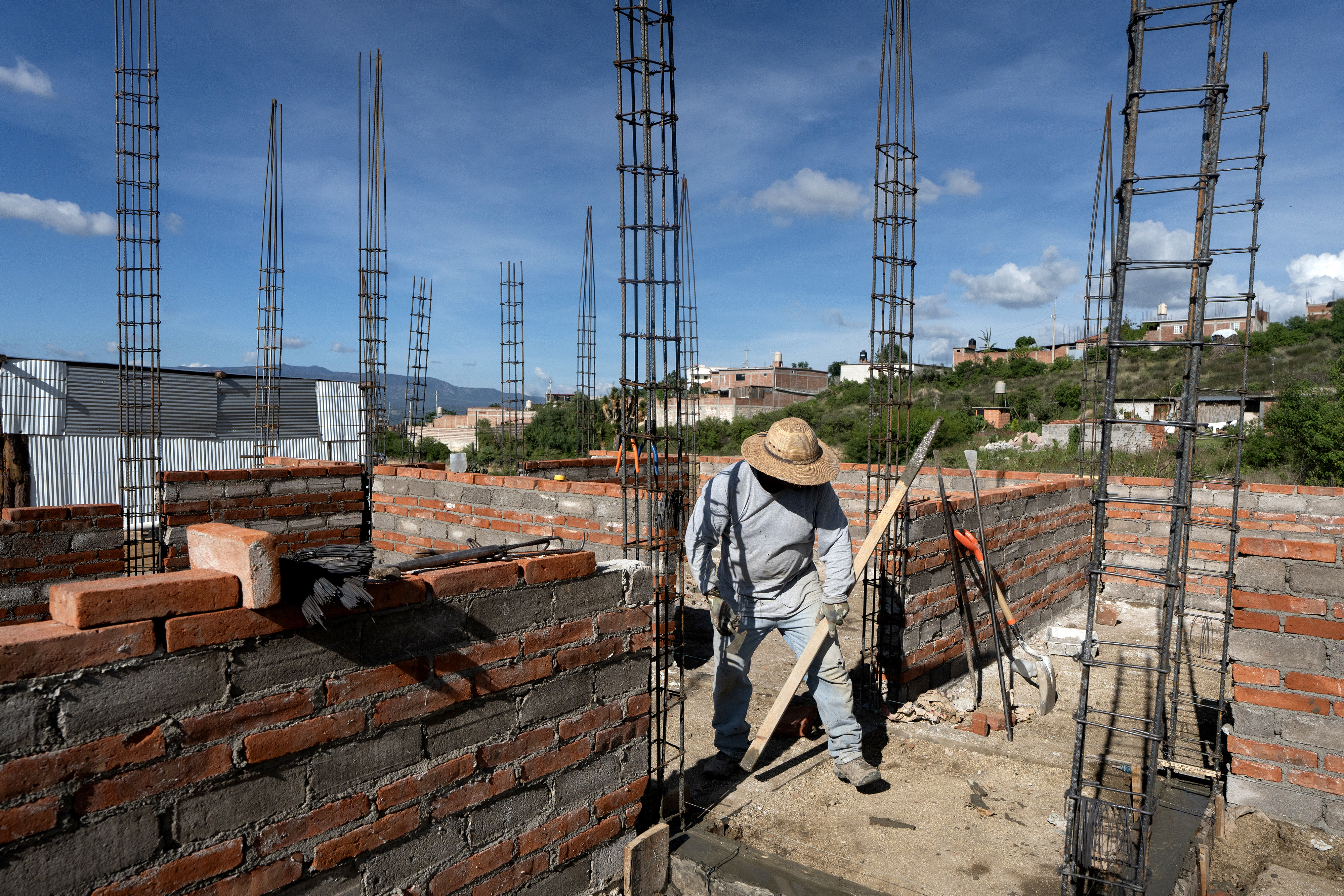
The money sent back by these migrants fueled construction jobs and helped launch small businesses. In March, local leaders unveiled a peach-colored welcome arch at the town’s entrance, honoring “the invaluable help of our countrymen working abroad.” However, the Trump administration's immigration policies have significantly affected this flow of funds. Many migrants have been deported, while others have reduced their work in the U.S., leading to a halt in construction projects. The unfinished "California-style" facades now stand as a testament to this change.
Rosa Gómez Hernández, 37, used to receive regular financial support from her father and a nephew who worked in the U.S. This allowed her to start an embroidery business. However, with rising costs and falling earnings, the monthly payments dropped from $1,500 to $500. Most of this is now spent on medical bills for her brother’s chronic condition, and she expects the amount to decrease further when her 63-year-old father returns home.
“Up north is where we’ve gotten the money for everything — to build houses, to take care of families, to sow in the fields,” she said. “If they don’t send money, the town stops.”
Remittances from the U.S. reached $60 billion last year and contributed significantly to Mexico’s economy. They accounted for about 3.5 percent of Mexico’s GDP, with over 10 percent in Oaxaca, a major source of migrants. June saw a 16.2 percent drop in remittances compared to the previous year, the steepest decline for that month on record. Local officials in Quialana estimate that payments have fallen by a third.
Many blame President Donald Trump and his immigration crackdown, which has led to increased deportations and fear among those still in the U.S. However, some experts argue that trends began before Trump’s presidency, with a declining Mexican population in the U.S. over the past 15 years and weaker ties between immigrants and their homelands.
Manuel Orozco, director of the program on migration and remittances at the Inter-American Dialogue, noted that remittances depend on new migration cycles. He predicted that the decline could cause local economies to contract, potentially encouraging more people to move north, contrary to Trump’s goals.
The Department of Homeland Security defended its policies, stating that American dollars should stay in American pockets and that illegal immigrants should return to their countries. However, in Quialana, the effects of these policies are evident. Families struggle with medical bills, men returning to farming, and half-built houses remaining incomplete.
The Return of Migrants and Its Consequences
Lidia Sánchez, 26, recently returned to Quialana after spending over two decades in Los Angeles. She left to join her father and later obtained DACA protections. Her return marked the end of monthly checks that funded the final touches on her dream home. With increased immigration enforcement in Los Angeles, including at her children’s school, she decided to return.
Her story is not unique. More people are returning voluntarily or being deported. The Gómez family celebrated her homecoming with traditional foods and gifts, but the financial support that once flowed from the U.S. has dwindled.
Men in Sánchez’s family once traveled between Oaxaca and California, working in restaurants or landscaping. The cycle of migration provided a steady income, allowing them to return home and farm. However, as the border became more difficult to cross, many stayed in the U.S., building roots and starting businesses.
Sánchez, who knows little about farming or construction, hopes to restart her eyelash extension business in Los Angeles. Meanwhile, her son, Brice, prefers video games to traditional meals, highlighting the generational shift caused by migration.
The Effects of Reduced Remittances
Artemio Raymundo Pablo, 63, worked 16 years in the U.S. as a landscaper before returning to seek treatment for kidney failure. His children, who live in Anaheim, have stopped working due to fears of deportation, leaving him without financial support. He relies on their help for expensive hemodialysis treatments.
In another part of the village, a half-built house with Tuscan columns stands as a symbol of the stalled development. Gaspar Sánchez Sánchez, the owner’s nephew, faced deportation after being stopped by immigration officers. He borrowed money to continue construction, but the debt may force him to return to the U.S. if conditions do not improve.
The impact of reduced remittances is felt deeply in Quialana. While the town once thrived on the financial support of its diaspora, the current situation highlights the fragility of this economic model. As families face uncertainty, the future of the village remains uncertain.

Post a Comment for "Mexico's Cash Flow Dips as Crackdowns Take Toll"
Post a Comment