
Pakistan's solar surge drives up power costs for the poor
The Rise of Solar Power in Pakistan’s Agricultural Heartland
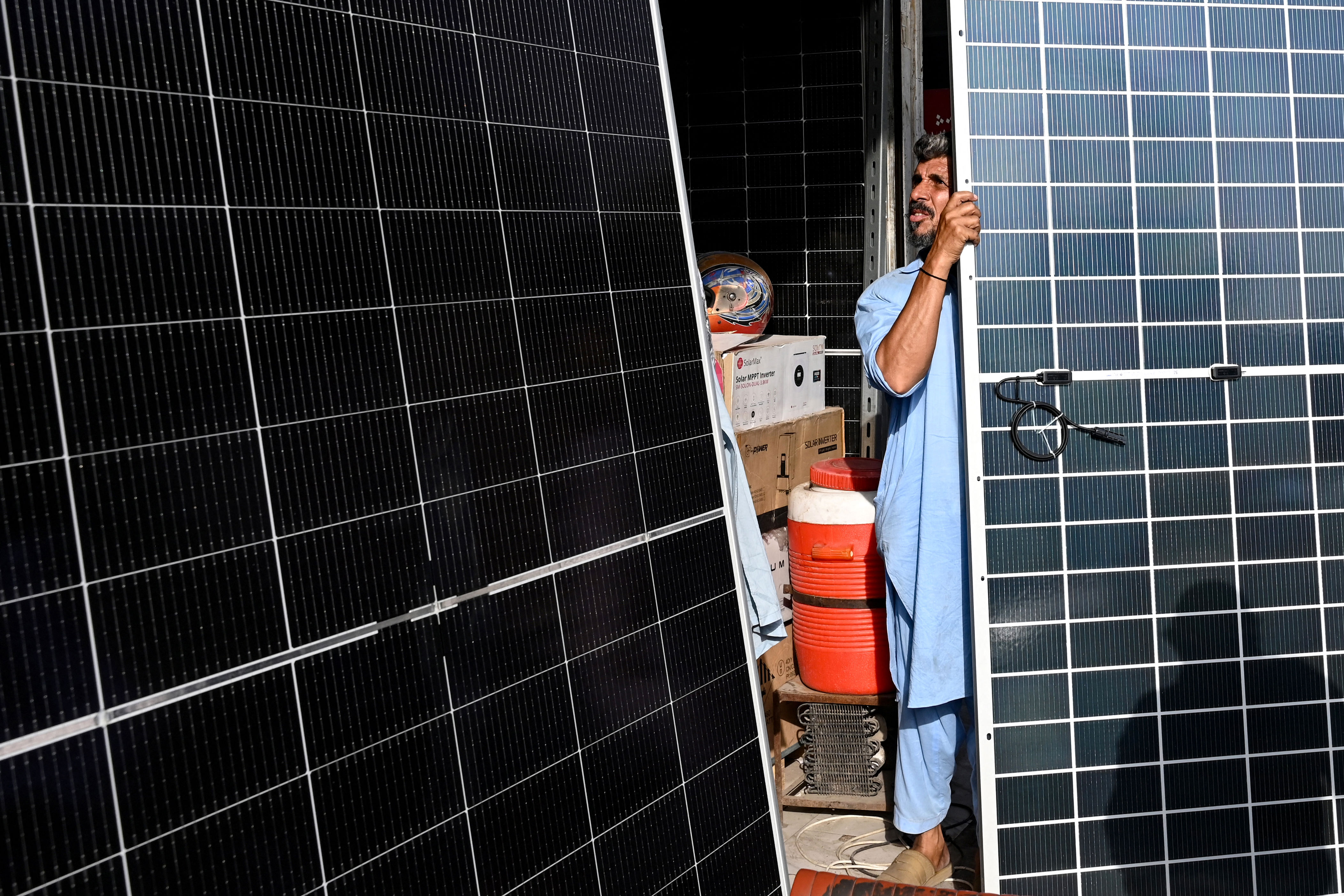
In the heart of Pakistan’s agricultural region, a quiet revolution is taking place. Solar energy has become an integral part of daily life, with mosques installing solar panels to light their prayer rooms, factories transitioning to sun-powered operations, and farmers utilizing the technology to transform dry land into fertile fields.
Mohammed Latif, a 68-year-old farmer from Dhaku, a village in eastern Punjab, has witnessed this transformation firsthand. Last year, he installed a solar-powered pump that allowed him to cultivate bell peppers on his once-barren property. This venture not only provided him with a steady income but also enabled one of his sons to study in Britain. “Even rich people are trying to become farmers now,” he said, reflecting on the shift in societal priorities.
Latif recalls only one other major societal change in his lifetime: the construction of Pakistan’s highway system nearly four decades ago. Today, the solar energy boom is reshaping the country’s energy landscape. Two years ago, solar energy was the fifth-largest source of electricity in Pakistan. Now, it stands alone at the top, accounting for about one-fourth of the national power supply.
A Rapid Shift in Energy Consumption
The rapid adoption of solar energy was initially welcomed by the government, which has long struggled to provide reliable power to its 240 million citizens. However, officials now worry that the surge in solar installations is happening too quickly and is creating an unfair advantage for the wealthy.
The boom began in 2023 when global solar panel prices dropped significantly, and imports from China surged. Wealthy Pakistanis, along with farmers like Latif, started purchasing solar panels in large quantities, encouraged by government subsidies. As a result, many have disconnected from the aging and overburdened national grid.
Pakistani Power Minister Awais Leghari acknowledged that the high cost of electricity has driven many people away from the grid. “It’s the price of electricity that has led to people getting out of the grid,” he said.
However, this shift has left many behind. According to the World Bank, 45 percent of Pakistanis live below the poverty line, making solar panel systems unaffordable for most. The pool of customers for the national grid has shrunk, and the costs of maintaining old coal-powered plants have increasingly been passed on to those who can least afford it.
The Growing Divide
Electricity prices in Pakistan roughly doubled between 2021 and 2024 before stabilizing due to government intervention. Many families have had to cut back on food and other essentials to pay their power bills. Hasnat Khan, senior vice chairman of the Pakistan Solar Association, described the situation as a “death spiral.”
Analysts argue that the current surplus of power-generating capacity is a result of poor planning. After decades of chronic shortages, Pakistan rushed to expand coal power production, leading to an overcapacity of power plants. The government claims that these expensive fossil fuel plants remain necessary, as solar energy production can fluctuate on cloudy days.
This dilemma highlights a lack of foresight in energy planning. Between the 1990s and early 2010s, frequent power outages caused economic paralysis, prompting authorities to expand coal production. This approach led to significant debt, with official figures showing that Pakistan’s power sector is saddled with around $5.6 billion in debt.
The Social Impact of Solar Energy
While the government has taken steps to reduce losses by cracking down on electricity theft and collecting outstanding payments, much of the burden has fallen on consumers, exacerbating energy inequality. Critics argue that there is a glaring double standard, as many wealthy individuals install solar panels and disconnect from the grid, while others continue to bear the costs.
In regions like northern Punjab, known as the “martial belt,” the solar divide is particularly pronounced. Once humble towns, such as Dhaku, have transformed with private investments and government subsidies. For farmers like Latif, connecting to the national grid would require costly infrastructure, so provincial authorities covered 60 percent of the cost for his solar panels.
Muhammad Hassan Miraj, a former military officer, lives in a luxurious estate where he relies entirely on solar energy. While he acknowledges the economic benefits of solar power, he also notes its darker side.
The Struggle of the Less Fortunate
Not everyone has benefited from the solar revolution. Abdul Karim, a 34-year-old small farm owner in Dhaku, feels left behind. He says he often has to choose between feeding his family and paying his electricity bill. During summer months, when temperatures exceed 110 degrees, he only turns on his fan when his children feel dizzy from the heat.
Karim expresses resentment toward the government in Islamabad, feeling that officials do not understand the struggles of ordinary citizens. “They sit in their comfortable houses, but over here, poor people like me are being crushed,” he said.
Leghari, the power minister, admitted that there were missteps in policy. Encouraging solar producers to sell excess energy to the grid resulted in the government paying for power it didn’t need. Wealthy landowners and businessmen gained access to cheap or even free electricity, while many others paid higher prices.
Looking Ahead
Solar power advocacy groups suggest solutions such as expanding battery use to allow households to consume their own excess energy and imposing limits on the size of solar systems. However, real change requires action from the top, analysts say.
Muhammad Basit Ghauri, a Pakistani energy analyst, recommends investing in local solar panel production, modernizing the national grid, and redirecting subsidies from fossil fuels to renewable energy.
Haji Javed Dhakku, a 60-year-old entrepreneur in Dhaku, has so many solar panels that he can run three air-conditioning units and two water pumps, with leftover electricity to sell to the grid. He recently started donating part of his revenue to poorer families who cannot afford their power bills. “It shouldn’t fall on me,” he said. “It should be the government’s job.”

Post a Comment for "Pakistan's solar surge drives up power costs for the poor"
Post a Comment