
Sleep tomorrow, but invest fiercely: Why apartments are the fast-track to wealth in Korea
The Rise of Apartment Investments in South Korea
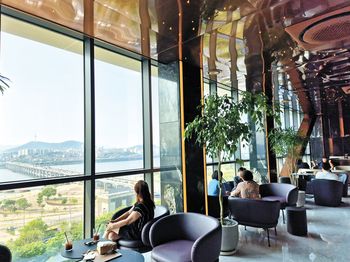
In the upscale Seocho District of southern Seoul, a cafe located within the Raemian One Bailey apartment complex offers a stunning view of the Han River. This location is just one example of how real estate has become a central part of life for many Koreans. In a country where apartment prices often rise faster than salaries, middle-class investors are increasingly turning to high-stakes property investments, hoping to outperform traditional stock trading.
Jeon Chi-woo, an office worker, made a significant profit of around 8 million won ($580,000) from a single apartment investment in the Seocho District in just two years. However, this success came at a cost—nearly 70% of his household income was directed toward interest payments. Despite this, he remains undeterred, with his next goal being to purchase an apartment in one of Seoul’s most desirable neighborhoods, such as Apgujeong or Banpo.
“I’ve seen many people around me become billionaires through apartment investments, but not through stock trading,” said Jeon. “They didn’t set out to get rich. They just paid off the debt they borrowed to buy their apartments. Then one day, as property values rose, they simply found themselves wealthy.”
Koreans’ deep faith in real estate has led to some of the most expensive apartments in the world, second only to Hong Kong, Zurich, and Singapore. According to a report by Deutsche Bank Research Institute, the average price per square meter in Seoul reached $22,875, a 32% increase over five years. This has created a housing market that outpaces even major cities like New York and London.
The confidence in real estate, coupled with generous loan programs from financial institutions, has fueled a surge in household debt. In the first half of the year, 71% of housing purchases in Seoul were apartments, according to data from the land ministry. This trend has raised concerns among policymakers, leading to strict loan regulations imposed by President Lee Jae Myung in June.
The Evolution of Apartments in Korea
The journey of apartments in Korea began in the 1960s with the Mapo Apartment, which had an occupancy rate below 10%. Despite government efforts to promote them, early residents were skeptical due to issues like poor ventilation and carbon monoxide risks. To address these concerns, the Korea National Housing Corporation conducted animal testing using guinea pigs, which showed no signs of gas poisoning.
Despite initial skepticism, apartments became a practical solution during Korea’s economic boom from the 1970s to the 1990s. As the population of Seoul grew from 2.45 million in 1960 to 10.61 million in 1990, apartments provided efficient housing for the expanding middle class. Over time, they became symbols of success, marking important life milestones like marriage and having children.
Modern apartment complexes now offer luxurious amenities such as swimming pools, saunas, movie theaters, and even meal services. These features have made apartments more than just places to live—they have become extensions of personal identity. Some luxury apartments have even sparked exclusive communities, including branded merchandise and matchmaking groups for residents.
A recent example is the Raemian One Bailey complex in Banpo, where a credit card exclusively for residents was launched, along with a beer named after the development. The demand for such properties is so high that a 34-pyeong (1,209-square-foot) unit was recently sold for 72 billion won ($5.15 million).
The Enduring Belief in Real Estate
Koreans' unwavering belief in real estate has been reinforced by historical trends. Since 1985, there have been only three instances when home prices fell by more than 5%, according to Macrotrends. Even during economic downturns, apartment prices have typically recovered over time, making them seem like a safer investment compared to stocks.
Lee So-mang, an office worker and mother of two, recalls seeing her parents’ apartment in Seoul increase fourfold in value over the years. She has followed in their footsteps, investing heavily in real estate. Kim Jin-yoo, a professor at Kyonggi University, notes that while stock markets can experience dramatic crashes, apartment prices rarely plummet.
One example of this long-term appreciation is the Eunma Apartment in Gangnam. When it was first sold in 1979 for 27 million won, it is now valued at 4.2 billion won, a 15,000% increase. Meanwhile, the Kospi index has risen approximately 2,500% since its introduction in 1983.
The Future of the Korean Housing Market
Experts predict that despite low economic growth, the desire for apartments will persist. The OECD estimates Korea’s potential growth rate for this year at 1.9%, a sharp decline from the double-digit growth rates of the past. However, apartment prices in key areas are expected to remain stable, as demand for housing in urban centers continues to outpace supply.
While rapid price increases may slow, the housing market is likely to become more polarized. In Seoul, average apartment prices have jumped 48% in July compared to five years earlier, while prices in other metropolitan areas have risen by just 4% over the same period.
Investor Lee, who plans to sell her current properties to buy a unit in Seoul, believes that owning an apartment in the capital is like holding cash. “I don’t think I’ll ever have to worry about financial hardship with the ownership of an apartment in Seoul,” she said confidently.

Post a Comment for "Sleep tomorrow, but invest fiercely: Why apartments are the fast-track to wealth in Korea"
Post a Comment