
Texas Ignites a National Gerrymandering Conflict
Texas Redistricting and the Political Implications
The Republican-controlled Texas legislature, under the influence of Donald Trump, introduced a plan for mid-decade redistricting, an unusual move that sparked hope among Democrats. They believed that by altering Democratic-held districts on an already gerrymandered map, Republicans might inadvertently dilute their own strongholds, making them more vulnerable to Democratic victories. However, the newly released redistricting plan has largely dashed those hopes.
Currently, Democrats hold 13 out of 38 U.S. House districts in Texas, which is already a skewed representation. Under the new map, if voters cast their ballots as they did in 2024, Democrats would only secure eight districts. This shift could significantly impact the balance of power in the U.S. House in 2026, potentially determining who controls the chamber.
While Democrats in Texas have some strategies to resist, such as a walkout during the special legislative session where the maps will be voted on, the broader political landscape may offer more opportunities for counteraction. Other states are also considering their own redistricting efforts to gain an advantage.
In California, Democrats are exploring ways to redraw district lines to benefit their party, though there is some debate over whether voter approval is necessary for their plan. Similarly, Democratic legislators in New York and Maryland are initiating redistricting processes, while Democratic governors in New Jersey and Illinois have indicated they may support similar actions ahead of 2026.
Despite these efforts, the outcome of the 2026 elections will still depend heavily on the popular vote margin. A significant backlash against Trump or a weak performance from Democrats could render all redistricting efforts irrelevant. According to G. Elliot Morris, a former data analyst at the Economist and FiveThirtyEight, Democrats are currently leading by 2.3 points in generic ballot polls. While this does not indicate a major wave like the one seen in 2018, it suggests a competitive race.
Historically, gerrymandering was a backroom tactic used by political operatives to minimize attention. In recent years, Democratic states have often handed redistricting responsibilities to independent commissions, whereas Republican states have not. This imbalance has shifted, with gerrymandering now being openly embraced as a political tool, allowing state legislators to influence control of the U.S. House regardless of voter preferences.
The MAGA Instant Pot: A Failed Attempt to Flatter Trump
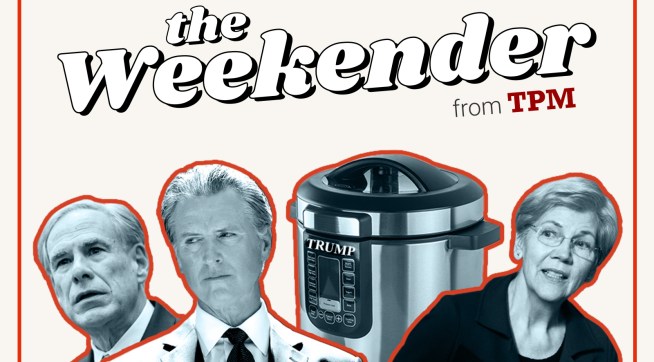
A recent attempt by a New York-based private equity firm to create Trump-themed kitchen appliances backfired spectacularly. Centre Lane Partners planned to launch products like MAGA-branded Instant Pots and bedsheets, with proceeds going to Trump’s library fund. However, the company failed to obtain the necessary trademark approvals, and after media scrutiny, legal threats led to the cancellation of the plans. This incident highlights the challenges of trying to align with Trump's interests without proper authorization.
Immigration and Population Growth
New Census data reveals that the entire population growth in the U.S. between July 2023 and July 2024 came from nonwhite populations, particularly Latinos and Asians. This growth is driven by immigration, which has rebounded after a decline during the pandemic. These groups are helping to sustain the youth population, which is essential for maintaining economic productivity and funding programs like Medicare and Social Security.
Democratic Dilemma on Trump Accountability
Senator Elizabeth Warren (D-MA) has raised concerns about working with Republicans on government funding bills. She argues that the Trump administration has undermined Congress’s authority by refusing to spend approved funds and forcing legislation through GOP senators. This has created a difficult situation for Democrats, who must decide whether to support bipartisan bills or risk a government shutdown that could further empower Trump’s administration.
As the political landscape continues to evolve, the decisions made by Democrats and other parties will play a crucial role in shaping the future of American politics.

Post a Comment for "Texas Ignites a National Gerrymandering Conflict"
Post a Comment