
Why Do French Cars Look So Unusual?
The Unique Evolution of French Automobiles
The automobile was not invented in France, but the country played a significant role in shaping its early development. While the first cars emerged in several places almost simultaneously during the late 19th century, France took an unconventional approach that set it apart from other nations. This distinctiveness can be traced back to the cultural and industrial environment of the time.
Paris, as a global artistic center, became a hub for modernism. This movement sought to understand the effects of industrialization on political structures and societal norms, while also grappling with new scientific ideas like evolution. In this context, the automotive industry in France developed in a way that reflected the country’s forward-thinking mindset.
Centralized Industry and Cultural Influence
Unlike other early car-producing countries, the automotive industry in France was centralized in Paris. This concentration brought together finance, politics, and industry, creating a unique ecosystem. As a result, French manufacturers such as De Dion Bouton, Panhard, and Renault were able to thrive in a city that was also a beacon of artistic innovation.
France's embrace of technology was evident in the establishment of government-funded engineering schools throughout the 19th century. These institutions trained designers and engineers who would go on to shape the future of transportation. The automobile thus became a symbol of progress, deeply embedded in the national consciousness.
The Impact of the 1900 Paris Exposition
The 1900 Paris Exposition showcased the country's commitment to modernity, promoting clean, tasteful, and technical innovations. This event had a lasting impact on car design, influencing the emergence of what is known as "l’exception française." This concept reflects a quirky form of engineering and design that emphasizes cultural individualism—essentially, the idea that the French could stand apart from international norms.
During World War I, France's leadership in aeronautics provided a financial boost to companies such as Hispano-Suiza, Lorraine-Dietrich, Voisin, and Farman. After the war, these firms transitioned to creating luxurious cars, applying technologies developed for aircraft, including lightweight construction and overhead camshafts.
Coachbuilders and Unconventional Designs
To complement the advanced chassis produced by these brands, a group of coachbuilders emerged. These artisans created some of the most outlandish designs in automotive history. Influenced by scientific aerodynamics, companies like Vanvooren, Figoni et Falaschi, Hibbard & Darrin, and Saoutchik crafted Streamline Moderne designs that featured round doors, elongated front fenders, and even retractable roofs. While these elements may have compromised mobility, they highlighted the importance of design in French car culture.
Pioneers of Innovation
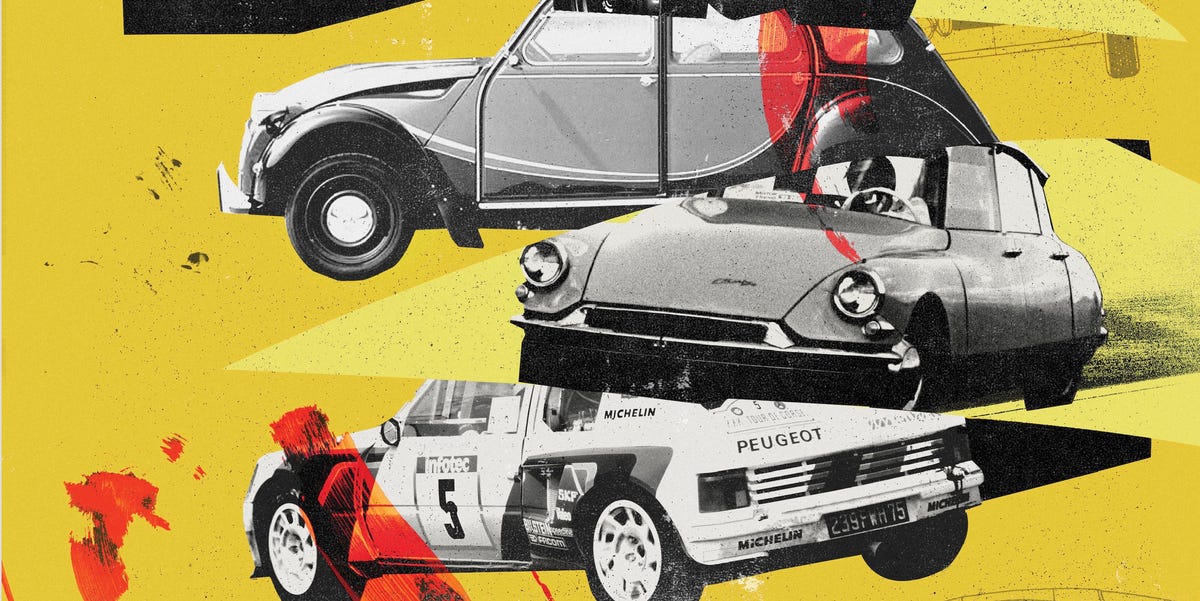
André Citroën, a key figure in French automotive history, played a crucial role in shaping the industry. His willingness to take risks and invest in innovation led to the creation of three iconic vehicles: the Traction Avant, the 2CV, and the DS. Each of these cars introduced groundbreaking features, from front-wheel drive to hydropneumatic suspension, setting new standards for performance and comfort.
Citroën's approach to production, which involved long-term iterative series, allowed for continuous improvement and ensured that his cars remained competitive. This strategy had a ripple effect across the industry, prompting other manufacturers to adopt similar practices.
Designing for a Unique Market
The French market has historically been less influenced by international trends, partly due to the country's limited share of car exports. In 2024, France accounted for just 2.4 percent of global automotive exports, compared to much higher figures from countries like Germany. This insularity has fostered a feedback loop where French consumers prefer domestic brands, allowing automakers to experiment with bold designs.
French automakers have taken advantage of this environment to push boundaries. Alpine was among the first to use fiberglass body panels, while the René Bonnet Djet introduced the mid-engine layout to production cars. Other innovations include the Matra-Simca Bagheera and the turbocharged rally cars from Renault and Peugeot.
Modern Quirks and Continued Experimentation
Even in the 21st century, French cars continue to defy convention. The Renault Avantime, Twizy, and C4 Cactus are prime examples of this trend, each offering a unique blend of style and functionality. The continued support of the French government for Renault has also contributed to this experimental spirit, providing a level of protection that allows for greater risk-taking.
In a global market dominated by mass-produced crossovers, the eccentricity of French cars offers a refreshing alternative. While their practicality may be questionable, their uniqueness resonates with those who appreciate innovation and individuality.

Post a Comment for "Why Do French Cars Look So Unusual?"
Post a Comment