
Why Russia's Kalibr-NK and Uran Missiles Show Its Global Power
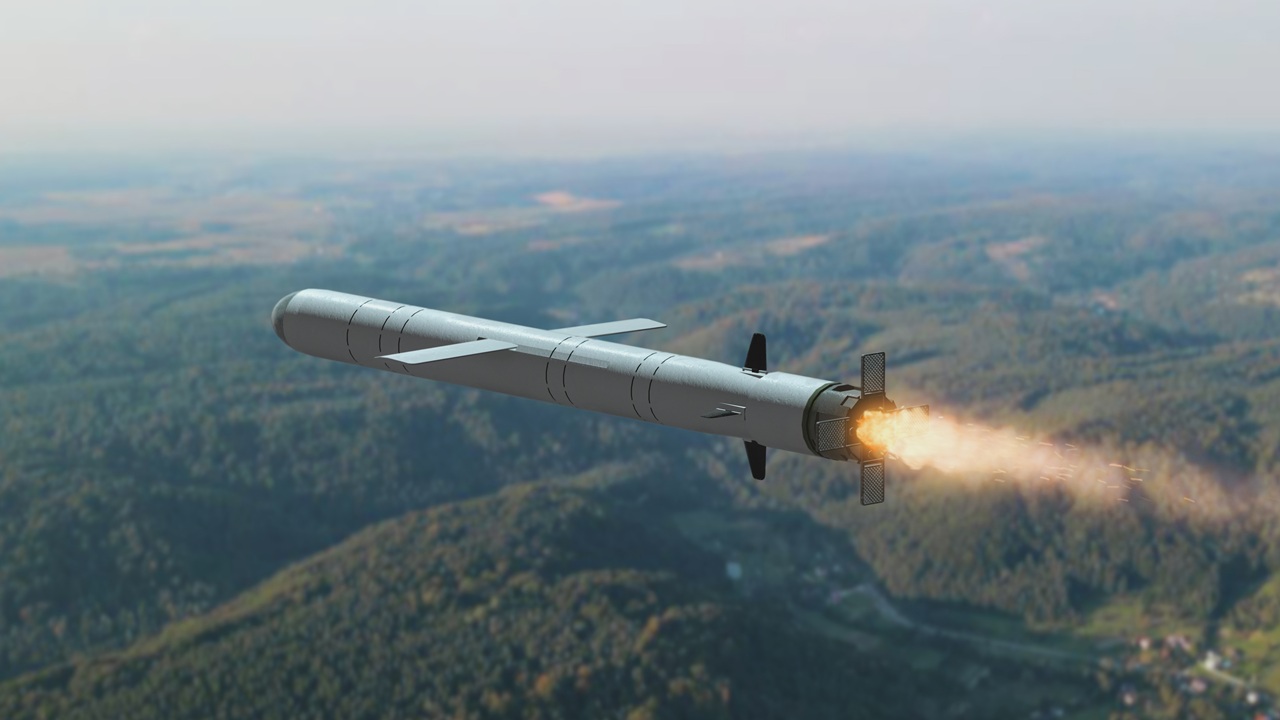
Russia's Naval Capabilities: A New Era of Precision and Power
Russia has long been a formidable player on the global stage, but its recent military advancements have redefined perceptions of its capabilities. The country’s naval weaponry, particularly the Kalibr-NK and Uran (Kh-35) cruise missiles, showcases a level of precision and technological sophistication that many in the West had underestimated. These systems are not only a testament to Russian engineering prowess but also a strategic tool in Moscow’s broader military ambitions.
Beyond the "Gas Station with Nukes" Narrative
The notion that Russia is merely a “gas station with nukes” has been increasingly challenged by its demonstrated military capabilities. Since the onset of the Ukraine War, Russia has maintained a strong grip on its energy exports, supplying nations like India and China while circumventing Western sanctions. This has allowed Moscow to bolster its defense industry, producing more in three months than NATO can in a year. Such self-sufficiency underscores a growing confidence in Russia’s ability to sustain its military operations independently.
Strategic Gains and Regional Influence
As Russian forces make significant advances in Ukraine, the likelihood of Kyiv achieving its strategic goals—regaining control over Eastern Ukraine and the Crimean Peninsula—appears slim. Meanwhile, Russia continues to expand its influence in Central Asia, competing with Western powers for dominance in the region. In the Far East, the country has conducted extensive military exercises in the Sea of Japan, testing its advanced missile systems. These maneuvers highlight Russia’s commitment to maintaining a strong presence in multiple theaters.
The Kalibr-NK Missile: A Long-Range Land-Attack Weapon
The Kalibr-NK is a ship-launched variant of the broader Kalibr family, designed for long-range land-attack missions. Developed by NPO Novator (OKB-8), this missile traces its origins to the post-Soviet era and entered service in 1994. The Kalibr-NK, specifically the surface ship-launched version designated 3M14T, is optimized for land-attack roles. It features a modular design capable of carrying conventional or nuclear warheads, with a maximum payload of 1,102 pounds.
With a range of 932 to 1,553 miles, the Kalibr-NK is powered by a multi-stage solid-fuel rocket and turbojet engine. While it cruises at subsonic speeds, it can accelerate to Mach 3 in the terminal phase for anti-ship variants. However, the NK variant focuses on subsonic land strikes. Guidance relies on inertial systems, with GLONASS integration allowing it to fly at extremely low altitudes to avoid radar detection.
Operational Provenance
The Kalibr-NK has proven its effectiveness in real-world conflicts. During the Syrian Civil War, Russian ships in the Caspian Sea fired 26 Kalibr-NK missiles in 2015, striking ISIS targets over 900 miles away. In the 2022 invasion of Ukraine, these weapons were used to target Ukrainian military command centers and infrastructure, including the ports of Odesa and Vinnytsia.
The Uran (Kh-35) Missile: Tactical Anti-Ship Capability
The Uran missile, known as the Kh-35, emerged from Soviet-era development starting in the 1970s. Official production began in 1983, with the first export variant delivered to India in 1996. Russia integrated it into its navy in 2003, positioning it as a cost-effective successor to the older P-15 Termit. With a unit cost of around $500,000 in 2010, the Uran offers a tactical advantage in anti-ship operations.
Key specifications include an air-launched version weighing 1,146 pounds, with ship and helicopter variants weighing 1,344 pounds. The missile carries a 319-pound high-explosive fragmentation warhead and is powered by a R95TP-300 turbofan engine, reaching speeds of around Mach 0.8. The upgraded Kh-35U variant can reach up to 186 miles, making it a versatile option for both sea and land strikes.
Complementary Roles in Naval Strategy
While the Kalibr-NK and Uran serve different purposes, they complement each other in Russia’s naval strategy. The Kalibr-NK’s extended range and land-attack focus make it ideal for strategic operations, whereas the Uran’s shorter-range, anti-ship emphasis suits tactical engagements. Together, they provide a layered defense and offense, with the Kalibr offering standoff power and the Uran ensuring affordability and versatility.
Future Implications
The evolution of these missiles reflects ongoing innovations in precision-guided munitions, posing challenges to global security. As geopolitical tensions persist, these systems will likely remain central to Russia’s military strategy. If the Russians are indeed serious about pivoting to their east, these systems will be key for the Pacific Fleet. Their continued development underscores the need for robust countermeasures to address the evolving threat landscape.

Post a Comment for "Why Russia's Kalibr-NK and Uran Missiles Show Its Global Power"
Post a Comment