
5 Box Office Disasters: Why Each Battle Failed
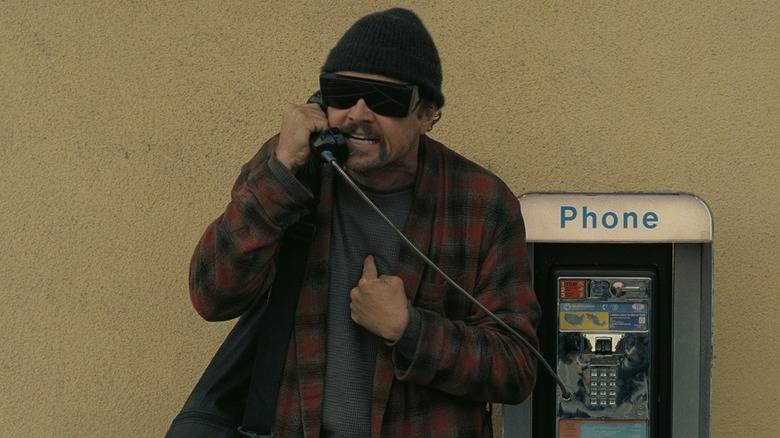
The Financial Struggles of "One Battle After Another"
It may be one of the most critically acclaimed films in recent memory, but Warner Bros.’ highly anticipated "One Battle After Another" failed to meet commercial expectations. Directed by Paul Thomas Anderson, known for his work on "There Will Be Blood," the film received widespread praise and was expected to be a major hit. However, its box office performance fell short of what was hoped for, raising questions about the film's financial viability.
The movie opened domestically with $22 million, which placed it at number one on its opening weekend. While that might seem like a solid start, it was far from sufficient given the film’s massive production budget. Estimates suggest that the film cost between $130 million and $175 million to produce. Even when combined with the $26 million it earned overseas, the global debut of $48 million left the film in a precarious position financially.
To break even, the film would need to achieve a global multiplier of 6.25, meaning it would have to gross around $300 million worldwide. That seems unlikely, especially considering the current state of the theatrical market. In comparison, Ryan Coogler’s "Sinners" opened to $48 million and eventually grossed $366 million globally, demonstrating how much more successful such a film can be.
The Impact of an Oversized Budget
One of the primary reasons for the film’s financial struggles is its exorbitant budget. Even if we assume the film was made for $130 million, the numbers don’t add up. For context, Christopher Nolan’s "Oppenheimer" was made for $100 million and still managed to perform well at the box office. Similarly, "Sinners" was produced for $90 million and went on to become a massive success. If "One Battle After Another" had been made for a lower budget, it might have had a better chance of turning a profit.
The film’s opening weekend of $22 million in the U.S. and $48 million globally simply doesn’t match the scale of its production costs. Even with strong legs in theaters, the film is likely to fall short of the $300 million mark needed to break even. This highlights a growing challenge in the industry: making high-budget films that appeal to a broad audience while also maintaining profitability.
Paul Thomas Anderson’s Commercial Challenges
While Paul Thomas Anderson is widely regarded as one of the greatest directors of his generation, he has never been known for big box office draws. His previous highest-grossing film, "There Will Be Blood," only earned $77 million worldwide. This is significantly less than the earnings of other A-list directors who are known for both critical and commercial success.
Anderson’s reputation as a filmmaker is unquestionable, and there is a strong possibility that "One Battle After Another" could win Best Picture at the Oscars. However, the film’s financial prospects remain uncertain. A $22 million domestic opening against a $130 million budget is not a sign of a successful film, especially in today’s theatrical climate. Even a Marvel movie with similar numbers would be considered a flop.
Leonardo DiCaprio’s Box Office Draw
Leonardo DiCaprio, one of the biggest stars in Hollywood, also played a role in the film’s financial challenges. While he has headlined some of the most successful films in history, including "Titanic" and "Inception," his box office draw has diminished in recent years. His last film, "Killers of the Flower Moon," opened to $23 million and earned $158 million worldwide. This is very close to the performance of "One Battle After Another."
DiCaprio’s star power was a key factor in Warner Bros.’ decision to invest heavily in the film. However, the numbers suggest that he is no longer the kind of box office draw that justifies a $130 million budget for a political dramedy without a clear hook for mainstream audiences. The film’s lack of mass appeal made it difficult to attract a wide audience, especially in the pandemic era.
The Decline of Overseas Revenue
Another significant factor in the film’s poor performance is the decline of overseas revenue. In the past, films like Ang Lee’s "Life of Pi" relied heavily on international markets to offset their costs. However, this trend has changed in recent years. Countries like China, once a major source of revenue for Hollywood, are now showing less interest in American films. Additionally, geopolitical tensions and shifting audience preferences have led to a drop in foreign box office earnings.
For "One Battle After Another," this means that the film will likely see a more balanced split between North America and the rest of the world. This is not enough to make up for the financial shortfall, especially given the film’s high production costs.
Not a Must-See Cinematic Event
Finally, the film failed to generate the kind of buzz that turns a movie into a must-see cinematic event. While Warner Bros. is known for creating hype around its releases, "One Battle After Another" did not manage to capture the attention of the average moviegoer. It underperformed compared to other films with similar budgets and marketing efforts.
This lack of excitement further contributed to its financial struggles. Without a strong opening weekend, the film struggled to gain momentum, making it difficult to recoup its costs.
Despite all of this, the film remains a critically acclaimed work of art. Its potential to win awards and find a long-term audience through streaming and home entertainment platforms offers some hope for Warner Bros. However, based on traditional box office metrics, "One Battle After Another" is likely to be remembered as a financial disappointment.

Post a Comment for "5 Box Office Disasters: Why Each Battle Failed"
Post a Comment