
Bakery Loses $212K in Banking Mistake, Account Frozen With No Relief
A Small Business Owner’s Nightmare: The Impact of a Clerical Error
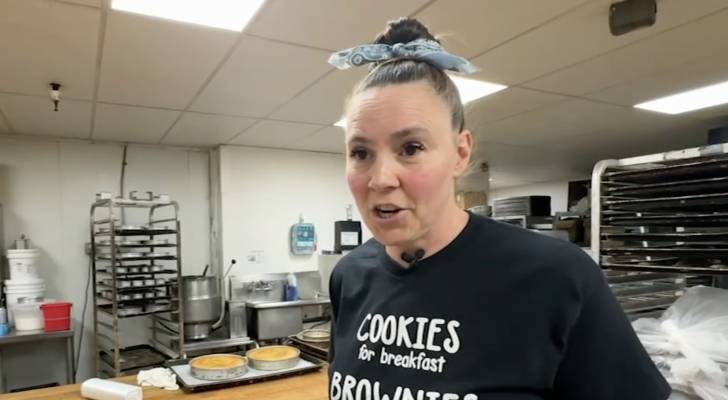
Sarah Torres, the owner of A Sweet Affair Bakery in Walnut Creek, California, was counting on two government checks to keep her family-owned business afloat. These checks were part of the Employee Retention Credit (ERC) program, a financial lifeline created by Congress in 2020 to help businesses retain employees during and after the pandemic. However, what should have been a relief turned into a nightmare when Torres discovered that not only were the checks placed on hold, but her entire business account was frozen.
The ERC checks, worth $212,853, were deposited into her account, but soon after, Torres found herself unable to access any of the funds. This left her in a dire situation, as she had 20 employees to pay and a bakery that had been a local staple for over four decades. "It was just a nightmare," she said. "I was crying to them, 'please, this is a business account… I have 20 employees that I need to pay!'"
Torres eventually learned that the issue stemmed from a clerical error involving her business's Employer Identification Number (EIN). The EIN had been changed last year but wasn't updated with the IRS. As a result, the U.S. Treasury flagged the deposits as potentially fraudulent, leading to the freeze on her account.
For more than a month, Torres struggled to access her business funds, which threatened the very existence of her bakery. In an attempt to keep the business running, she was forced to take money from her child’s college account and borrow from family members. “So it’s been a lot of stress,” she said. “And I don’t really know why.”
When Torres reached out to the IRS, she was told there were no flags on her account and that the agency had verified the cashed checks with her bank. She was left confused and frustrated. Her attempts to resolve the issue with Bank of America were equally unproductive. She estimates she tried to contact the bank hundreds of times, with little to no success. At one point, the bank reportedly hung up on her, and she received no responses to her emails or mailed documents.
After finally speaking with a bank representative, Torres was told her funds would be released within seven to ten business days. However, the bank kept delaying the date her account would close, leaving her without access to her money and forcing her to consider shutting down her bakery or refinancing her home.
Bank of America’s Response
After ABC7 News stepped in, Bank of America provided an explanation. The bank stated that due to a discrepancy in tax identification numbers following a change in ownership, the Treasury Department reported that the deposited funds might be fraudulent. “Our subsequent investigation revealed additional information, and we determined there was no fraud. We are working with the Treasury Department and the client to complete the transactions,” the bank said in a statement.
Tax experts say this situation should have never escalated. Chris Housch of Housch Tax Law pointed out that since the bakery was using the same bank, the bank should have been able to identify the old EIN alongside the new EIN on that account and not treat it like it’s fraudulent. “And they should be able to honor that check,” he added.
Legal Implications of EIN Errors
Yes, a U.S. bank can freeze a business bank account if there’s an error with the EIN. Banks are required to verify customer information to prevent fraud and comply with regulations such as Know Your Customer (KYC) and Anti-Money Laundering (AML). For businesses like LLCs, corporations, and partnerships, an EIN is typically mandatory for account setup.
An EIN verification letter is often part of the bank’s due diligence, proving the business’s legitimacy and compliance with federal tax regulations. When discrepancies arise, banks may freeze accounts while investigating. Other common reasons for frozen accounts include:
- Suspicious or unusual transactions
- Failure to comply with KYC/AML regulations
- Court orders or legal disputes
- Outstanding debts or tax obligations
- Inactivity or administrative issues
Lessons for Small Business Owners
For Torres, the ordeal highlighted the uneven playing field between small businesses and large financial institutions. “As a small business, we don’t have the resources to hire big-time lawyers or fight a company like Bank of America,” she said.
Fortunately, her funds were eventually unfrozen, but the case serves as a cautionary tale for small business owners about the importance of ensuring all business identification information is consistently updated across all agencies and financial institutions.
For small business owners, the lesson is clear: even a minor clerical error can have devastating financial consequences when dealing with large banking institutions. Keeping detailed records and ensuring consistency across all your business identification numbers could save you from a similar nightmare.

Post a Comment for "Bakery Loses $212K in Banking Mistake, Account Frozen With No Relief"
Post a Comment