
Bruce Springsteen's Most Clichéd Biopic Yet: 'Deliver Me to Nowhere'
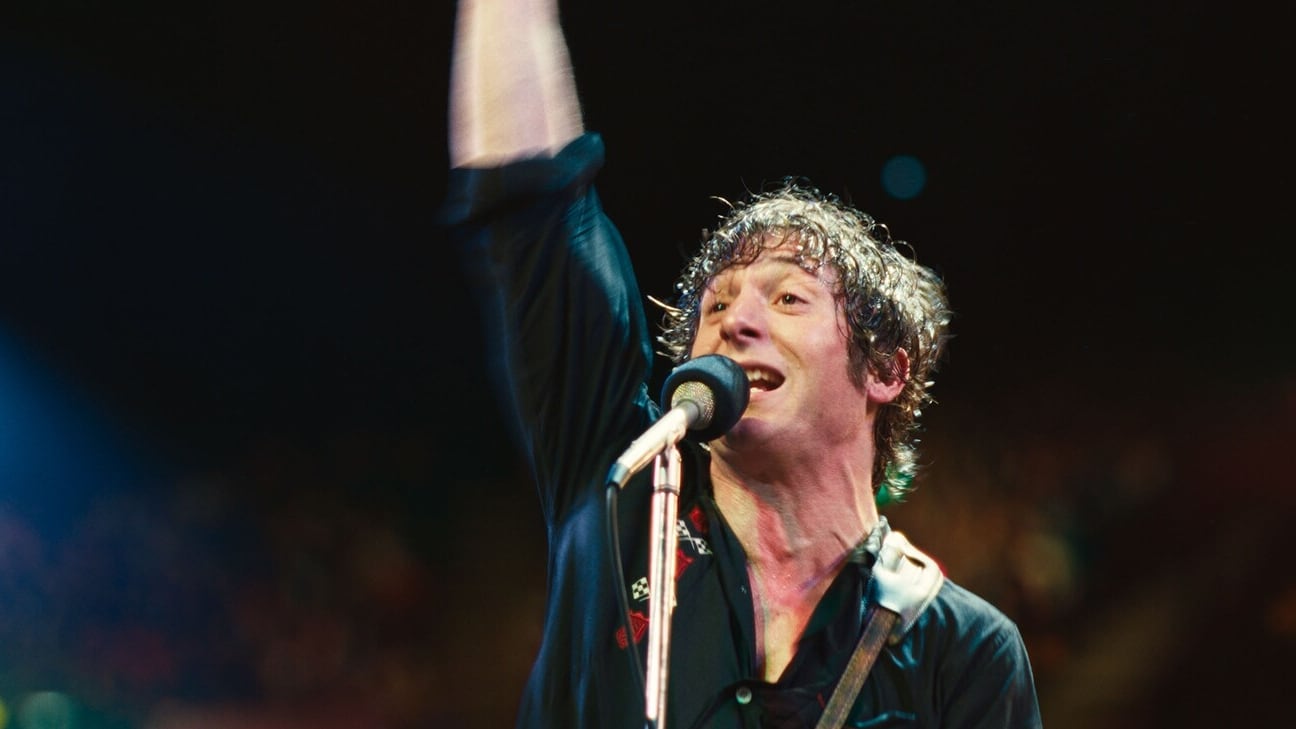
A Disappointing Biopic of a Musical Legend
The world of music biopics is often filled with predictable narratives and overused tropes, and Scott Cooper’s Springsteen: Deliver Me from Nowhere is no exception. This film, which explores the origins of Bruce Springsteen’s 1982 album Nebraska, attempts to present a deep dive into the artist’s personal struggles and creative process. However, it ends up feeling like a shallow retelling of familiar stories, lacking in originality and emotional depth.
The Origins of a Masterpiece
The film begins with Springsteen (played by Jeremy Allen White) returning from a successful tour in 1981, seeking a break from the pressures of fame. His manager, Jon Landeau (Jeremy Strong), agrees that a change of scenery is necessary, leading him to retreat to a waterfront home in Colts Neck, New Jersey. Here, he begins writing demos that will eventually become the foundation for his solo work with the E Street Band.
White’s portrayal of Springsteen captures the singer’s raspy voice and brooding demeanor, but the performance feels more like an impersonation than a true depiction of the artist’s inner life. The film attempts to show Springsteen as a man at a crossroads, grappling with his identity and artistic direction. Yet, rather than offering a nuanced portrayal, it leans heavily on clichés and heavy-handed storytelling.
A Focus on Family and Trauma
One of the central themes of the film is Springsteen’s relationship with his father, Douglas (Stephen Graham), who is depicted as an abusive and domineering figure. These scenes are presented through black-and-white flashbacks, showing young Bruce (Matthew Anthony Pellicano) navigating a troubled home life. While these moments are historically accurate, they are delivered in a way that feels overly dramatic and lacks subtlety.
The film also explores Springsteen’s connection to his mother, Adele (Gaby Hoffman), and his efforts to protect her from her husband’s violence. These portrayals, however, fall into predictable archetypes, making the narrative feel less like a compelling story and more like a series of well-worn tropes.
Love and Inspiration
In addition to his family struggles, the film highlights Springsteen’s romance with Faye Romano (Odessa Young), a local waitress and single mother. Their relationship provides inspiration for some of his most iconic songs, including “Atlantic City” and “I’m on Fire.” Yet, even these moments feel formulaic, with the film using them as plot devices rather than genuine emotional beats.
The film also delves into Springsteen’s fascination with Charles Starkweather, the real-life killer who inspired Terrence Malick’s Badlands. This interest is shown through scenes of Springsteen researching the case on microfiche, a detail that adds a layer of authenticity but is still presented in a way that feels forced.
The Role of Jon Landeau
Jon Landeau, played by Jeremy Strong, serves as a key figure in the film, acting as both a manager and a close friend to Springsteen. Cooper portrays him as a loyal ally who helps guide the artist through his creative process. However, the film fails to explore the complexities of their relationship, instead focusing on surface-level interactions that lack emotional resonance.
Landeau’s role becomes particularly significant when Springsteen begins working on Nebraska, an album that marks a departure from his usual sound. The film shows how Landeau and other collaborators, such as engineer Chuck Plotkin (Marc Maron), work to preserve the raw, unpolished quality of Springsteen’s recordings. Despite this, the film never fully captures the essence of the album or its impact on Springsteen’s career.
A Missed Opportunity
Ultimately, Springsteen: Deliver Me from Nowhere falls short of being a meaningful exploration of one of the most influential albums in rock history. Instead, it offers a generic, overly sentimental account of Springsteen’s life during this period. The film’s reliance on clichés, heavy-handed storytelling, and predictable character arcs makes it feel more like a greatest-hits package than a genuine tribute to the Boss.
While there are moments of insight—particularly in its depiction of Springsteen’s relationship with his father—the overall effect is one of disappointment. Rather than capturing the complexity of Springsteen’s journey, the film reduces it to a series of easily digestible scenes that fail to resonate on a deeper level.

Post a Comment for "Bruce Springsteen's Most Clichéd Biopic Yet: 'Deliver Me to Nowhere'"
Post a Comment