
Caregiving Stepped In, Then Shaped New Careers
A New Career Path Through Caregiving
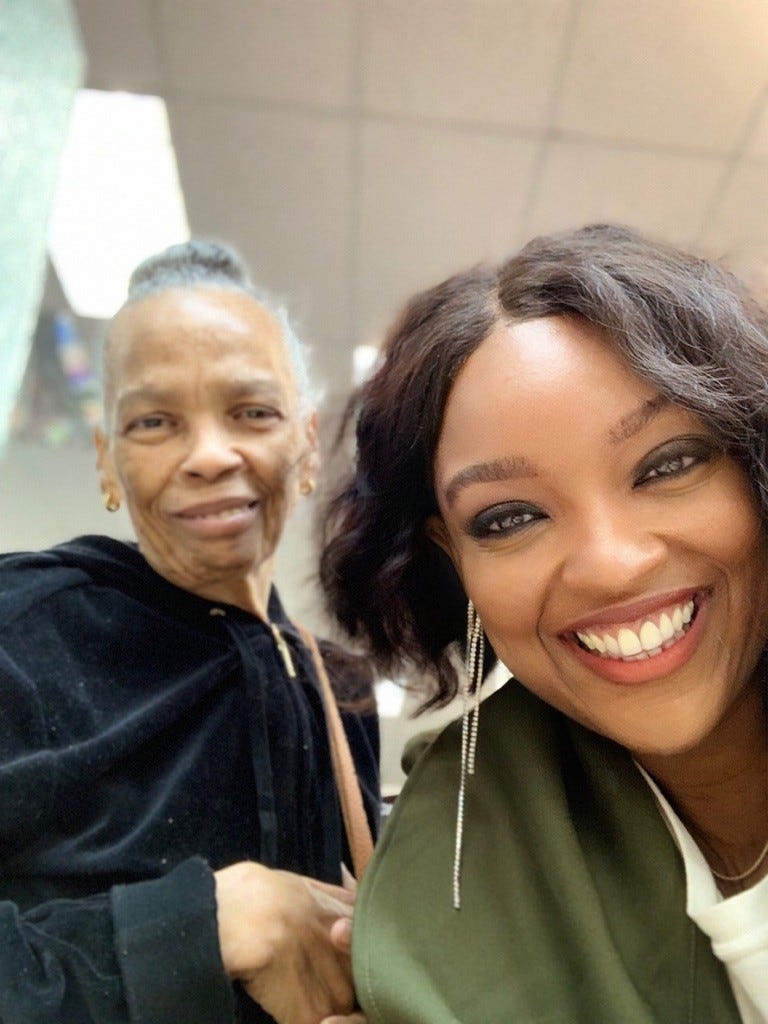
In her late 20s, Nicole Nurse was thriving in the fashion industry in New York City. She had just received a promotion at her fashion brand, complete with a corner office and an assistant. That was in 2011. A month after her promotion, her mother was diagnosed with early onset Alzheimer’s disease. The news hit Nurse hard. “It was very challenging,” she said. “I felt like I didn’t have enough space to support my mom emotionally when I was going through so much at work.”
Nurse made a tough decision. She packed up her office and became her mother’s full-time caregiver. While many caregivers have to step back from their careers, Nurse found that her experience led to a new career path. Now 43, she is a media strategist in the health and wellness field.
Caregiving often means leaving a job or reducing hours, which can impact finances and a sense of purpose. However, some caregivers find themselves drawn to continue care work in different forms—such as health aides, advocates, or storytellers. Even those who take a break from the workforce for several years may gain valuable skills that can be applied elsewhere.
Phyllis Stewart Pires, associate vice president of employee support programs and services at Stanford University, highlighted essential caregiving skills such as problem solving, research, time management, prioritization, negotiation, adaptability, and empathy. Diane Ty, managing director at the Milken Institute Future of Aging, added patience, compassion, communication skills, and project and crisis management to the list. “We think that they should be skills that you proudly put on your resume, on your LinkedIn profile,” Ty said.
Some caregivers might hesitate to share their caregiving experiences in the workplace, fearing it could affect their career advancement. However, some employers value transparency over resume gaps. Tatyana Zlotsky, CEO of A Place For Mom, said, “Why make them guess?”
During the 12 years she cared for her mother, Nurse took on part-time and freelance work while sharing her story on social media. At the time, she didn’t see anyone her age in a caregiving role. She continued to use her fashion background by dressing in bold colors and using red lipstick and nail polish. In her blog and social media posts, she emphasized the importance of self-care for caregivers.
“We don’t have to lose ourselves or our identity when we are caring for a loved one, even though it feels like it,” Nurse said. Eventually, writing and content creation became more of a career, accidentally.
The Need for Better Support for Senior Care
While parenting responsibilities are widely understood and sometimes better supported in the workplace, senior care still has a long way to go, Zlotsky said. She helped care for her grandparents for over two decades after her family moved to the United States from Moscow. “No one cares that your 85-year-old grandmother is sick,” Zlotsky said. But caring for older adults requires time and energy, she said, and America needs to talk about it.
With kids, there are expected milestones that offer some relief, such as when children go to school. But in caring for an older adult, Ty said, “it’s often sudden, it can be episodic, it can be long term.” That’s why something resembling a parental leave policy might not always work for a senior caregiver, Zlotsky said.
As with all caregiving, the burden falls overwhelmingly on women. According to a recent caregiving report from AARP, 61% of America's 63 million caregivers are women, and women caregivers report some of the worst impacts of caregiving, including physical and emotional strain, loneliness, and financial hardship. Women caregivers are also more likely to provide constant care than their male counterparts.
Employers should want to retain caregivers when they can, Ty said. By supporting them, employers can prevent expensive turnover costs and build trust among workers.
Zlotsky has seen the same story play out again and again, where a woman leaves work to care for her kids, comes back for a second chapter in her career, and then, within a couple of years, leaves again to care for her aging parents. That second bout of caregiving, Zlotsky said, comes with many of the same challenges as parenthood but with fewer resources and awareness, and oftentimes more guilt.
“It can’t just fall on the woman,” Zlotsky said. “It can’t just fall on the daughter, because it’s crushing them.”
Skills Over Degrees: A New Hiring Trend
Lived experience is worth more than degrees to some employers. Sarah Kilch Gaffney was 25 when she became a caregiver to her husband, Steven Gaffney, who was diagnosed with a terminal brain tumor in 2009. He died five years later, leaving her a grieving single mom without a clear path forward.
She was in the midst of nursing school, a career path she'd never imagined before his diagnosis. “Honestly, you know, doctors do a lot, but really it’s the nurses who make such a difference in the day-to-day,” Gaffney said. But juggling full-time nursing school with a toddler and a slowly declining husband was really hard. After he died, her heart wasn't in nursing school anymore. She quit, planning to take a short break from working, when a new opportunity caught her eye at the Maine chapter of the Brain Injury Association of America.
They were looking for someone with a master's degree in social work, Gaffney said. She has a bachelor's degree in creative writing and environmental studies. She decided to apply anyway and found her lived experience was enough to land her the gig.
A recent report from ADP found skills have emerged as a strong indicator of employee success compared to other, more traditional qualifications like degrees and industry experience. A 2025 survey of more than 1,000 employers by TestGorilla, a hiring platform, found that more than half of employers have eliminated degree requirements, 85% are using skills-based hiring, and 72% agree that considering the whole candidate, including their skills, personality, and cultural alignment, leads to better hiring decisions and improved organizational outcomes.
Gaffney's job was part time, offering flexible hours and the ability to work from home, which was rare in 2015. Most importantly, Gaffney found the work to be incredibly meaningful, advocating for families like her own who had minimal resources while working through painful diagnoses.
“I think it helps people feel a little bit more comfortable, sometimes,” she said. “I’m not someone who has 45 different letters after the end of my name, but I have a lot of experience living through it and that’s really valuable to a lot of caregivers to know that.”
Gaffney, 41, still works for the association and often facilitates caregiver support groups. She remarried in 2017 and has since had two more daughters with her second husband. She's caregiving for a spouse again, with her second husband battling long COVID-19. It's felt like "nonstop fight or flight" for her, she said. Having an understanding employer makes "the difference between me being able to stay in the workforce and not," she said.

Post a Comment for "Caregiving Stepped In, Then Shaped New Careers"
Post a Comment