
China's J-20 vs. Rafale: Stealth and Tech Clash in 4 Words
Key Points and Summary
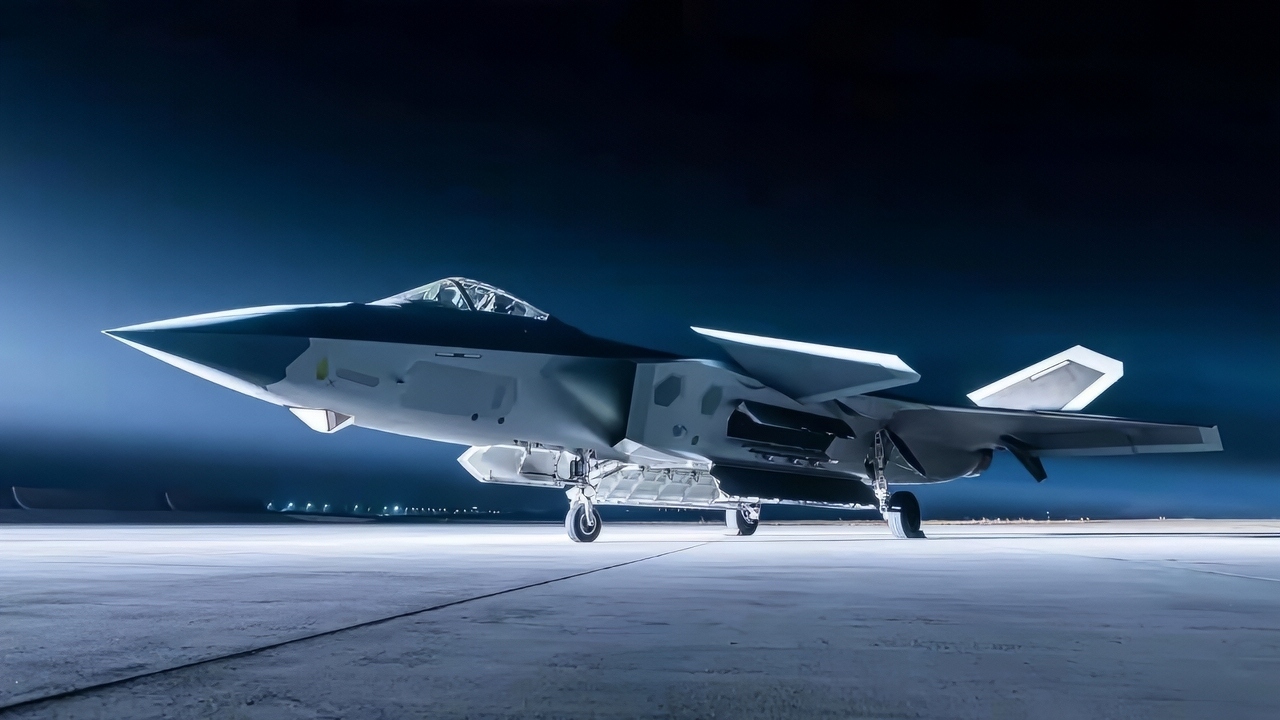
In a hypothetical confrontation between France's 4.5-generation Dassault Rafale and China's fifth-generation J-20 "Mighty Dragon," the Chinese stealth fighter would likely have the upper hand. While the Rafale is known for its maneuverability and includes a cannon for close-range dogfights, the J-20 possesses significant advantages in stealth, speed, and service ceiling. This "see-first, shoot-first" capability allows the J-20 to engage from beyond visual range, which could be decisive in a real-world scenario.
The Rafale's recent performance in combat has raised concerns about its effectiveness. In a major aerial battle between India and Pakistan in May, the Rafale faced off against the less advanced J-10C. The outcome was alarming: the J-10Cs managed to shoot down at least two Rafales, possibly more. This demonstrated the technological and tactical edge that the J-20 might hold over the Rafale.
The J-20 Mighty Dragon Versus the Dassault Rafale
With growing interest in potential matchups between different types of fighter jets, this analysis explores how Western aircraft compare to Chinese models. Today’s focus is on the fourth-generation “+” Dassault Rafale from France versus the fifth-generation J-20 from China.
First Look at the Match-up
The Rafale may have an advantage in maneuverability, but the J-20 is stealthier and more survivable against beyond-visual-range air-to-air missiles. The J-20 can fly faster at a higher altitude, allowing it to close in on the Rafale without being detected and launch missiles first. Meanwhile, the Rafale could use its onboard cannon to engage if it manages to recover.
Recent Challenges for the Rafale
The Rafale struggled during a large-scale nighttime dogfight between India and Pakistan in May. This was one of the most significant aerial battles in decades, involving around 110 fighter jets. India deployed the Rafales, while Pakistan used the less sophisticated J-10Cs. The J-10Cs managed to shoot down at least two Rafales, highlighting the potential threat posed by Chinese-made weapons.
Four for Four Hits From the PL-15 Missiles
The J-20 is equipped with four PL-15 missiles, which could allow it to destroy up to four Rafales in a direct engagement. Countries operating the Rafale were taken aback by the results of the Indian-Pakistani conflict. Questions arose about whether the Rafale pilots had a bad day or if the J-10Cs were simply superior. These concerns have prompted Western military planners to reassess their strategies.
J-20's Superior Performance
The J-20 has better engines than the Rafale, with the Xian WS-10 afterburning turbofan engines providing more thrust and enabling greater acceleration. Additionally, the J-20 has a higher service ceiling and faster speed. Its maximum altitude reaches 66,000 feet, compared to the Rafale’s 52,000 feet. The J-20’s top speed is at least Mach 2, with some sources suggesting it could reach Mach 2.25, whereas the Rafale tops out at Mach 1.8.
Stealth Capabilities
While the J-20’s stealth capabilities are not as advanced as those of the American F-22s and F-35s, they are still sufficient to evade detection by the Rafale. Pilots on the French jet would struggle to spot, identify, and track the J-20 until it’s too late. However, the Rafale might have an edge in maneuverability and climbing ability, allowing an experienced pilot to evade incoming missiles if spotted.
The Rafale’s Cannon Advantage
One potential advantage for the Rafale is its onboard 30mm GIAT 30/M791 autocannon, which carries 125 rounds of ammunition. The J-20 lacks a gun, meaning the Rafale could potentially take down the J-20 in a close-range engagement if it outmaneuvers the Chinese pilot.
Combat Experience and Unproven Capabilities
The Rafale has seen action in Afghanistan, Libya, and Syria, giving it real-world combat experience. In contrast, the J-20 remains untested, and Chinese pilots lack war experience. This raises questions about how the J-20’s stealth capabilities would perform in actual combat and whether Chinese pilots could match the skill of their Western counterparts.
Final Verdict: Stealth Wins
Despite the Rafale’s battle experience and advanced weaponry, including MICA and Meteor missiles, the J-20’s stealth and speed give it a clear advantage. The PL-15 missile has already proven effective against the Rafale, and the J-20’s superior performance in the Indian-Pakistani conflict suggests it could dominate in a direct matchup.
In summary, the J-20's stealth capabilities, speed, and advanced technology make it the superior choice in this hypothetical scenario. While the Rafale has its strengths, the J-20’s advantages in key areas suggest it would prevail in a head-to-head engagement.

Post a Comment for "China's J-20 vs. Rafale: Stealth and Tech Clash in 4 Words"
Post a Comment