
Democrats Refuse to Soften Fierce Rhetoric Post-Killings: 'No Duty to Censor'
The Escalation of Political Rhetoric in U.S. Politics
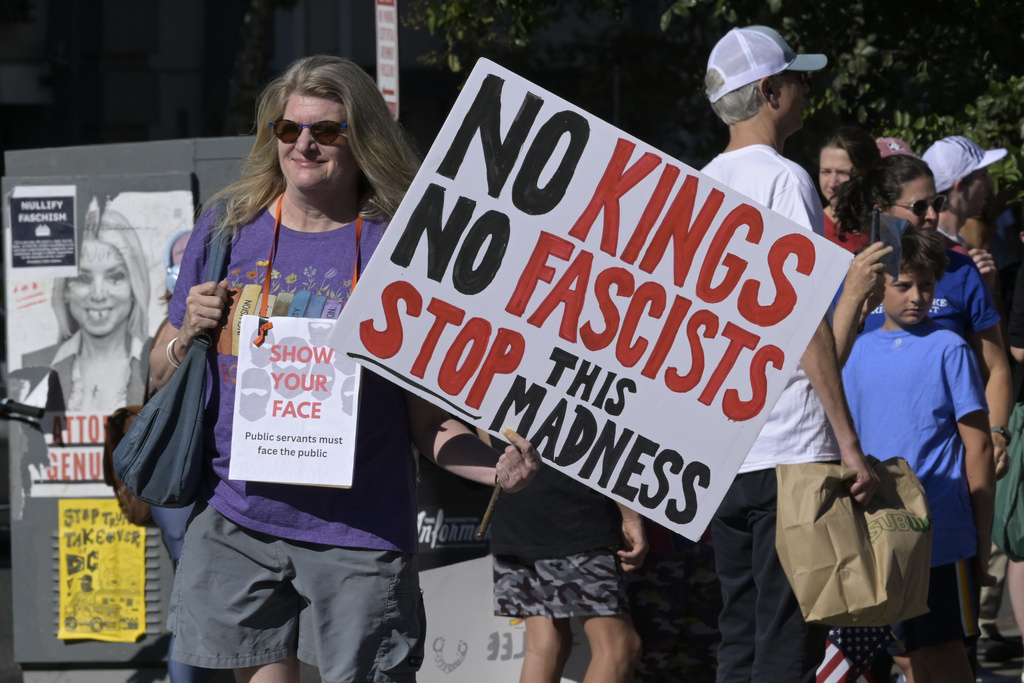
The ongoing political discourse in the United States has reached a boiling point, with Democrats refusing to back down from labeling President Donald Trump and his allies as “fascist.” This strong language comes amid growing concerns from Republicans who warn that such rhetoric is reckless, dangerous, and could fuel political violence.
The term “fascism” historically refers to a right-wing system of government led by a dictator, often associated with Adolf Hitler and Nazi Germany during the 1930s and 1940s. In the context of U.S. politics, this label carries significant weight and is seen as especially provocative. The debate over its use has intensified against a backdrop of recent violent incidents, including a shooting at a Dallas Immigration and Customs Enforcement (ICE) facility that left one detainee dead and two others injured. Just weeks before, conservative activist Charlie Kirk was assassinated, with authorities noting that the suspect had left behind ammunition marked with references to fascism.
Democratic Leaders Confront the Issue Head-On
From the House floor to campaign rallies, Democratic lawmakers and leaders have embraced the term “fascist,” arguing that Trump’s actions leave them no choice but to speak plainly. Former Vice President Kamala Harris, during her recent book tour, compared Trump and his allies to “a communist dictatorship” for suppressing dissent. This sentiment was echoed at a press conference where Democrats denounced what they called an assault on free expression, following ABC’s suspension of late-night host Jimmy Kimmel for remarks about Kirk’s assassination.
Rep. Maxwell Frost (D-FL) stated, “Fascism is not on the way. It is here.” He emphasized the importance of the First Amendment, highlighting how generations of Americans have used it to fight for progress. Sen. Chris Murphy (D-CT) also addressed the issue, stating that Trump’s actions are reminiscent of despots throughout history. He stressed the need for candor and urged the public to rise up in peaceful protest.
A Shift in Language and Strategy
Democrats have gradually increased their warnings about Trump, using more direct language. In 2022, former President Joe Biden described Trump’s governing philosophy as “semi-fascist.” By the next year, figures like Harris and Minnesota Gov. Tim Walz stopped using qualifiers, calling Trump a fascist outright. The message became even sharper in August 2025 when Democratic National Committee Chairman Ken Martin delivered a fiery address, declaring Trump an existential threat. “This is not politics as usual, my friends. This is authoritarianism. It’s fascism dressed in a red tie.”
Despite this, Martin recently called for unity after the ICE shooting, urging all citizens to work together to combat violence. However, some within the party have expressed concern over the risks of such rhetoric. A Democratic strategist noted that the political temperature is too high and advised caution in using terms like “fascist” or “dictator,” especially after recent events.
Republican Criticism and Concerns
Republicans argue that the Democratic language is incendiary and dangerous. Vice President JD Vance warned against using terms like “Nazi” to describe political opponents, citing the recent violence as evidence of rising risks. GOP strategists echoed this warning, suggesting that Democrats are inciting extreme behavior through their words.
Greg Manz, another Republican strategist, claimed that Democrats are guilty of projection, pointing to their own history of censoring free speech and weaponizing the government. He argued that the current rhetoric will backfire rather than gain support.
Polling and Political Tactics
Recent polling shows that liberals are more likely than conservatives to believe political violence is sometimes justified. The National Republican Congressional Committee highlighted this, accusing Democrats of normalizing hate and turning political violence into a talking point. A super PAC aligned with Speaker Mike Johnson has begun targeting vulnerable Democratic districts, accusing them of crossing a line and abandoning “decency and morality.”
Conclusion
As the political landscape continues to shift, the debate over the use of terms like “fascist” remains contentious. While Democrats insist that the language is necessary to confront perceived threats, Republicans warn that such rhetoric risks further division and violence. The challenge lies in balancing the need for clear communication with the responsibility to prevent escalation. As the nation grapples with these issues, the call for unity and understanding becomes increasingly urgent.

Post a Comment for "Democrats Refuse to Soften Fierce Rhetoric Post-Killings: 'No Duty to Censor'"
Post a Comment