
Furniture, Architecture, Fashion: How AI is Redefining Design
The Intersection of AI and Design: A New Era in Creativity
Design has always been a blend of art and science, where form and function must work together. In recent years, the integration of artificial intelligence (AI) into design fields such as fashion, architecture, and interiors has sparked both excitement and concern. While some view AI as a threat to the human touch in creative work, others see it as a powerful tool that can enhance efficiency, reduce waste, and even inspire new forms of expression.
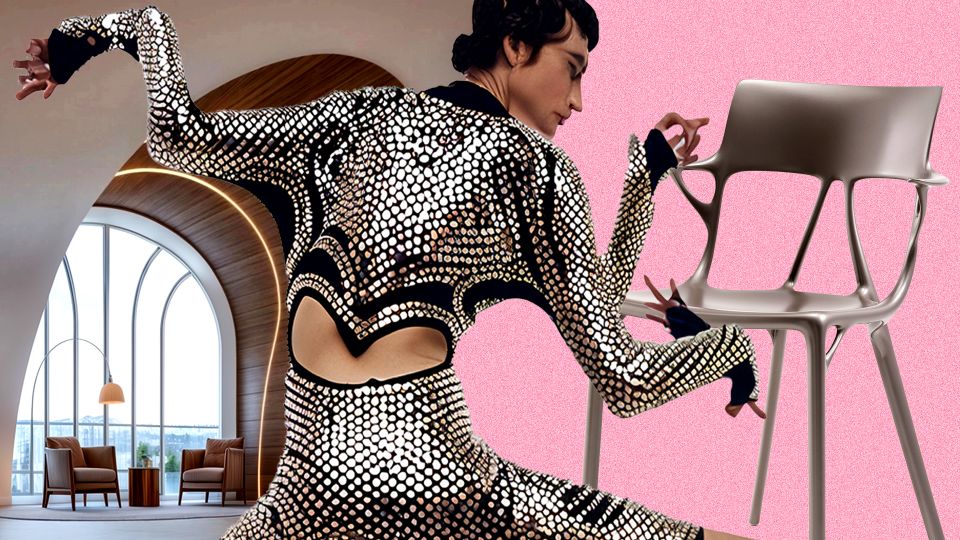
Three industry leaders—Philippe Starck, Norma Kamali, and Tim Fu—have embraced AI in their respective fields, offering insights into how this technology is reshaping their practices.
Philippe Starck: Redefining Industrial Design with AI
In 2019, Philippe Starck introduced the first mass-produced piece of industrial furniture created with the help of artificial intelligence: the “AI chair.” This project was born out of a desire to explore new creative territories, free from cultural or personal influences. Collaborating with Autodesk, Starck asked the AI to design a chair that could support the human body using minimal matter and energy.
The process was not straightforward. The AI struggled for over two years before a breakthrough came when Starck learned about fetal hand development. By understanding that fingers are formed by removing material rather than adding it, he guided the AI toward a more efficient solution. The result was a chair that redefined what was possible in generative design.
Starck acknowledges AI’s potential to save time and connect complex data points, but he emphasizes that it remains a tool rather than a replacement for human creativity. He believes that while AI can generate ideas, it lacks the emotional depth and intuition that come from the human subconscious. For now, he sees AI as an extension of his own creative process, not an end in itself.
Norma Kamali: Bridging Fashion and AI
Norma Kamali, a pioneer in fashion design, has long been fascinated by technology. Her early experiences with computers in the 1960s laid the foundation for her later exploration of AI. She recently developed an AI program that analyzes her extensive fashion archive, helping to generate new designs based on past work.
Kamali used AI to recreate a popular striped dress, which she had already designed in multiple variations. When she saw Jessica Biel wearing the original, she felt compelled to create a new version. AI provided fresh ideas, such as altering the stripe pattern and suggesting alternative silhouettes. The results were so consistent with her style that customers couldn’t tell the difference between AI-generated and human-designed pieces.
While she shares concerns about AI replacing jobs, Kamali also sees its potential to create new opportunities. She continues to sketch and work with real models, but she embraces AI as a valuable addition to her creative toolkit. “Why would you pass up this opportunity?” she asks.
Tim Fu: Transforming Architectural Design with AI
For architectural designer Tim Fu, AI is more than just a trend—it’s a transformative force. At his firm, Tim Fu Studio, AI is used to optimize floor plans, analyze building materials, and explore spatial configurations. The technology helps architects test multiple design options quickly, allowing them to focus on refining the best ideas.
Fu recently led a project to design a resort on Lake Bled, Slovenia, featuring seven luxury villas. This was the world’s first fully AI-driven architectural project. The team used AI to maximize views of the lake and incorporate traditional Slovenian design elements, such as timber “rizalit,” into modern glass-fronted atriums.
Fu sees AI as a calculator-like tool that speeds up the design process without replacing the architect’s role. He stresses the importance of maintaining human creativity and skill, even as technology advances. His firm tests candidates on both AI-prompting abilities and traditional sketching skills, ensuring that the human element remains central.
Embracing the Future of Design
As AI continues to evolve, its impact on design will only grow. While some fear it may diminish the role of human creativity, many designers see it as an opportunity to push boundaries and explore new possibilities. Whether through fashion, architecture, or industrial design, AI is proving to be a powerful ally in the creative process.
The key, as these pioneers suggest, is to use AI wisely—leveraging its strengths while preserving the unique qualities of human intuition and artistry. As the design world moves forward, the balance between technology and creativity will remain a critical conversation.

Post a Comment for "Furniture, Architecture, Fashion: How AI is Redefining Design"
Post a Comment