
Germany's Economy Struggles to Spend Its Way Out of Stagnation
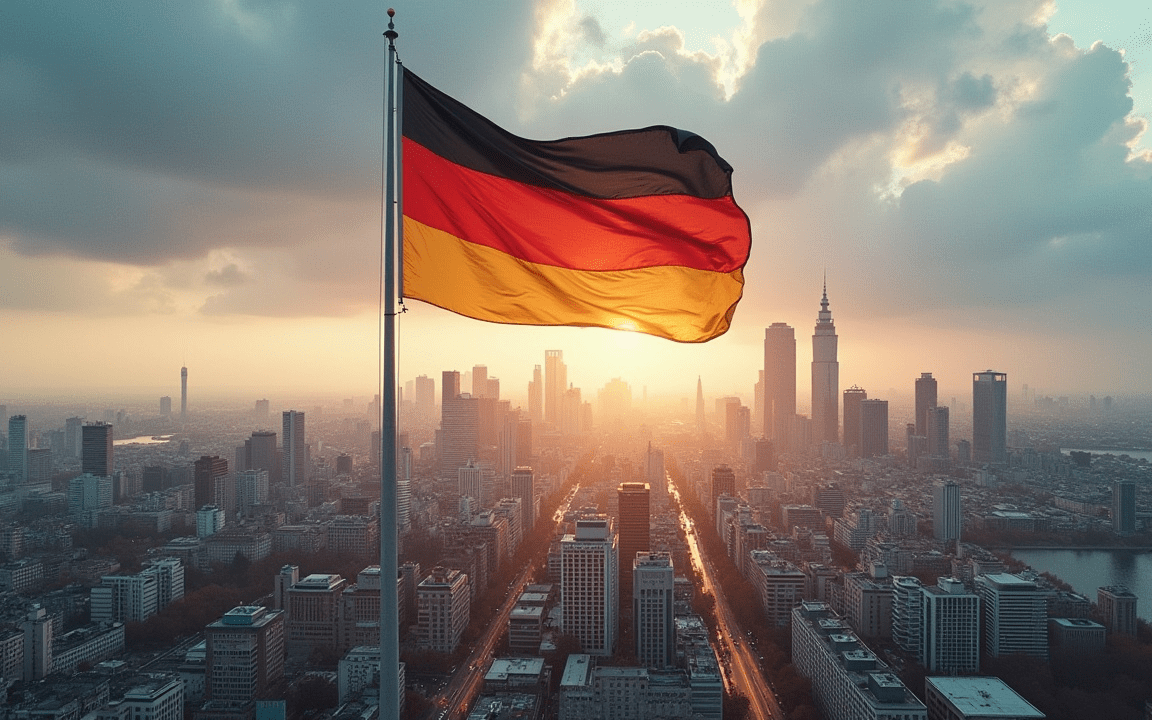
Germany's Economic Stagnation: A Struggle for Renewal
Germany’s economy is at a critical juncture, grappling with the limitations of its long-standing model. For two decades, the country thrived on its export-driven industrial might, but that formula is showing signs of fatigue. Growth has stagnated, the export surplus is shrinking, and even domestic consumption is struggling to provide a meaningful boost. This has led to uncertainty about whether the economy will experience prolonged stagnation or a potential rebound.
The Economy Stalls: Signs of Strain
Recent data paints a concerning picture of Germany’s economic health. After two consecutive quarters of modest growth, the country’s GDP contracted by 0.3% in the second quarter of 2025. Annual growth remains sluggish at just 0.2%, according to the Federal Statistical Office. Several factors are contributing to this slowdown.
Exports have declined due to increased US tariffs, which now sit at 15% for most goods and 27.5% for automobiles. Additionally, weaker demand from China has further impacted trade. The traditional pillars of the German economy—automotive, machinery, and chemicals—are also under pressure. Volkswagen, for instance, saw its net profit drop by 36% in the second quarter, highlighting the fragility of the automotive sector. Meanwhile, the chemical industry faces challenges from high energy costs and an oversupply from Chinese competitors.
The construction sector remains weak, with residential building expected to stabilize only in 2025. Despite some positive indicators, such as a 1.3% rise in July industrial production, the overall trend suggests a prolonged period of stagnation. Since 2019, the economy has remained flat, with output projected to remain stagnant in 2025.
Optimism Amid Weakness: What’s Driving Confidence?
Despite the bleak data, there are signs of optimism. Surveys suggest that business sentiment is improving. The Ifo Business Climate Index rose to 89.0 in August, with managers expressing more confidence about future revenues. Similarly, PMI surveys indicate modest expansion. However, this optimism appears to be at odds with the hard economic data.
One reason for this optimism is the promise of policy changes. Chancellor Friedrich Merz has pledged an “autumn of reforms,” including tax incentives, pension reform, welfare-to-work adjustments, and a more industry-friendly energy policy. Additionally, the EU has approved a €500 billion debt-financed program for infrastructure and defense. Businesses are hoping these measures will translate into real economic growth.
Another factor is the potential for improved trade relations. An EU-US deal could reduce auto tariffs from 27.5% to 15%, providing relief to German carmakers. While this rate is still higher than the 2.5% they enjoyed before Donald Trump returned to the White House, it represents a step forward. Furthermore, rising real wages in Germany, driven by union negotiations, have given some consumers hope. In sectors like metalworking and manufacturing, workers have seen pay increases of up to 20%, bringing entry-level monthly pay closer to €2,800.
The minimum wage is also set to increase to €13.90 in 2026 and €14.60 in 2027, placing Germany among the highest in Europe.
Why the Optimism May Be Fragile
Despite these positive developments, the current optimism is tenuous. Much of it rests on unimplemented reforms and tariff relief that has yet to materialize. Moreover, structural challenges persist. Energy costs in Germany remain significantly higher than in the US, undermining competitiveness. The euro has appreciated 13% against the dollar and 11% against the yuan this year, making exports less competitive.
Industrial firms are operating below capacity, leading to thin profit margins and limited capital spending. The fiscal outlook is also challenging. The deficit is projected to reach 2.7% of GDP in 2025, rising to 2.9% in 2026. Debt levels are expected to climb to 64.7% of GDP, prompting debates over potential budget cuts in 2027.
Unemployment is also on the rise, with over three million people unemployed in August for the first time in over a decade. This has pushed the jobless rate to 6.4%, signaling strain on households and labor demand.
The Path Forward: Opportunities and Risks
For investors, the mixed signals mean that certain sectors may perform better than others. Assets tied to public spending, such as construction and infrastructure suppliers, could see stronger performance. Defense contractors also appear more resilient compared to industries exposed to US trade tensions.
However, the automotive sector remains high-risk, with relief already priced in but not guaranteed. Chemicals and energy-intensive industries are unlikely to recover until energy costs become more predictable.
What Could Change the Narrative?
While the short-term outlook is challenging, there are potential turning points. If the EU acts quickly to implement the US tariff cut, German automakers could see partial relief by early 2026. If Merz manages to pass meaningful reforms on pensions, energy, and welfare, confidence could translate into investment. Public tenders for infrastructure and defense projects could also inject much-needed stimulus into the real economy.
However, the deeper issue lies in competitiveness. Merz has acknowledged that large parts of the economy are no longer price-competitive. Until energy costs fall and regulatory burdens ease, any recovery will likely be temporary.
A Binary Future: Growth or Stagnation?
Germany’s trajectory is unusually binary. Either the promised reforms and spending deliver in 2026, leading to the first real growth since before the pandemic, or the optimism gap collapses, and stagnation becomes entrenched. Three key indicators to watch include the timing of EU legislation to cut auto tariffs, Germany’s industrial energy prices, and the delivery of infrastructure tenders. These factors will determine whether 2026 sees 1% growth or near-zero.
For now, the data suggests stagnation. The hope lies in the policy pipeline. Whether that hope translates into reality will be one of the most significant economic stories in Europe today.

Post a Comment for "Germany's Economy Struggles to Spend Its Way Out of Stagnation"
Post a Comment