
How Israel Might Respond to Palestinian State Recognition Efforts
New Efforts to Advance a Two-State Solution
France and Saudi Arabia are aiming to leverage the United Nations General Assembly this year to bring renewed focus to the Israeli-Palestinian conflict. This comes amid the ongoing, devastating war in the Gaza Strip, which has intensified global calls for a resolution. The two nations are pushing for a new roadmap that could lead to the establishment of a Palestinian state in territories captured by Israel during the 1967 Middle East war. Several Western countries, including Britain, Canada, and Australia, have already recognized Palestinian statehood, joining nearly 150 other nations that have done so. France is expected to follow suit at the General Assembly.
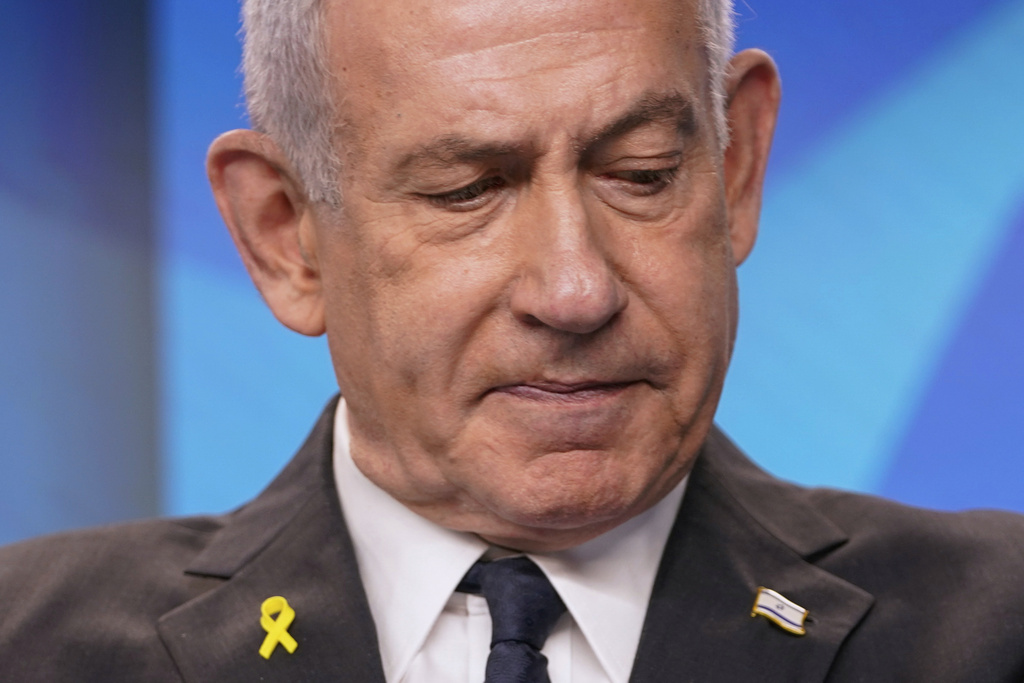
Despite these efforts, the push for a two-state solution faces significant challenges. The United States and Israel strongly oppose any moves toward recognizing a Palestinian state. The U.S. has even prevented Palestinian officials from attending the General Assembly. Prime Minister Benjamin Netanyahu, who is against Palestinian statehood, has warned of potential unilateral actions, such as annexing parts of the West Bank, which would further complicate the path to independence for Palestinians.
A Long-Standing Conflict
The idea of a Palestinian state has long been seen as the only viable way to resolve the conflict, which dates back over a century. The recent war in Gaza, sparked by Hamas' attack on October 7, 2023, has only deepened the crisis. Advocates argue that a two-state solution would allow Israel to remain a democratic state with a Jewish majority, while ensuring that Palestinians have full rights under their own government.
U.N. Secretary-General António Guterres recently emphasized that without a two-state solution, there can be no lasting peace in the Middle East. However, the prospects for such a solution have never looked more bleak.
Historical Challenges and Setbacks
Peace talks initiated in the early 1990s repeatedly failed due to violence and the expansion of Israeli settlements, which are seen as obstacles to a Palestinian state. No meaningful negotiations have occurred since Netanyahu returned to power in 2009. Israel has annexed east Jerusalem, considering it its capital, and has encouraged the growth of Jewish settlements in and around Palestinian neighborhoods.
The occupied West Bank is home to over 500,000 settlers with Israeli citizenship, while approximately 3 million Palestinians live under Israeli military rule. In Gaza, Israel's military operations have led to massive casualties, displacement, and widespread destruction. Tens of thousands of Palestinians have been killed, and nearly 90% of the population has been displaced. Much of the territory is now uninhabitable, and some areas face famine.
International Responses and Opposition
Before the war, most of Israel’s political class opposed Palestinian statehood. The Trump administration showed little interest in reviving peace talks, instead proposing to relocate much of Gaza’s population to other countries—a plan that Israel supported but critics say amounts to ethnic cleansing.
France and Saudi Arabia have proposed a phased plan to end the conflict. It includes an immediate end to the war in Gaza, the return of all hostages, and a complete Israeli withdrawal. Hamas would hand power to a politically independent committee under the Palestinian Authority, though it has not agreed to lay down its arms. International assistance would help rebuild Gaza and govern the territories, possibly with foreign peacekeepers. Regional integration, including Saudi normalization of ties with Israel, would follow.
The U.N. recently approved a nonbinding resolution endorsing the “New York Declaration,” but the plan faces strong opposition from the U.S. and Israel. They argue that recognizing a Palestinian state rewards Hamas and complicates efforts to secure a ceasefire and free the remaining hostages.
Obstacles and Unresolved Issues
The French-Saudi plan avoids the most contentious issues, such as final borders, the fate of settlements, the return of Palestinian refugees, security arrangements, the status of Jerusalem, and recognition of Israel as a Jewish state. It also relies heavily on the Palestinian Authority, which many Palestinians view as corrupt and autocratic. Israel accuses the group of not being fully committed to peace, despite recent reforms.
The plan calls for Palestinian elections within a year, but President Mahmoud Abbas has delayed previous votes when they threatened his party’s dominance. Hamas, which won the last national elections in 2006, would be excluded unless it gives up its weapons and recognizes Israel.
All of this suggests that the plan may end up like many past Mideast accords, leaving Israel in full control of the land from the Jordan River to the Mediterranean Sea, ruling millions of Palestinians denied basic rights.

Post a Comment for "How Israel Might Respond to Palestinian State Recognition Efforts"
Post a Comment