
How Pierre Balmain Embodied the 'Jolie Madame' Aesthetic
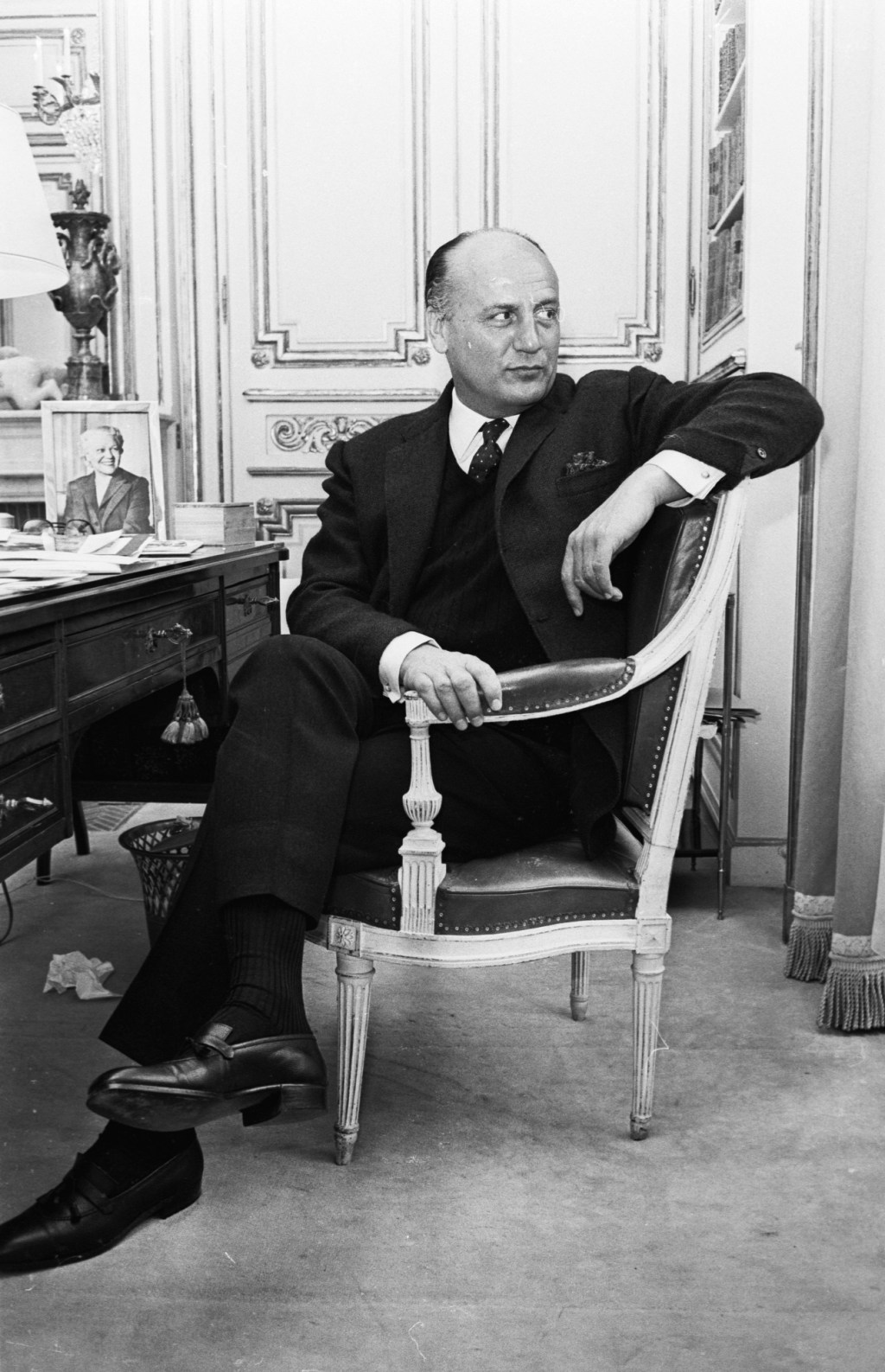
The Early Struggles of a Fashion Visionary
Pierre Balmain's journey to establishing his couture house was marked by a series of challenges that tested his resilience and determination. In the aftermath of the liberation of Paris in August 1944, he set up his brand in a cramped apartment where his office was essentially the bathroom, with wooden planks on the bathtub serving as a makeshift desk. This environment, far from ideal, became the birthplace of his label amidst the chaos of post-war Paris.
Balmain had previously worked for Lucien Lelong during World War II, but after the war, he decided to launch his own couture house at 44 rue François 1er. His mother, who owned a boutique in Aix-les-Bains, invested all her savings into the new venture and oversaw the preparations for the debut. However, nothing went according to plan. Balmain recalled in his 1964 memoir, "My Years and Seasons," that the circumstances surrounding the first showing were filled with drama, much like a second-rate film.
He had carefully chosen an opening date, October 12, 1945, when no other Paris designer was showing. But just days before the event, he discovered that Madame Grès had moved her show to the same day. Desperate, he called her and explained he could not recall the invitations. Grès agreed to reschedule, a gesture that deeply impressed Balmain and bolstered his confidence.
The troubles didn't end there. On the morning of the show, police officers arrived with a bailiff demanding the premises for the French government. Balmain, who hadn't slept all night, had a fit and threw them out—miraculously without immediate consequences.
Despite these hurdles, Balmain never doubted his success. During the war, he had met American writer Gertrude Stein and her partner Alice B. Toklas, who were clients of his mother's boutique. He designed some outfits for them and even invited them to attend his first show in a letter written in September 1945, expressing his confidence in his destiny.
A New Era of Simplicity
Balmain's early reviews were overwhelmingly positive, with the U.K. and U.S. editions of Vogue featuring a piece written by Stein and illustrated by Cecil Beaton, who attended the show. The first look was a brown oversized tunic inspired by a Breton fisherman's blouse, worn with gray flannel slacks and low-heeled brown suede shoes. The model walked with Balmain's pet Airedale, who lunged at Stein's poodle, leading to a humorous dog fight that added a note of informality to the event.
The oversized top with patch pockets was an instant hit, and Balmain created variations for day and evening wear. Beaton photographed the looks on models standing in an artist's backyard surrounded by junk, signaling a new form of glamour emerging from the ashes of war.
Noting Balmain's penchant for clean lines, The News Pulse wrote in December 1946: "He is an apostle of simplicity in fashion design or at least this is his mood of the moment." He expressed his belief in simple clothes that weren't devoid of ideas, approving of small waists and figure lines while rejecting fantastic exaggeration.
A Rise to Prominence
Balmain quickly became a key player in France's post-war fashion renaissance, attracting a clientele of royalty and movie stars such as Wallis Simpson, Marlene Dietrich, and Judy Garland. He also gained recognition as a prolific costume designer for theater and film, dressing the likes of Sophia Loren, Vivien Leigh, Brigitte Bardot, and Katharine Hepburn.
Born in 1914 in Saint-Jean-de-Maurienne, Balmain had wanted to be a fashion designer since childhood, often dressing paper dolls with scraps of cloth. His father, who inherited a wholesale drapery business, died suddenly when Pierre was seven years old. His mother managed a fashion boutique but tried to discourage him from pursuing a career in fashion.
Balmain studied architecture at the École des Beaux-Arts in Paris in 1933 while freelancing for Robert Piguet. A year later, he dropped out and joined the studio of Edward Molyneux, where he remained for five years before joining Lelong. He was mobilized from 1939 to 1941, shuttling between Paris and his native Savoie, though he was confined to office duties.
In December 1941, he returned to Lelong, where he worked alongside Christian Dior. The two discussed opening a couture house together but eventually went their separate ways. Though Balmain's business soared, he was eclipsed by Dior, who captured the popular imagination with his New Look, launched in February 1947.
International Influence and Cultural Exchange
Like Dior, Balmain understood the importance of establishing an international presence. During fittings for the wedding dress of Stella Carcanos, daughter of Argentina's ambassador to Great Britain, he made inroads with the British aristocracy in London. Soon after, Helena Rubinstein came knocking, asking him to design a capsule collection to accompany a new makeup line.
The launch in September 1946 at luxury department store B. Altman & Co. in New York City was promoted with a six-page color spread in Vogue shot by Horst P. Horst, with a caption heralding a "New Look from Paris." After a monthlong visit, Balmain told The News Pulse he intended to drop new designs every two weeks to cater to U.S. ready-to-wear manufacturers.
"With planes making travel a matter of hours it brings all the world close to Paris and in many parts of the world the seasons do not correspond to our seasons. For instance, many of our South American customers want summer dresses when we are holding our fall showings," he said.
A Global Vision
Balmain's wanderlust influenced his designs, reflecting his travels across the globe. He created collections inspired by his journeys, such as his 1948 beachwear line featuring tropical-patterned cotton sarong skirts and his fall 1948 haute couture collection with asymmetric dresses constructed like Indian saris.
"Balmain has completely modernized the Oriental influence, avoiding familiar embroideries or picturesque treatments in favor of clean-cut lines and plain colors," The News Pulse wrote of his fall 1949 couture line, which featured kimono-sleeved coats and colors named Lotus Pink, Lacquer Red, and Lantern Yellow.
Balmain traveled both to scout new markets and for pleasure, exploring far-flung destinations like the Bamiyan valley in Afghanistan and bringing back numerous art objects and mementoes that filled his 19th-century villa in the Paris suburb of Croissy— including Tanagra statuettes, 17th-century Chinese porcelain, and nearly 400 Gallé vases.
Between shows, he would repair to the Italian island of Elba, where in 1958 he commissioned Italian architect Leonardo Ricci to build him a futuristic villa with an oval pool and lush Asian-inspired gardens.
Legacy and Influence
Balmain's style was best summed up by the name of one of his fragrances, Jolie Madame, launched in 1952. Underpinned by his early architectural training, his body-conscious silhouette rested on strict tailoring, cinched waists, and strong shoulders.
During this time, the house—run for decades by the formidable Ginette Spanier—hired a young Karl Lagerfeld, who became Balmain's assistant and later apprentice for three years.
Despite his reputation for decorum, Balmain could also inject a dose of sizzle. A fan of animal prints, he used leopard print with abandon and had a huge zebra-skin rug in his office.
He created a sensation with the transformable dress he made for Juliette Gréco's performance at the "April in Paris" costume ball in 1952 at New York's Waldorf Astoria Hotel: an austere black long-sleeve gown that slid off to reveal a gold lamé dress with a plunging bustier neckline. Press photos show Balmain, dressed as Louis XIV, kneeling near Greco as she flipped her jet-black hair.
Gigi Hadid's gold Miu Miu dress at this year's Met Gala was inspired by a gown that Balmain designed for Josephine Baker in 1951, and he anticipated the trend for naked dressing with his translucent sheath for Carroll Baker, who almost caused a riot when she wore it to the London premiere of her film "The Carpetbaggers" in 1964.
Among his memorable contributions to film were the costumes he designed for Bardot in "And God Created Woman," cementing her sex kitten persona, and the hourglass silhouettes that Loren wore in "The Millionairess."
While many of his peers died young—Robert Piguet in 1953, Jacques Fath in 1954, Marcel Rochas in 1955, and Dior in 1957—Balmain remained active until his death from cancer in 1982, at the age of 68. He was succeeded by Erik Mortensen, his right hand since 1951, for haute couture and Peggy Huynh Kinh for ready-to-wear.
Reflecting on his journey in 1964, Balmain gave an insight into his complex temperament by admitting that he thrived on adversity. "It seems that for me setbacks have always been stimulants, and it is in the midst of difficulties that I have best succeeded in fulfilling my destiny. This is so true that I have come to need problems and challenges to produce my best work. Nothing is more harmful to me than the sense of security," he wrote in his memoir.
He also detailed his feuds with critics who dismissed his flattering designs, popular with aristocrats and ladies who lunched, as staid and conventional, especially when compared with emerging '60s designers like Yves Saint Laurent, Pierre Cardin, and André Courrèges.
"Sometimes I regret that my character does not drive me to create an occasional horror, for I believe that the nightmare of certain models can confirm the purity of lines. But I cannot force myself to do it," Balmain retorted.
"I believe that in our determination to uphold a certain picture of Parisian elegance, without compromise and without weakness, we have now succeeded in the establishment of a style," he said.

Post a Comment for "How Pierre Balmain Embodied the 'Jolie Madame' Aesthetic"
Post a Comment