
New Gaza Flotilla Heads Toward Israel – Legal Right to Intercept?
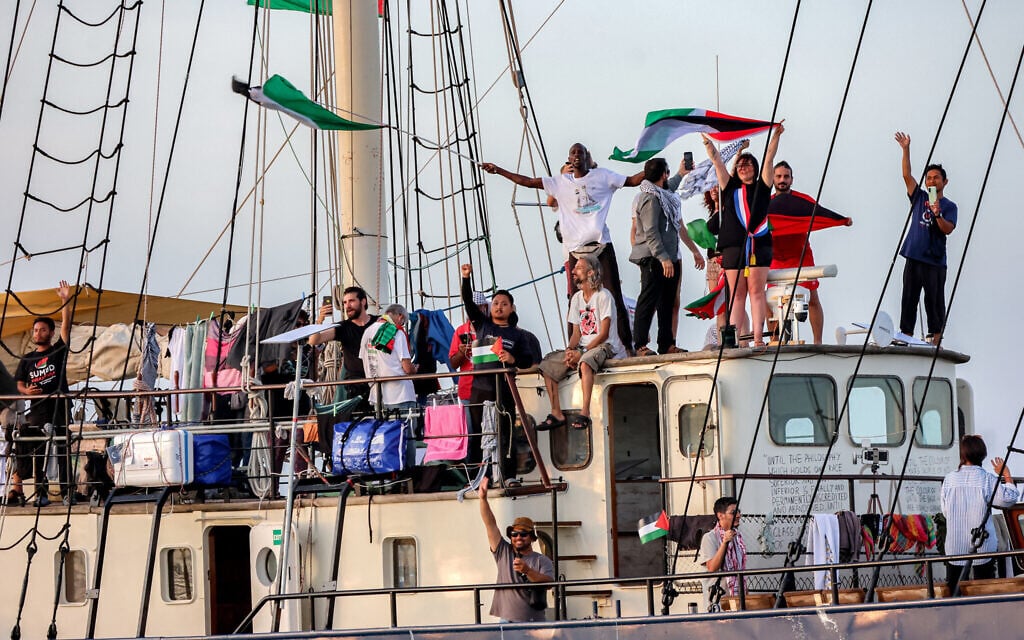
The Global Sumud Flotilla and the Legal Debate Over Israel’s Naval Blockade
As tensions continue to escalate in Gaza, with Israel advancing its military operations in the region, a new initiative has emerged that aims to challenge the ongoing naval blockade of the territory. The “Global Sumud Flotilla,” composed of around 35 small vessels carrying approximately 350 activists from over 45 countries, is making its way across the Mediterranean toward the coast of Israel and Gaza. This movement seeks to deliver aid directly to the war-torn area while drawing global attention to what organizers describe as a humanitarian crisis and potential acts of genocide.
The flotilla's primary objective is to break Israel’s naval blockade and provide much-needed supplies to civilians in Gaza. However, this effort has sparked a significant legal debate about the legitimacy of the blockade and whether Israel has the right to intercept such vessels. The question at the heart of this conflict is whether the blockade is a lawful measure under international law or if it constitutes an illegal act that justifies the breach by the flotilla.
Understanding the Blockade
Israel first imposed a naval blockade on Gaza in January 2009 during Operation Cast Lead, aiming to prevent Hamas from smuggling weapons into the territory. Since then, the blockade has remained in place, with Israel occasionally stopping attempts to break it. One of the most notable incidents occurred in 2010 when the Mavi Marmara, a ship attempting to breach the blockade, was intercepted by Israeli naval forces, resulting in the deaths of 10 Turkish activists.
Dr. Eran Shamir-Borer, a former head of the International Law Department of the IDF’s Military Advocate General’s Corps, argues that naval blockades are a well-established military practice recognized under international law. He points to the San Remo Manual on naval warfare and the London Declaration of 1909 as key legal frameworks that support the use of blockades in times of conflict. According to these documents, blockades can be considered lawful if they are not solely intended to starve the civilian population and if they do not cause excessive harm relative to their military advantage.
Shamir-Borer emphasizes that Israel has allowed the passage of humanitarian aid through land crossings, which he claims undermines allegations of a deliberate policy of starvation. He also notes that the San Remo Manual does not apply the principle of proportionality to blockades in the same way it does to other forms of military action. Instead, the focus is on preventing the smuggling of weapons and ensuring the security of the state.
The Global Sumud Flotilla’s Claims
The organizers of the Global Sumud Flotilla argue that Israel’s blockade is illegal and that their mission is justified under international law. They claim that the blockade violates the Geneva Conventions and constitutes collective punishment against the civilian population. The flotilla is transporting around 250 tons of aid, which it hopes to deliver to Gaza, but this amount is significantly smaller than the weekly aid shipments facilitated by Israel through land crossings.
According to recent reports, over 14,000 tons of aid entered Gaza in the week leading up to September 19, with the majority being food. Additionally, COGAT, the agency responsible for coordinating aid delivery, reported that nearly 1,700 trucks of aid were distributed within Gaza last week. These figures suggest that the humanitarian situation is being addressed through established channels, raising questions about the necessity of the flotilla’s mission.
Despite these efforts, the flotilla continues to assert that the blockade is an illegal and unjustified measure. They argue that the damage caused to the civilian population is disproportionate and that Israel’s actions constitute a violation of international law. However, the legality of the blockade remains a contentious issue, with differing interpretations among legal experts and international bodies.
Enforcing the Blockade
Under international law, the enforcement of a naval blockade is a legitimate right of the state imposing it. The San Remo Manual explicitly states that blockades may be enforced using "legitimate methods and means of warfare," including the interception of vessels attempting to breach the blockade. Activists have argued that since the flotilla is sailing in international waters, Israel cannot legally intercept them. However, according to Shamir-Borer, the intention to breach the blockade is sufficient grounds for interception, even on the high seas.
He explains that neutral vessels can be captured if there is reasonable suspicion that they are breaching a blockade. This applies to the Global Sumud Flotilla, which openly declares its intent to reach Gaza and unload its cargo. Therefore, Israel has the legal right to enforce its blockade and prevent the flotilla from delivering its aid.
Conclusion
The Global Sumud Flotilla represents a significant attempt to challenge Israel’s naval blockade and bring attention to the humanitarian situation in Gaza. While the organizers argue that the blockade is illegal and that their mission is justified under international law, legal experts like Dr. Eran Shamir-Borer maintain that the blockade is a legitimate exercise of self-defense and that Israel has the right to intercept any vessel attempting to breach it. As the flotilla continues its journey, the debate over the legality of the blockade and the rights of states to enforce it will remain a central issue in the ongoing conflict.

Post a Comment for "New Gaza Flotilla Heads Toward Israel – Legal Right to Intercept?"
Post a Comment