
No Deal as Shutdown Looms
Key Issues in the Ongoing Government Shutdown Talks
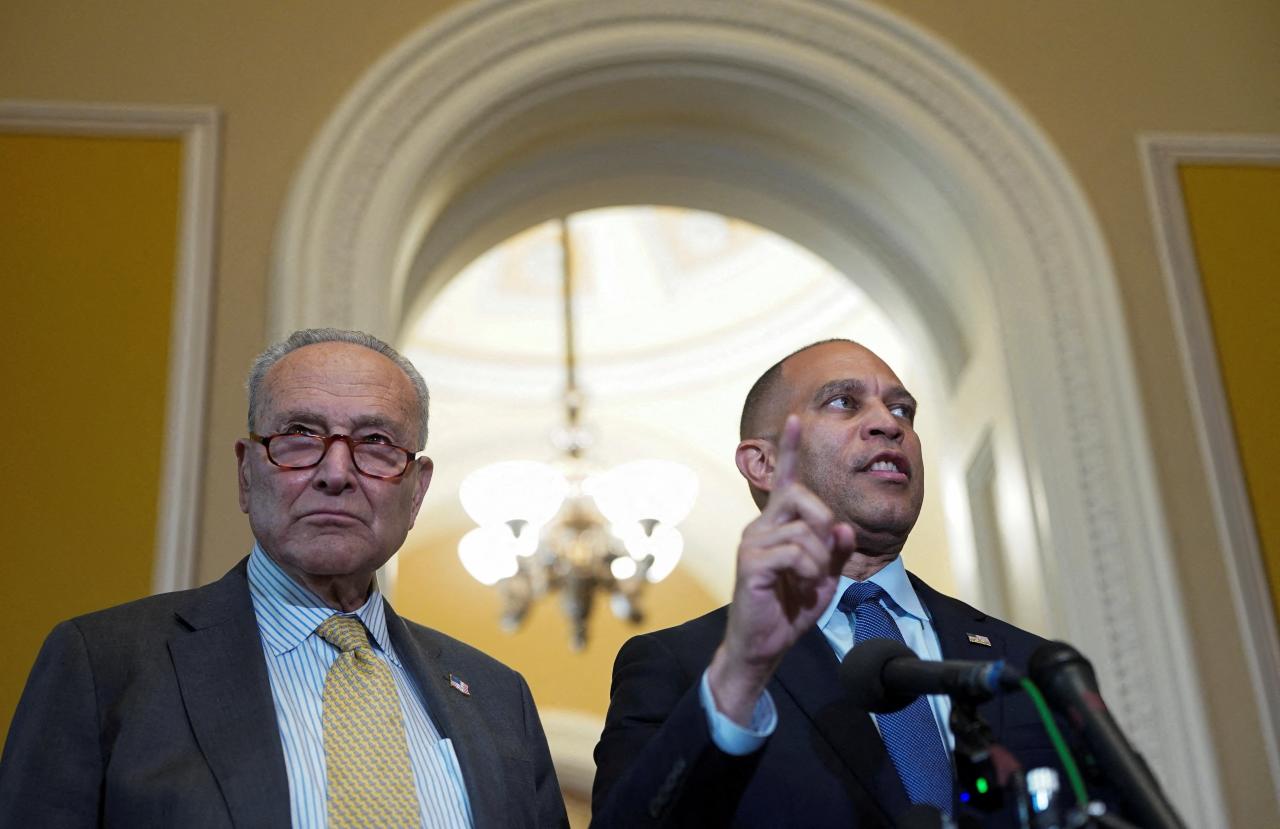
Top Democratic leaders have been engaging with President Donald Trump to restore billions of dollars in healthcare spending as part of any agreement to avoid a government shutdown. However, these discussions have not led to any breakthroughs, further reducing the likelihood of a last-minute resolution. House Minority Leader Hakeem Jeffries (D., N.Y.) described the meeting with the president and Republican leaders as “frank and direct,” but noted that significant differences remain.
The meeting took place with less than 36 hours before federal funding is set to lapse, potentially leading to a partial government shutdown. Democrats expressed their willingness to begin negotiations with the White House and GOP lawmakers, while Republicans indicated they are open to dialogue but not under the pressure of an imminent shutdown. This has resulted in a stalemate between the two parties.
Senate Minority Leader Chuck Schumer (D., N.Y.) mentioned that they discussed the consequences of the healthcare situation, suggesting that Trump may have been unaware of the full impact. In contrast, Vice President JD Vance emphasized that the government should not be shut down over policy disagreements, noting that some of the ideas presented by Democrats were reasonable. However, he also stressed that holding those ideas as leverage for a shutdown is unreasonable.
House Speaker Mike Johnson (R., La.) urged Democratic leaders to support the GOP’s seven-week stopgap bill to keep the government funded, using this period for further discussions and crafting full-year spending bills. A White House official confirmed that Trump pushed for Democrats to accept the GOP proposal. Other lawmakers, however, remain pessimistic about reaching any compromise.
Escalating Tensions and Potential Consequences
The stakes have risen as the White House budget director, Russ Vought, instructed agencies to prepare lists of employees who could be fired if funding lapses. This move goes beyond the typical temporary furloughs and missed paychecks seen in past shutdowns. If Congress fails to pass a short-term spending patch, the government will partially shut down at 12:01 a.m. on Wednesday.
Trump agreed to meet over the weekend after canceling an earlier planned meeting. However, both the White House and congressional Republicans have strong political reasons to avoid making concessions. Republicans aim to pass a stopgap spending bill through November 21 before any major deals, while Democrats insist on securing billions in healthcare funding first.
A key question heading into the meeting was whether Trump would act as a dealmaker or let Democrats leave empty-handed. According to allies, Trump believes he holds a strong position and expects Democrats to face blame for a government shutdown. A close Republican source suggested that while Trump enjoys being a dealmaker, there may not be much of a deal to make.
Focus on Healthcare Subsidies and Political Dynamics
Schumer and Senate Majority Leader John Thune (R., S.D.) have signaled that any potential deal would likely center around extending health-insurance subsidies. The enhanced Affordable Care Act tax credits, introduced in 2021, are set to expire at the end of the year. While Democrats and some Republicans support an extension, Republicans are pushing for new income limits on who receives these subsidies. They also want discussions to occur only after Congress passes the stopgap bill.
The Senate was scheduled to vote again on the same GOP bill that Democrats had previously rejected. With a 53-47 majority, Republicans need 60 votes to pass most legislation. Given the House is out this week, this remains the only available option.
During his first term, Trump struck deals with Democrats, sometimes bypassing his own party. For example, in 2018, he told Schumer and then-House Minority Leader Nancy Pelosi (D., Calif.) that he would "be the one to shut it down" over border security issues, leading to the longest government shutdown in U.S. history.
Strategic Moves and Public Perception
Schumer noted a growing distance between Trump and Republican congressional leaders, suggesting that the path forward involves Trump urging Republicans to renew the expiring subsidies. He dismissed the idea of supporting a short-term patch of just a week to allow more time for discussions about extending the ACA subsidies.
In March, Schumer and some Democratic colleagues supported a GOP bill to keep the government open, viewing it as the best of bad options. However, this decision faced backlash from the left flank of his party. This time, Schumer has taken a firm stance alongside Jeffries.
Democrats argue that they are in a strong position if they can show Republicans are refusing to negotiate. Polling shared with Democrats suggests that in states with close Senate races, respondents would blame Republicans for not working with Democrats.
Republicans, on the other hand, claim that Democratic demands—totaling over $1 trillion over 10 years—are unrealistic. Alongside restoring ACA subsidies, Senate Democrats have proposed reversing Medicaid cuts from Trump’s tax law and rescinding congressionally appropriated funds.

Post a Comment for "No Deal as Shutdown Looms"
Post a Comment