
Opinion: Is the 'Department of War' a Symbol of National Decline?
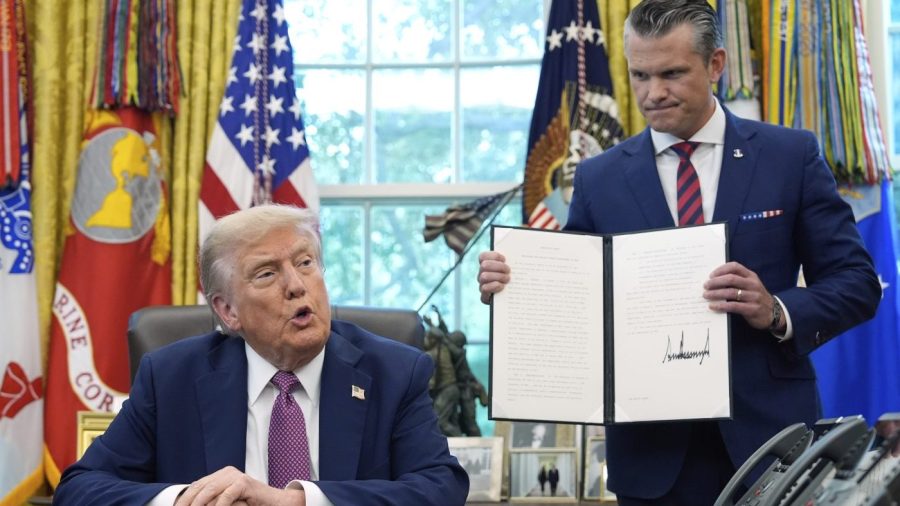
The Return of the Department of War
President Trump's decision to reinstate the name "Department of War" has sparked significant debate and raised questions about the nation's readiness for potential global conflict. This move, made through an executive order on September 5, marked a return to a historical title that had been replaced by the Department of Defense in 1947 under the National Security Act. The symbolic gesture was accompanied by strong rhetoric from Secretary of War Pete Hegseth, who emphasized the need for a more aggressive military stance.
Hegseth’s comments highlighted a shift towards a more confrontational approach, suggesting that the revived name would signal America’s commitment to war. He stated that the change conveyed “maximum lethality” and warned adversaries that the U.S. would raise up warriors rather than just defenders. A White House fact sheet supported this sentiment, claiming the name change would serve as a warning to those who might challenge American interests.
A Test of Readiness
The timing of this decision coincided with a tense moment in international relations. On Tuesday evening, NATO forces successfully shot down Russian drones that had breached Polish airspace. This incident raised concerns about the potential for a larger conflict, especially given the recent changes in the U.S. military structure. Since the name change, both China and Russia have remained relatively quiet, leading to speculation about whether the drone incident was a deliberate message from Moscow.
The situation became even more complex when Chinese President Xi Jinping held a military parade in Beijing on September 2, showcasing advanced weaponry and over 10,000 troops. This event, which ostensibly commemorated the end of World War II, was seen as a demonstration of strength and a challenge to U.S. dominance. Notably, Russian President Vladimir Putin and North Korean leader Kim Jong Un were present, highlighting a growing alliance among these nations.
A Symbolic Gesture or a Strategic Move?
Trump’s reaction to Xi’s parade was marked by a public accusation on Truth Social, where he claimed that China, Russia, and North Korea were conspiring against the U.S. This bold statement contrasted sharply with his own military parade in Washington on July 14, which many found underwhelming. The timing of these events suggests that Trump may have felt threatened by the display of strength from other nations.
The rebranding of the Department of Defense to the Department of War appears to be a strategic move aimed at countering the perceived threat from China and its allies. However, the symbolic gesture raises questions about the actual preparedness of the U.S. military. Despite the new name, the reality is that America faces several challenges in maintaining its military advantage.
Challenges Facing the U.S. Military
Several chronic issues hinder the U.S. military's ability to quickly ramp up production for a global conflict. These include a lack of domestically produced raw materials, reduced manufacturing capacity, disruptions in international supply chains, workforce shortages, and a dearth of critical skills. Reports from various branches of the military highlight problems such as aging fleets, delays in production, and personnel shortages.
The Heritage Foundation, a Trump-friendly organization, has pointed out that the U.S. may not be able to win a drone war with China, let alone any prolonged conflict. This concern is echoed by internal reports within the military, which indicate that only small percentages of units are combat-ready for extended missions.
The Great Seal and the Future of U.S. Policy
The Great Seal of the United States, featuring an eagle facing the olive branch, symbolizes peace. However, this image seems to contradict Trump's policy statements of “maximum lethality” and “America’s readiness to wage war.” As tensions continue to rise, the question remains whether Trump is bluffing or if the nation will be tested in the coming days.
In conclusion, the return of the Department of War is a significant development that highlights the complexities of modern military strategy. While the symbolic gesture may serve as a warning to adversaries, it also underscores the urgent need for the U.S. to address its underlying challenges and ensure it is fully prepared for any potential conflicts. The coming months will be crucial in determining the direction of U.S. foreign policy and its readiness to face the challenges of a rapidly changing global landscape.

Post a Comment for "Opinion: Is the 'Department of War' a Symbol of National Decline?"
Post a Comment