
Opinion | Israel Reaps What It Sowed By Attacking America's Allies
The Unprecedented Attack on Doha
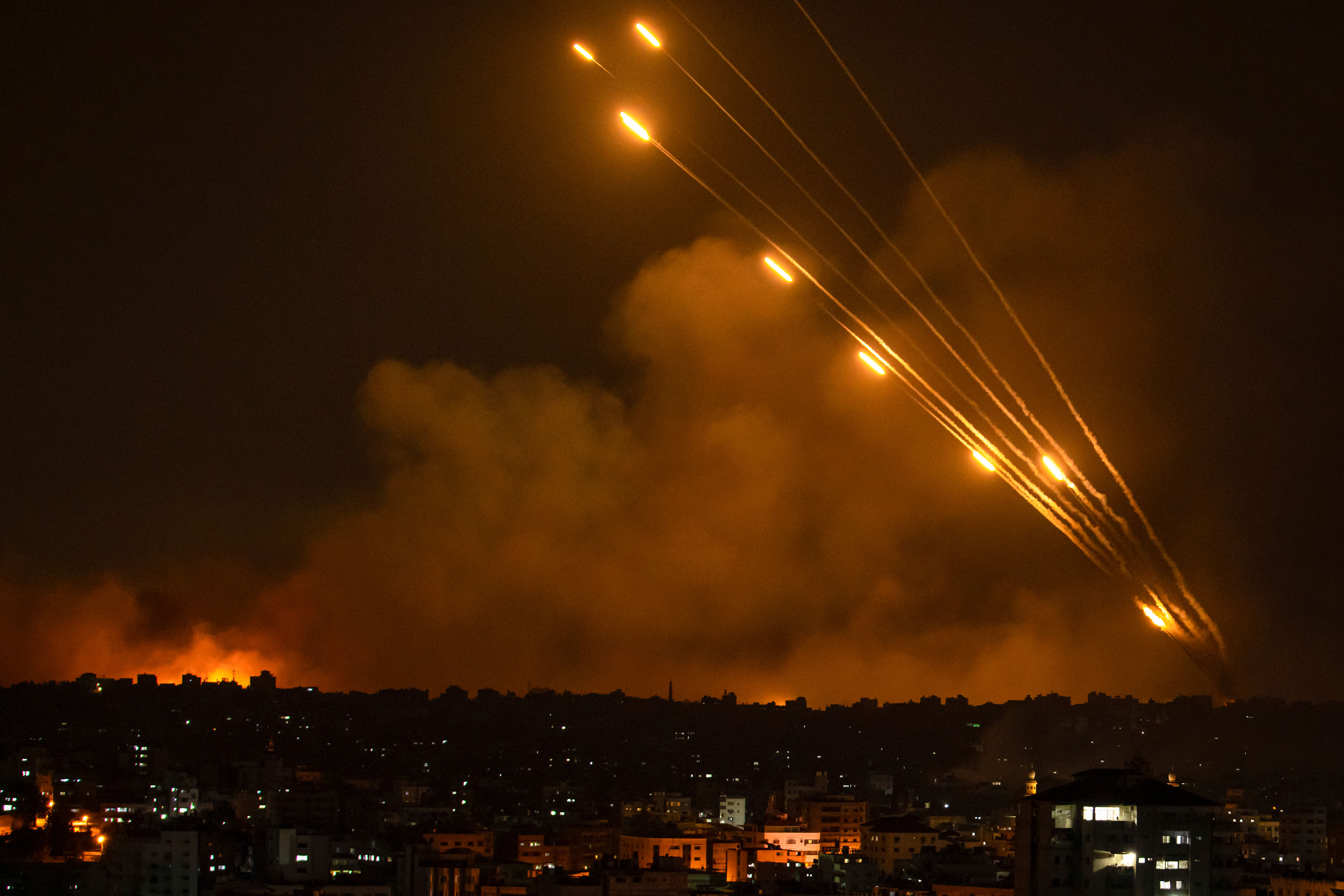
On September 9, Israel conducted a strike on a gated compound in Doha's Leqtaifiya district, which was being used by Hamas' political bureau. This marked an unusual and significant event, as it involved an attack on a close U.S. ally that has historically maintained unofficial ties with Israel. The timing of the strike was also notable, as senior Hamas figures were in the process of evaluating a U.S.-backed ceasefire and hostage proposal.
The attack targeted several Hamas leaders, resulting in the deaths of six individuals, including a Qatari security officer. Other casualties included Khalil al-Hayya, a senior Hamas figure, his office director, and three bodyguards. According to Israeli media, the operation involved 15 fighter jets dropping 10 bombs. However, it has since been confirmed that Israel did not achieve its primary objective of eliminating key Hamas leadership, which also included Khaled Mashaal and Zaher Jabarin.
The Upcoming Summit and International Reactions
The Qatari Prime Minister, Sheikh Mohammed bin Abdulrahman Al Thani, condemned the attack as "cowardly" and accused Israel of violating Qatar's sovereignty. His government has suspended communication with Israeli negotiators and is preparing to host an Arab-Islamic summit in the coming weekend. Qatar has also sent a formal letter to the United Nations Secretary-General, Antonio Guterres, strongly criticizing the Israeli aggression.
The United States has also expressed disapproval of the strike, given that Qatar is a close U.S. ally. The Al Udeid airbase, located in Qatar, hosts the U.S. Central Command. Former President Donald Trump claimed that the decision to bomb Qatar was made by Israeli Prime Minister Netanyahu. He stated that bombing a sovereign nation, especially one working to broker peace, does not serve the interests of either Israel or the United States. The White House later claimed that Israeli jets launched the attack without coordination with the U.S., and only after the missiles were airborne did American officials become aware. Trump ordered envoy Steve Witkoff to warn the Qataris, but by the time he made contact, the bombs had already struck. Qatar, however, disputes this account.
The Scathing UNSC Statement
In a rare move, the UN Security Council issued a joint statement condemning the attack in Doha, though it did not explicitly name Israel. All Gulf countries united behind Qatar, expressing strong support for its sovereignty. UAE ruler Sheikh Mohammed bin Zayed Al Nahyan traveled to Doha to meet with Qatari Emir Al Thani, while Kuwait, Bahrain, and Saudi Arabia also strongly condemned the Israeli airstrikes. These were the very Gulf states that had previously severed ties with Qatar in 2017, imposing a blockade on it due to allegations of supporting terrorism and the Muslim Brotherhood.
Israeli Prime Minister Benjamin Netanyahu justified the attack by citing terrorism, using it as a rationale for the strike. He referenced the events of September 11 and October 7, drawing parallels between the two attacks. Netanyahu emphasized the need to remember the atrocities committed against the Jewish people.
Israel's Case and Qatar's Role
Retired Gen. Yossi Kuperwasser, head of the Jerusalem Institute for Strategy and Security, argued that Qatar chose to host a terror group on its soil, which led to consequences. He claimed that Doha cannot hide behind sovereignty claims and that it was warned repeatedly about hosting Hamas.
Qatar has long been criticized for its dual role as both an "arsonist" and a "fire-fighter." It initially supported Hamas, enabling acts of terror, including the October 7 attacks, before shifting to a role as a mediator and peace-builder. Qatar has also supported the Taliban, providing legitimacy to the group when it was proscribed by the UN. In 2020, Qatar played a key role in brokering talks between the Taliban and the U.S. under the Trump administration.
A Terrorist History and Mediation Efforts
Qatar's foreign policy is rooted in its constitution, which emphasizes mediation as a key priority. The country has hosted various groups, including the Taliban, Hamas, and Syrian opposition factions. Its media outlet, Al Jazeera, has often been accused of interfering in the internal affairs of other nations, despite the heavy censorship of coverage about Qatar.
Despite these efforts, the recent strikes on Qatar have raised questions. Qatar had previously supported the Hamas government in Gaza, in coordination with Israel. However, following the October 2023 attacks, there were allegations that the Netanyahu government engaged in a PR campaign funded by Qatar to portray the country in a positive light, known as the Qatar-gate scandal.
A Puzzling Strike and Broader Implications
The immediate trigger for the strikes may have been the Hamas attack in Jerusalem, which killed six people and injured 12 others. Netanyahu demanded that Qatar expel the Hamas chief, warning that if they did not comply, Israel would do so. Many believe the strikes should have come earlier, as 48 Israelis remain held captive by Hamas in Gaza.
Internationally, Israel faces growing condemnation, with the International Criminal Court issuing an arrest warrant for Netanyahu. Norway's sovereign wealth fund has divested from Israeli companies, Germany has suspended arms exports to Israel, and Spain has imposed an arms embargo and recalled its ambassador.
The More Things Change...
Despite the backlash, it remains uncertain whether anything will fundamentally change on the ground. Qatar has signaled that it will not allow Israeli actions to disrupt negotiations. Claims that the attack could negatively impact Qatar's relations with the U.S. have been dismissed, with Qatar reaffirming that its security partnership with the U.S. is stronger than ever.
The upcoming Arab-Islamic summit, scheduled for the coming weekend, may be more about issuing strong statements of condemnation rather than taking concrete action. Ultimately, the situation remains fluid, with ongoing tensions and complex dynamics shaping the region's future.

Post a Comment for "Opinion | Israel Reaps What It Sowed By Attacking America's Allies"
Post a Comment