
Piet Oudolf Breathes New Life into Calder Gardens
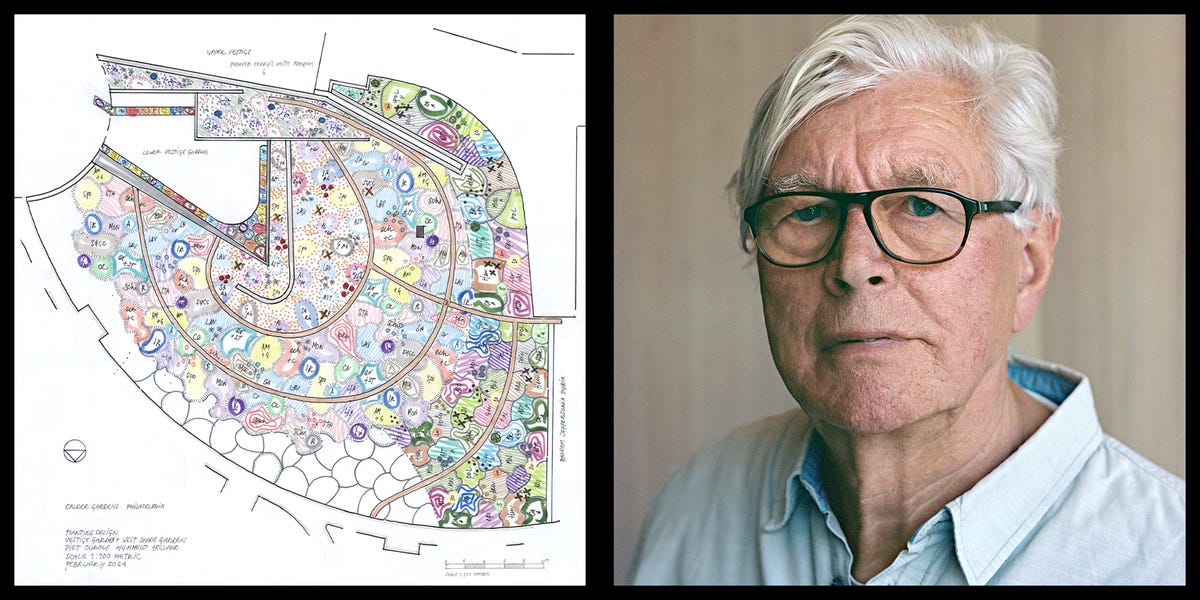
The Vision Behind Calder Gardens
In 2018, Alexander “Sandy” Rower, the grandson of the artist and sculptor Alexander Calder and president of the Calder Foundation, received a call from the Barnes Foundation in Philadelphia. The leadership of the Barnes, which had successfully moved its 4,000-artwork collection a decade earlier, was interested in bringing a Calder museum to Calder’s hometown. However, Rower had a different vision. He expressed his desire to create a sanctuary rather than a traditional museum.
After several discussions with the Barnes team, things began to align. Joseph Neubauer, then the chair of the Barnes board, understood Rower’s vision. The Swiss-based firm Herzog & de Meuron was chosen for the architecture. Plans were quickly taking shape, but the challenge remained: what to call it? Through a soul-searching effort, the architect Jacques Herzog and Thomas Collins, the executive director of the Barnes, settled on the name Calder Gardens.
Herzog approached the project as a topographical exercise, developing the concept step by step, almost like an artwork. There was no program, no brief, no budget, and not even a clear site. Eventually, a one-and-a-half-acre tract along Benjamin Franklin Parkway, across from the Barnes, was secured, along with the necessary funding.
Piet Oudolf: The Master of Natural Beauty
The question of who would design the gardens was clear to Rower. He believed there was only one person for the job: Piet Oudolf. A renowned Dutch garden designer, Oudolf is known for his wild and wispy aesthetic, seasonal consciousness, and high-density plantings that emphasize perennials, bulbs, grasses, ferns, and small shrubs.
Oudolf's approach to gardening is deeply rooted in creating experiences that transform how people see and interact with nature. His gardens serve as both emotional constructions and public teaching tools. From the High Line in New York City to the Lurie Garden in Chicago, Oudolf has consistently aimed to give people an experience of plants, encouraging them to appreciate green spaces and their impact on well-being.
Now 80, Oudolf has spent the past five decades immersed in garden design, becoming one of the most recognized names in the field. Despite his fame, he remains focused on his craft, running his operation solo and taking on no more than 10 projects at a time. This allows him to be deeply involved in each project, ensuring quality and attention to detail.
A Journey Through Nature
Born in 1944 in the rural town of Bloemendaal, Oudolf grew up in a family that ran a restaurant. Plants were never on his mind during his early years. However, after marrying and thinking about his future, he found himself drawn to the English countryside. Cycling through the area with his wife Anja, he was inspired by the meticulously manicured gardens he encountered.
This led Oudolf to leave his restaurant job for a position at a plant nursery, marking the beginning of his journey into garden design. Over the years, he has built a career centered around plants, emphasizing their role as materials in creating beautiful and functional spaces.
Oudolf gained recognition as a leading figure in the New Perennial and Dutch Wave movements. His work in the 1980s challenged traditional garden designs, focusing instead on free-flowing environments that maintain beauty throughout the year. His book, "Dream Plants for the Natural Garden," co-authored with Henk Gerritsen in 1991, became a key reference for gardeners and designers alike.
Expanding Horizons
Oudolf's breakthrough came in the early 2000s, with projects like the Lurie Garden in Chicago and the High Line in New York City. These projects elevated his status and brought him into the art world. In 2010, he presented a celebrated garden installation at the Venice Biennale, further solidifying his reputation.
His collaborations extended beyond gardens, appearing in various architectural and cultural spaces. Oudolf's influence can be seen in places like Noma in Copenhagen and the Vitra design company campus in Germany.
Despite his success, Oudolf prefers not to refer to himself as an artist, instead identifying as a gardener and garden designer. Others, however, view his work as art. Elizabeth Diller of Diller Scofidio + Renfro compares him to a jazz musician, noting that he invites plants to grow in their own way, rather than forcing them into submission. This unique approach continues to inspire and captivate those who experience his gardens.

Post a Comment for "Piet Oudolf Breathes New Life into Calder Gardens"
Post a Comment