
Pismo Beach Flag Shred: Why No Hate Crime Charges?
The Destruction of a Pride Flag and the Lack of Hate Crime Investigation
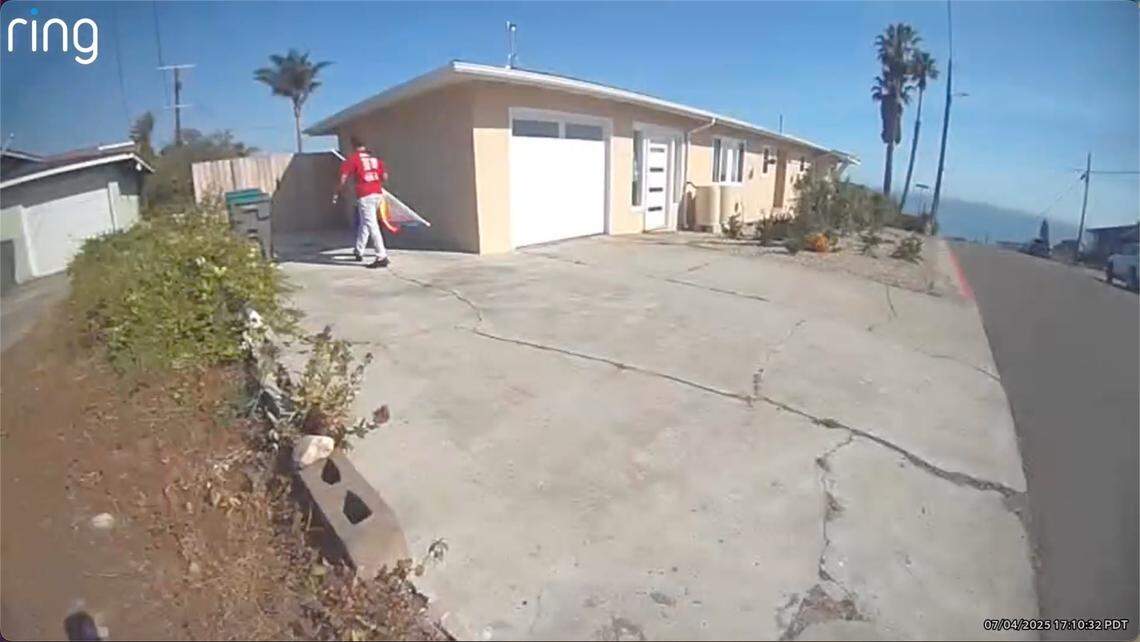
A Pride flag was destroyed in Pismo Beach on the Fourth of July, but two months later, the incident is not being investigated as a potential hate crime. Cynthia, a Pismo Beach resident who asked to remain anonymous for fear of retaliation, was enjoying her Fourth of July evening when she noticed her Pride flag had gone missing from its usual place outside her front door.
“We found the flag in the trash can, and it had been shredded,” Cynthia said. “I looked at our Ring cameras, and that’s when I saw the footage… of a young man doing something with the flag, and then we saw him walk across the driveway and put it in the trash can.”
Cynthia, who considers herself an ally of the LGBTQ+ community, believed the destruction of her flag was clearly an act of anti-LGBTQ+ sentiment. She asked the Pismo Beach Police Department to investigate the incident as a hate crime. Initially, the department did so. However, when the case reached the San Luis Obispo County District Attorney’s Office, it was no longer treated as a hate crime, and the individual involved was not required to complete any bias training as part of his misdemeanor diversion, according to District Attorney Dan Dow.
In recent years, the issue of where and when Pride flags can be flown in San Luis Obispo County has largely revolved around their use over official government buildings during Pride month. Morro Bay recently voted to discontinue flying the Pride flag in May, and the question of whether or not to fly it caused controversy at an Arroyo Grande City Council meeting in 2023. The issue also made headlines in 2021 when Pride flags were desecrated by Paso Robles High School students.
As part of its Reality Check series, the Tribune investigated the case and why law enforcement did not treat it as a hate crime.
How Did the Pismo Beach Police Department Handle the Complaint?
As the investigation into Cynthia’s case progressed, she said the focus on the hate crime aspect of the crime slipped out of view. Though she asked the Pismo Beach Police Department to investigate it as a hate crime, and it was initially investigated as such, she said that side of the investigation was quickly dropped.
Cynthia said the individual in question was identified by the Paso Robles Police Department because he was wearing clothing at the time of the incident that indicated he was a Paso Robles High School athlete. The Tribune is not naming the 18-year-old suspect because he is in diversion, which has the intention of ultimately not having his name in a searchable database once it is successfully completed. Neither he nor his mother responded to The Tribune's request for comment for this story.
When Cynthia spoke with Chief Deputy District Attorney Jarrett Gran and the Pismo Beach Police Department about the situation, Gran said the police did not recommend filing hate crime charges, and a hate crime enhancement was not filed with the case, she said.
Cynthia said she sought the hate crime enhancement not to be punitive, but to make sure the student received some kind of bias or hate-crime-specific training as part of his misdemeanor diversion.
“I guess it's called the misdemeanor property crimes, so they're treating it just like an ordinary property crime, which it clearly wasn't,” Cynthia said. “It's not like he came in and stomped on my flowers or smashed a garden gnome, right?”
Critically, Cynthia said she was not informed of her Marsy’s Law rights by the District Attorney’s Office, which requires law enforcement to notify victims and provide opportunities for input during the criminal justice process. Had she had the opportunity, she would have asked for a misdemeanor diversion process that would include some kind of bias or hate crime training.
What Makes a Hate Crime?
According to the Pismo Beach Police Department’s investigation, the student was on the autism spectrum and had his mother present with him when he spoke with the police about the incident. The student "exhibited signs of a cognitive disability during the interview," including the way he answered and understood questions, according to the police report.
"Based on (the suspect's) statements, I determined that he did not use force or threats of force and therefore did not violate Penal Code 422.6(a)," the report read. That code protects victims from individuals seeking to stop them from exercising their constitutional rights by force or threat of force, willful injury, intimidation, interference, oppression, or threats regardless of their actual or perceived characteristics.
The suspect "stated he held no prior negative feelings toward the LGBTQ+ community and did not act with hate or prejudice when removing the flag," the report continued.
In an email to The Tribune, Dow highlighted the suspect's cognitive disability and the fact that police found he did not have negative feelings toward the LGBTQ+ community when he shredded the flag as to why the office did not pursue the crime as a hate crime.
Changes in Victim Notification Process
Dow said he created and implemented the pre-filing misdemeanor program to deal with first-time offenders of low-level crimes "typically committed by very young adults" such as the suspect. He said the program has reduced recidivism for first-time offenders significantly.
The California Legislature has also created its own court-based misdemeanor diversion and mental health diversion programs that are available to defendants after a case is filed in court, Dow said.
"We believe that the facts of this case warranted our decision to offer our pre-filing misdemeanor diversion program because it will have a more significant impact on the offender and is more likely to lead to a better outcome," Dow said.
He added that had his office filed the case in court and the suspect sought court misdemeanor diversion, the suspect would not have been required to participate in a victim impact class and theft/property violation class.
Dow did acknowledge that based on Cynthia's experience, his office has implemented a new internal process to ensure victims are notified of the District Attorney’s Office intent to provide misdemeanor diversion prior to actually offering the diversion to the defendant.
"This will provide victims the opportunity to weigh in and be heard before we make our decision instead of only being informed after the decision was made without their input being considered," he said.
He said his office strives to fully inform every victim of their rights under Marsy’s Law.
"We are committed to being a continually learning organization and have already made improvements based on our recent feedback from Cynthia," he said.

Post a Comment for "Pismo Beach Flag Shred: Why No Hate Crime Charges?"
Post a Comment