
Power, Politics, and Performance: Russia's Revamped Intervision Contest Crowned a Winner
A New Musical Arena: Intervision and Its Geopolitical Implications
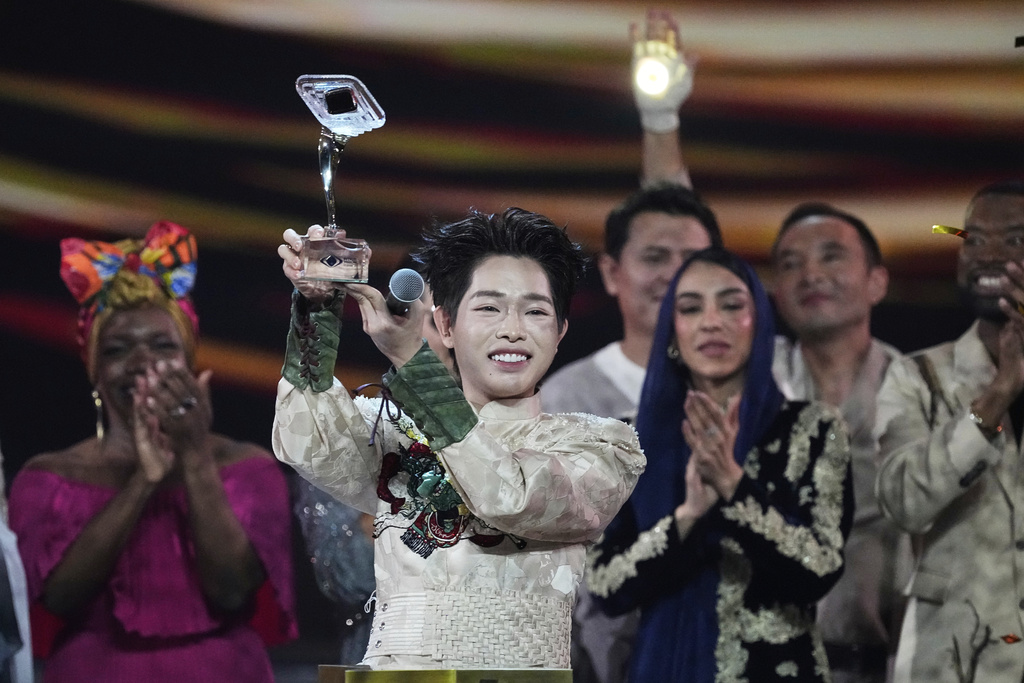
When Vietnamese singer Duc Phuc raised the crystal cup trophy in Moscow’s Live Arena on Saturday night, he became the first winner of the Intervision song contest. This Russian alternative to Eurovision has sparked discussions about its role in the global music scene and its connection to politics.
In a competition filled with powerful vocals and impressive visual effects, Duc Phuc's song "Phu Dong Thien Vuong," which blends pop, rap, and dubstep, won the grand prize of 30 million rubles (about $360,000). The contest also had some unexpected moments. Before the U.S. entrant, Australian-born Vassy, was scheduled to perform, the show's presenters announced that she would not be able to take the stage due to “political pressure” from the Australian government. Another U.S. act, Brandon Howard, had been set to perform but dropped out due to “unforeseen family circumstances.”
Vassy did not comment on the incident when asked by the Associated Press. Meanwhile, Russian singer Shaman delivered a passionate speech after his performance, asking that Russia's entry not be judged by the international jury. He claimed that Russia had already won by inviting so many countries to join.
Glitter and Geopolitics
For years, Eurovision has been the pinnacle of international music competitions, celebrating songs across Europe. Intervision aims to challenge this dominance. Like Eurovision, the contest features acts performing under their national flags in front of large audiences, competing for votes and recognition.
However, beneath the surface, there are strong geopolitical undertones. Intervision was launched through a presidential decree in February, three years after Russia was excluded from Eurovision due to its full-scale invasion of Ukraine. This new contest offers Moscow a platform to re-engage with the global cultural stage.
Russian officials have denied that Intervision is an example of soft power. However, high-level politicians have been closely involved. President Vladimir Putin mentioned the contest during his state visit to China, and Foreign Minister Sergey Lavrov appeared at the event.
A Historical Context
Intervision is modeled after a socialist-era contest held in Czechoslovakia and Poland between the 1960s and 1980s. Historian Dean Vuletic notes that these earlier versions aimed to bridge the gap between East and West. They sought to attract attention from Western media and record companies. Boney M even performed as an interval act in 1979, showcasing their hit "Rasputin."
In 2025, the contest includes 23 acts from various countries, including China, South Africa, Brazil, the UAE, India, Cuba, Ethiopia, and Venezuela. However, the selection process for performers remains unclear, with no public list of co-organizers. This lack of transparency raises questions about the contest's inclusivity and fairness.
A Global Audience or a Political Platform?
Despite its global ambitions, Intervision faces challenges in gaining widespread support. Content creators like Henrik Larsson have posted videos about the contest, highlighting the diversity of songs. However, most Eurovision fan communities have ignored Intervision, viewing it as a political tool rather than a genuine musical competition.
The contest's commitment to “traditional universal and family values” contrasts with Eurovision's LGBTQ+ friendly environment. Vassy's involvement with the NOH8 Campaign, which promotes LGBTQ+ rights, led to her Wikipedia page being temporarily altered. This highlights the tension between artistic expression and political messaging.
The Future of Intervision
For Intervision to build a lasting legacy, it needs more than just musicians—it needs fans. Without a strong fan base or a central organization driving the competition, its future will depend heavily on political support. Historian Dean Vuletic warns that without this, the contest may face the same fate as its predecessors in the 1960s and 1970s, which faded due to social and political changes.
As the 2025 show concluded, organizers announced that next year's event will be held in Saudi Arabia. For now, the Kremlin shows enthusiasm for the competition's planned 2026 edition. Lavrov emphasized the need to promote an objective portrayal of Russia abroad, suggesting that some of the country's perceived shortcomings provoke envy among foreign counterparts.

Post a Comment for "Power, Politics, and Performance: Russia's Revamped Intervision Contest Crowned a Winner"
Post a Comment