
Real or Fake? Food Brands Named After Real People
The Truth Behind Famous Food Brand Mascots
Some brands have used clever marketing to create memorable characters that resonate with consumers. However, not all of these beloved figures are real. Some are fictional, while others are based on actual people. Let’s take a closer look at which food mascots are real and which are just part of the marketing magic.
Fake Mascots: The Fictional Faces
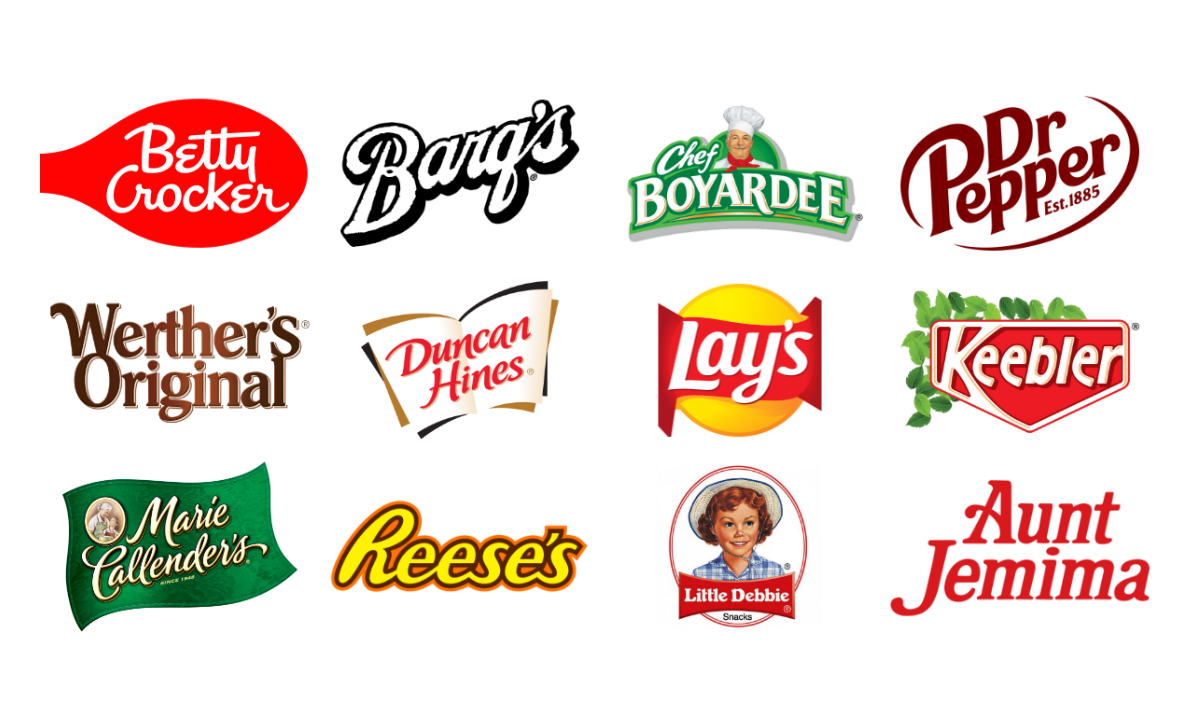
One of the most well-known fake mascots is Betty Crocker. She has been associated with General Mills since 1921 and was even named the “Second Most Popular Woman in America” by Fortune magazine. However, she was never a real person. Her letters were written by staff members, and her image was created for marketing purposes.
Another example is Mrs. Butterworth. Her bottle was shaped like a woman, but she was never a real person. The character was created as part of a contest in 2009, and the company clarified that she was not based on any specific individual or stereotype.
Werther’s Original caramel company is another brand that doesn’t have a real person behind its name. It was named after the town of Werther in Westphalia, Germany, where the company was founded.
Juan Valdez, the iconic figure representing Colombian coffee, is also fictional. He has been the face of the National Federation of Coffee Growers of Colombia since 1958, but no such person exists. Today, he has his own line of coffee and runs over 500 cafes.
Aunt Jemima, once a symbol of racial stereotyping, was also fictional. The character was first introduced in 1893 and was portrayed by a former slave at the World's Columbian Exposition. Quaker Oats continued using the image until 2020, when the product was rebranded as Pearl Milling Company.
Real People Behind the Brands
Not all mascots are fictional. Some are based on real individuals who played a significant role in the creation of their respective brands.
Duncan Hines, for instance, was a real person. In 1935, he compiled a list of restaurants for his friends, which eventually led to the publication of "Adventures in Good Eating." His name was later licensed to a cake mix company.
Orville Redenbacher was a real man who co-founded a popcorn company. Alongside Charles F. Bowman, he developed a signature popcorn variety called "RedBow," which became a staple in American households.
H.B. Reese, the creator of Reese’s Peanut Butter Cups, was also a real person. He started making peanut butter cups after being let go from Hershey’s. His creations eventually became part of the Hershey company.
Edward Barq, the founder of Barq’s Root Beer, was a real person who introduced the beverage in the late 19th century. His drink was unique in its formulation, featuring less sugar and higher carbonation.
Godfrey Keebler, the original baker behind Keebler cookies, was a real person. His first bakery opened in 1853, and the elf mascot, Ernest J. Keebler, was introduced much later in 1968.
Ettore Boiardi, the owner of Il Giardino d’Italia in Cleveland, Ohio, was a real person who popularized his spaghetti sauce. He decided to spell his name phonetically to make it easier for customers to pronounce.
Jerrome Monroe Smucker, the founder of the J.M. Smucker Company, was a real person who started with apple butter. His products were made with apples planted by Johnny Appleseed, adding a touch of folklore to the brand’s history.
Maybe Real: The Uncertain Cases
Some mascots fall into a gray area, with some evidence pointing to real people and others suggesting they are fictional.
Julius Pringle, the mascot for Pringles, may have been inspired by a real person. A Mark Pringle filed a patent for Procter & Gamble in 1937, and the company’s website mentions that Gene Wolfe, who invented the chip-making machine, resembles the mascot.
Uncle Ben, the image on Uncle Ben’s rice packaging, is another case of uncertainty. While the company claimed to have based the character on a “legendary” Texas rice farmer, there is no clear evidence that a real person named Ben ever existed.
Conclusion
The world of food branding is filled with both real and fictional characters. While some mascots are based on actual people, others are purely marketing tools designed to capture the imagination of consumers. Whether real or not, these figures have played a significant role in shaping the identities of their respective brands.

Post a Comment for "Real or Fake? Food Brands Named After Real People"
Post a Comment