
Review: Julia Roberts, Andrew Garfield, and Ayo Edebiri Dive Into Sexual Politics
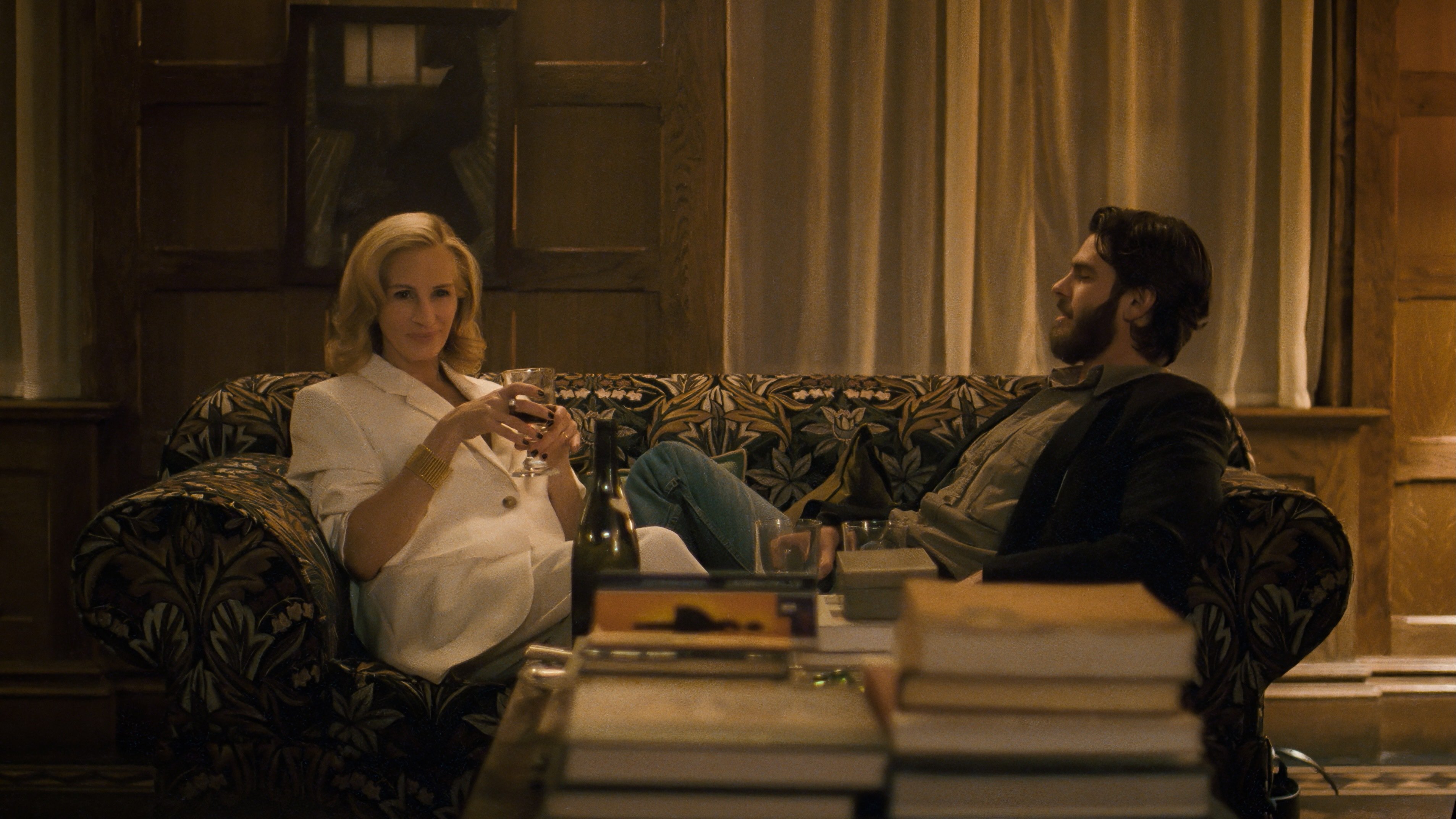
A Deep Dive into Luca Guadagnino’s After the Hunt
Luca Guadagnino has carved a unique niche in contemporary cinema by exploring the complexities of desire, love, and human connection. His recent films, including Challengers and Queer, have delved into intricate emotional landscapes, often blurring the lines between passion and obsession. Now, with After the Hunt, he continues this exploration, but this time, the focus is on a more cerebral and emotionally charged narrative.
The film centers around a rape accusation within a prestigious university's philosophy department, setting the stage for a nuanced examination of truth, power dynamics, and personal responsibility. The screenplay by Nora Garrett weaves a complex web of perspectives, challenging audiences to navigate the moral ambiguity of the situation. While some critics have found the film's approach didactic or intellectually hollow, others argue that its heavy-handed intellectualizing serves as a protective shield against the raw emotional truths that threaten to unravel its characters.
The Characters and Their Complexities
Julia Roberts stars as Alma Olsson, a philosophy professor at Yale poised for tenure. Her character embodies the intellectual elite, navigating a world where ideas are as powerful as actions. The film opens with a sophisticated cocktail party, a setting that highlights Alma's status and the dynamics of her relationships. Her colleague Hank Gibson (Andrew Garfield) shares her aspirations, but their relationship is fraught with tension and unspoken desires. Meanwhile, Maggie (Ayo Edebiri), a protege of both professors, represents a different perspective—one shaped by her identity as a Black woman in a predominantly white academic space.
Maggie's journey is marked by her struggle to fit in and gain recognition from her mentors. She is self-conscious about her place in this world, often adopting a polished appearance that contrasts with her inner turmoil. Her interactions with Hank and Alma reveal a deep admiration for the former, while her relationship with Alma is more complicated. The film sets up a dynamic where Alma is at the center of attention, admired and desired by those around her, yet ultimately isolated by her own choices.
The Central Conflict
The inciting incident of the film occurs after the party when Maggie accuses Hank of rape. Unlike many legal dramas, After the Hunt does not provide a clear-cut account of what happened. Instead, it invites viewers to piece together the events through the perspectives of Alma, Hank, and Maggie. This narrative choice adds layers of complexity, forcing audiences to confront the ambiguities of memory, perception, and truth.
Alma's response to Maggie's accusation is shaped by her feelings for Hank, creating a conflict between her loyalty and her sense of justice. Meanwhile, Hank's story is far from innocent, revealing a pattern of behavior that complicates his defense. The film moves swiftly through cause and effect, highlighting the consequences of their actions and the pressures they face.
The Role of Intellectualism and Emotion
Throughout the film, Guadagnino explores how intellectualism can serve as a coping mechanism for emotional pain. Alma, in particular, uses philosophical debates and political discussions to distance herself from her own vulnerabilities. However, her physical ailments and emotional struggles suggest that this approach is ultimately ineffective. The film juxtaposes these intellectual arguments with moments of raw emotion, urging viewers to look beyond the surface and confront the deeper issues at play.
Maggie's character provides a counterpoint to Alma's intellectual detachment. Her experiences as a Gen Z student highlight the generational divide in how trauma and sensitivity are perceived. The film critiques the dismissive attitudes of older generations, suggesting that such defensiveness may mask a deeper fear of vulnerability.
The Performances
The performances in After the Hunt are nothing short of stellar. Andrew Garfield delivers a compelling portrayal of Hank, balancing charm with a growing sense of defensiveness. Ayo Edebiri brings depth to Maggie's character, capturing her resilience and emotional complexity. Julia Roberts shines as Alma, embodying the tension between her public persona and private struggles. Michael Stuhlbarg, as Frederik, adds a layer of warmth and humor, providing a contrast to the more intense dynamics of the other characters.
The Ending: A Mixed Reaction
The final act of After the Hunt has sparked debate among viewers. While much of the film is steeped in intellectual discourse and emotional intensity, the conclusion takes a sharp turn, shifting to a more lighthearted tone. This abrupt change has left some audiences confused, questioning whether it serves as a commentary on the characters' attempts to move forward or if it undermines the film's earlier themes. Regardless of the interpretation, the ending leaves a lingering sense of uncertainty, reflecting the complexities of the characters' journeys.
Conclusion
Despite its mixed critical reception, After the Hunt is a captivating drama that offers a thought-provoking exploration of desire, betrayal, and the complexities of human relationships. With its stellar cast and nuanced storytelling, the film stands as a testament to Guadagnino's ability to tackle difficult subjects with depth and sensitivity. Whether one agrees with its approach or not, After the Hunt is a compelling addition to the director's body of work.

Post a Comment for "Review: Julia Roberts, Andrew Garfield, and Ayo Edebiri Dive Into Sexual Politics"
Post a Comment